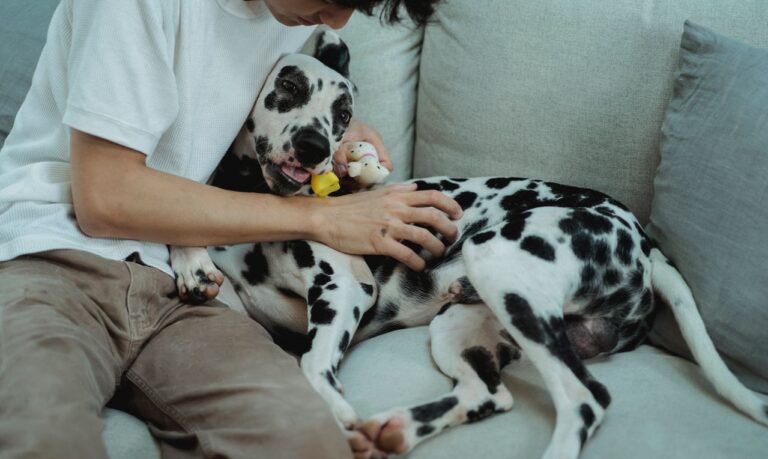
Walking through your living room, you hear it—that rhythmic, wet, obsessive slurp-slurp-slurp. You look over, and your dog is once again focused entirely on their front left paw, nibbling and licking as if they’ve discovered a hidden treat between their toes. At first, it seems like simple grooming. But as the minutes turn into hours, and the fur begins to turn a rusty, stained brown, you realize this isn’t “cleaning.” It’s a cry for help.
As a Dog Care Expert, I see this daily. Owners often dismiss chronic licking as “boredom” or “just a habit.” But in the world of canine physiology, licking is a primary symptom of a systemic breakdown. Your dog is trying to “wash away” an itch that is actually happening deep within their skin or immune system.
In this StyPets Masterclass, we are going to dive deep into the biology of the itch. We will decode the “Lick Map,” separate food triggers from environmental ones, and give you the expert protocols to finally bring your companion some peace.
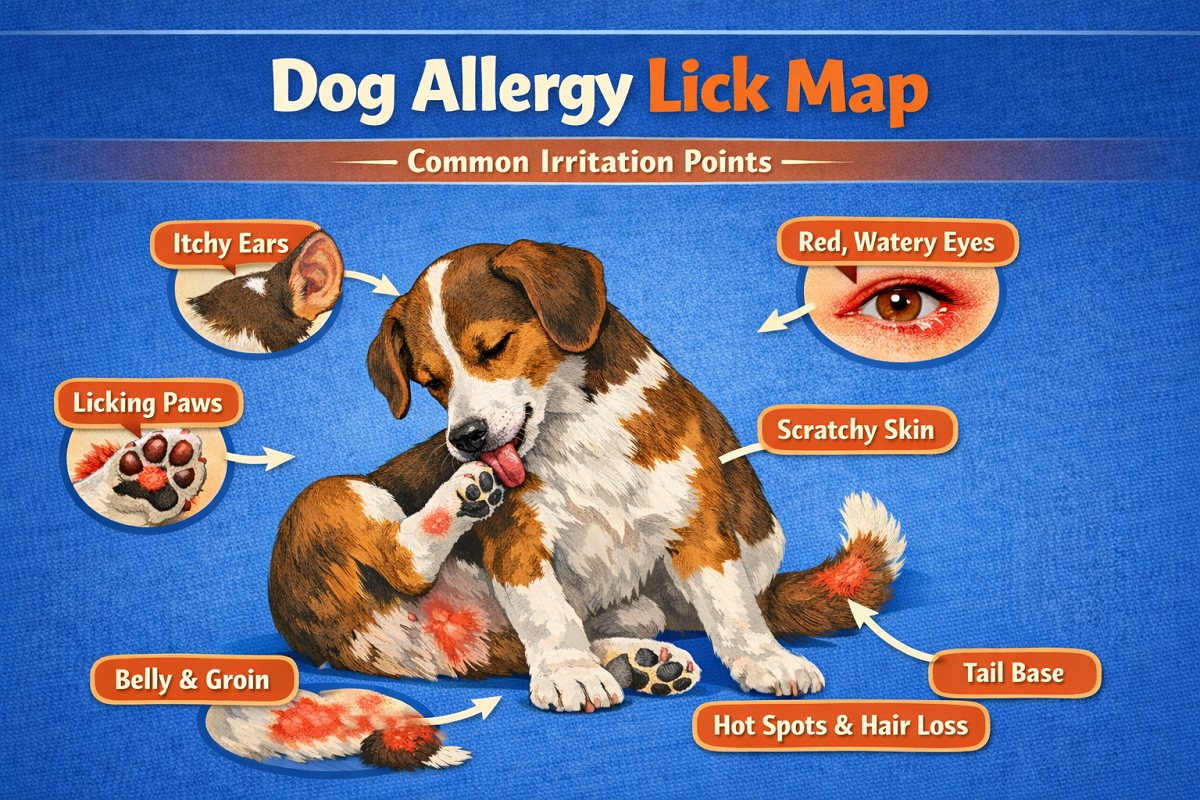
1. The “Lick Map”: Identifying the Trigger Zone
Before we can treat the dog, we must investigate the geography of the irritation. Allergies are rarely “global” at the start; they leave specific footprints that act as a roadmap to the source of the problem.
The Paws: The “Walking” Allergy
If your dog is obsessed with their feet—specifically licking between the toes and the pads—you are likely looking at Atopy (environmental allergies). Dogs don’t wear shoes. Every time they step outside, they are walking through a minefield of pollen, mold spores, lawn fertilizers, and pesticides. These microscopic particles get trapped in the moist crevices of the paw, causing immediate inflammation.
The Base of the Tail: The “Hitchhiker” Allergy
Does your dog chew at their lower back or the base of their tail? This is the classic “Hot Zone” for Flea Allergy Dermatitis (FAD). It is a common misconception that a dog needs to be “infested” with fleas to itch. For an allergic dog, it only takes one bite. The flea’s saliva contains a protein that triggers a massive histamine release.
The Ears and Belly: The “Internal” Allergy
Frequent ear infections (redness, yeast smell, or waxy buildup) paired with licking of the groin or armpits are the hallmark signs of Food Sensitivities. When a dog’s gut is reacting to a protein it can’t process, the inflammation often manifests in the “soft tissue” areas where the skin is thinnest.
2. Environmental vs. Food: The Great Diagnostic Debate
When a dog starts itching, the first instinct for most owners is to change their food. While this is sometimes the answer, statistically, 80% of canine allergies are environmental, not food-based.
Environmental Allergies (Atopic Dermatitis)
Think of this as “Hay Fever” for dogs, but instead of sneezing, they itch. These are typically seasonal. If your dog is fine in the winter but starts licking frantically in the spring or autumn, the enemy is in the air. Common triggers include:
-
Ragweed and Grass Pollens
-
Dust Mites (year-round)
-
Cleaning Chemicals on floors
Food Allergies (Adverse Food Reactions)
True food allergies are non-seasonal. If the licking is consistent from January to December, we look at the bowl. Most food allergies are reactions to the protein source (Chicken, Beef, or Dairy) or the low-quality “split” carbohydrates we discussed in our Nutrition Masterclass.
3. The “Bio-Film” Risk: Why Licking Makes It Worse
Here is the “Expert Truth” that most owners miss: The licking itself becomes a secondary disease.
A dog’s mouth is full of bacteria. When they lick an itchy spot, they introduce moisture and warmth to an already inflamed skin barrier. This creates the perfect petri dish for Staphylococcal (bacterial) or Malassezia (yeast) overgrowth.
This creates a self-perpetuating cycle:
-
The Trigger: An allergy causes a minor itch.
-
The Response: The dog licks to soothe the itch.
-
The Complication: The saliva breaks down the skin barrier, allowing yeast/bacteria to move in.
-
The Result: The skin becomes “hot,” red, and even more itchy because of the infection.
Breaking this cycle requires more than just stopping the allergy; you have to sanitize the “Bio-Film” that the dog has created.
4. Zeke’s 3-Step “Comfort Protocol”
If your dog is currently in an “itch flare,” follow this expert-level environmental reset before moving to heavy pharmaceutical interventions.
Step 1: The “Pollen Purge”
If your dog has environmental allergies, every walk is an exposure event.
-
The Action: Keep a container of hypoallergenic, fragrance-free wipes by the door.
-
The Goal: Physically wipe the paws, undercarriage, and muzzle after every outdoor session. You are removing the “poison” before the dog has a chance to lick it off and ingest it.
Step 2: Strengthening the “Skin Shield”
A healthy dog has a natural “lipid barrier”—an oily layer that prevents allergens from soaking into the skin. Allergic dogs often have “leaky skin.”
-
The Action: Supplement with high-quality Omega-3 Fatty Acids (specifically EPA and DHA from fish oil).
-
The Goal: To “grease” the skin from the inside out, making the skin barrier more resilient against environmental irritants.
Step 3: The Scent-Free Sanctuary
Dogs spend 12 to 18 hours a day with their nose and skin pressed against their bedding.
-
The Action: Wash all dog beds, blankets, and your own linens in a “Clear and Free” detergent. Avoid fabric softeners and dryer sheets at all costs.
-
The Goal: To remove “contact dermatitis” triggers from their sleeping environment.
5. When to Call the Vet: The “Red Flag” List
As a Dog Care Expert, I believe in holistic management, but I also know when the biology has gone too far for home remedies. You must seek veterinary help if you see:
-
Porphyrin Staining: The fur has turned a deep rusty red or brown (this is a chemical reaction from chronic saliva exposure).
-
The “Frito” Smell: If your dog’s paws smell like corn chips, you have a significant yeast infection that requires medicated shampoo or anti-fungals.
-
Lichenification: The skin has become thick, black, and leathery (like elephant skin). This indicates long-term, untreated inflammation.
Zeke’s Expert Insight: “You aren’t just managing a habit; you are managing an immune response. If you don’t address the root cause, you’re just watching your dog’s quality of life evaporate one lick at a time.” — Zeke
Conclusion: Restoring the Peace
Constant licking is an exhausting experience for both the dog and the owner. It is a sign of a body out of sync with its environment. By using the StyPets approach—identifying the “Lick Map,” managing the “Bio-Film,” and cleaning the environment—you can break the cycle of the itch.
Remember: A quiet house isn’t just better for your ears; it’s the sound of a comfortable, healthy dog.
The STYPETS Expert Series
-
Training: Stop Leash Pulling: The 3-Step Protocol
-
Adoption: The 3-3-3 Rule for Rescue Success