When preparing your dog for a routine vaccination schedule, your immediate focus is likely on the veterinary appointment itself. However, elite canine management requires auditing an invisible physiological variable: the microbiome baseline. Emerging veterinary research confirms that the immune system’s capacity to build strong vaccine antibodies depends directly on the state of the digestive tract. Optimizing dog gut health and immunity before a medical intervention is a process we call “Prebiotic Priming.”
At STYPETS, we do not view vaccinations as isolated medical events. We analyze them as software updates being installed onto biological hardware. If that hardware is compromised by systemic inflammation or an unbalanced microbiome, the update will fail to achieve full utility. This comprehensive masterclass will provide a technical blueprint to optimize dog gut health and immunity, ensuring your dog’s digestive ecosystem is engineered for maximum vaccine efficacy and long-term metabolic health.
1. The Gut-Vaccine Axis: The Science of Antibody Optimization
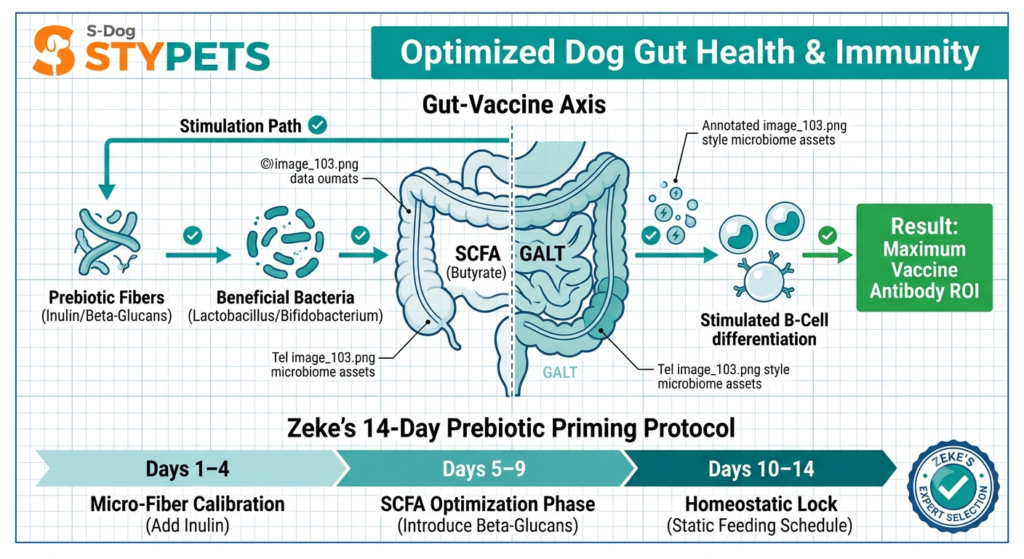
To understand how dog gut health and immunity dictate vaccine performance, we must analyze the spatial infrastructure of the canine immune system. Over $70\%$ of your dog’s immune cells reside within the gut-associated lymphoid tissue (GALT).
The Cellular Communication Network
When a vaccine is administered, it introduces an antigen to trigger a controlled immune response. For this trigger to translate into robust, long-lasting antibody protection, the immune system requires clear cellular signaling.
-
The Microbiome Signal: Beneficial gut microbes produce short-chain fatty acids (SCFAs) like butyrate, acetate, and propionate. These fatty acids act as chemical messengers that stimulate B-cell differentiation.
-
The Antibody ROI: B-cells are the specialized white blood cells responsible for manufacturing vaccine-specific antibodies. Without adequate SCFA production, the B-cell response can be sluggish, resulting in lower antibody titers and shorter-lived immunity.
2. The Prebiotic Priming Protocol: A 14-Day Engineering Timeline
Simply changing your dog’s diet the morning of a vet visit will not yield results. Altering the microbial baseline requires systematic planning. This 14-day prebiotic priming protocol is designed to maximize dog gut health and immunity before any scheduled vaccination.
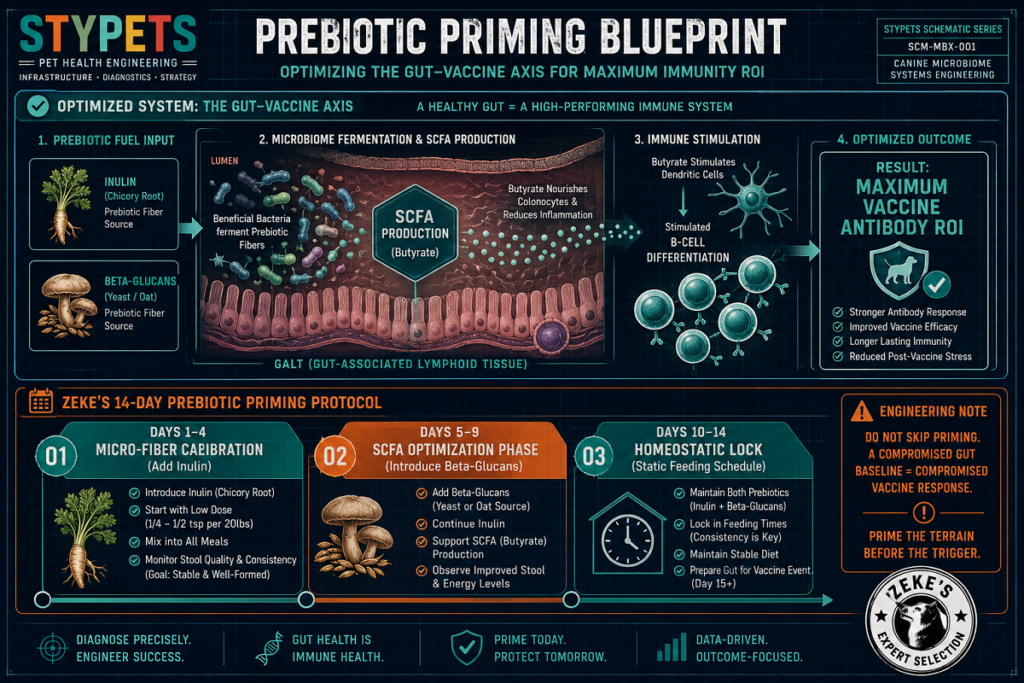
Days 1 to 4: The Micro-Fiber Calibration
Begin introducing targeted prebiotic fibers into your dog’s current Dog Food. Prebiotics are non-digestible structural carbohydrates that act as specialized fuel for beneficial bacteria like Lactobacillus and Bifidobacterium.
-
Action: Add small, measured amounts of chicory root extract or inulin to their daily meals.
-
The Metric: Monitor stool consistency closely. We are looking for a firm, well-formed output, indicating successful bacterial fermentation.
Days 5 to 9: SCFA Optimization Phase
During this phase, we accelerate the production of short-chain fatty acids to prime the GALT for cellular activation.
-
Action: Introduce specific culinary medicinal mushroom extracts, such as Turkey Tail or Reishi, which are rich in beta-glucans.
-
The Impact: Beta-glucans bind directly to immune receptors in the gut, putting the immune system on a state of “positive alert” without triggering harmful systemic inflammation.
Days 10 to 14: The Homeostatic Lock
Lock in the microbial balance to create a clean, low-entropy biological environment for the upcoming appointment.
-
Action: Maintain a strict, static feeding schedule. Eliminate all high-fat novelty treats or processed table scraps.
-
The Goal: Prevent any acute digestive stress or micro-inflammation that could distract the immune system from processing the vaccine antigen.
3. Auditing Commercial Dog Food for Micro-Immunity Flaws
The quality of the everyday fuel you place in the bowl determines the baseline structural integrity of the gut lining. To maximize dog gut health and immunity, you must perform a strict structural audit of your commercial Dog Food.
The High-Heat Degradation Factor
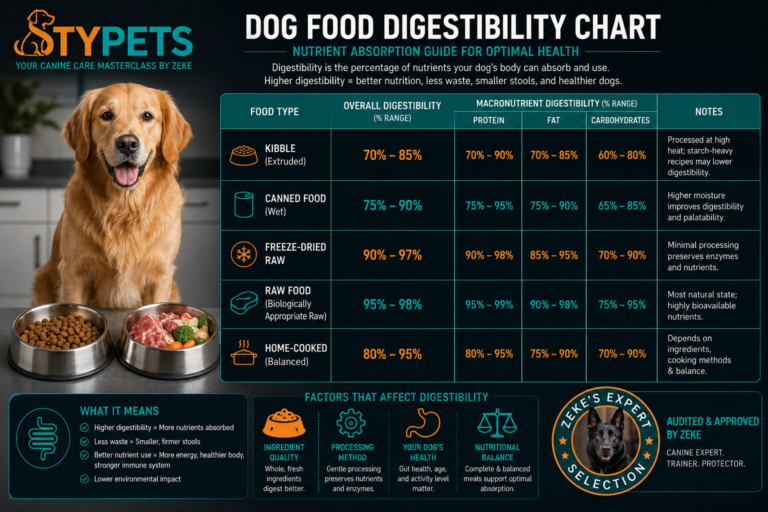
Many commercial kibbles are processed using extreme heat extrusion. This industrial process destroys natural enzymes and heat-sensitive vitamins, while creating advanced glycation end-products (AGEs). These highly processed molecular structures can irritate the delicate gut epithelium, causing micro-tears that compromise dog gut health and immunity.
Ingredient Flags to Eliminate
-
Excessive Simple Carbohydrates: High-glycemic fillers like corn, wheat, and soy fuel opportunistic pathogens in the digestive tract, altering the microbiome baseline.
-
Generic Chemical Preservatives: Synthetic antioxidants like BHA, BHT, and ethoxyquin can disrupt delicate microbial balances over time, reducing the long-term ROI of your nutritional investments.
4. The Biological Cost of Gut Dysbiosis During Medical Events
When a dog suffers from gut dysbiosis—an imbalance of harmful versus beneficial bacteria—the entire immune infrastructure faces an elevated tax. This internal imbalance compromises the core connection between dog gut health and immunity.
[Gut Dysbiosis] ➔ [Leaky Gut / Epithelial Tears] ➔ [Systemic Inflammation] ➔ [Blunted Vaccine Antibody Response]
-
The Distraction Effect: When the gut lining is hyper-permeable (“leaky gut”), microscopic food particles and endotoxins slip into the bloodstream. The immune system is forced to pivot, burning critical resources to combat this internal contamination.
-
The Diminished Return: If the immune system is actively fighting localized inflammation in the colon, its capacity to process a newly introduced vaccine antigen is significantly blunted, compromising the core connection between dog gut health and immunity.
5. 3 Critical Mistakes That Damage Your Dog’s Microbial Baseline
When managing your dog’s health routine, look out for these three common tactical errors that degrade the gut microbiome:
-
Unnecessary Antibiotic Cycling: Never request broad-spectrum antibiotics for minor, non-bacterial structural issues. A single course of aggressive antibiotics can clear out beneficial microbial populations, taking months of focused supplementation to recover.
-
Abrupt Dietary Swapping: Rotating your dog’s primary Dog Food instantly without a transitional window creates severe metabolic chaos. This structural stress alters the pH of the stomach and can lead to acute microbial die-offs.
-
Using Sanitizing Bowl Cleaners Improperly: Washing bowls with aggressive chemical disinfectants and failing to rinse them fully leaves toxic chemical residues. When ingested alongside Dog Food, these residues act as mild antimicrobials inside the stomach, steadily eroding dog gut health and immunity.
FAQ: Mastering Dog Gut Health and Immunity
1. Can I give my dog probiotics on the exact day of their vaccination?
Yes. Providing a high-quality, multi-strain probiotic on the day of vaccination supports dog gut health and immunity by maintaining microbial balance during a stressful vet visit.
2. How do I know if my dog has poor gut health before an appointment?
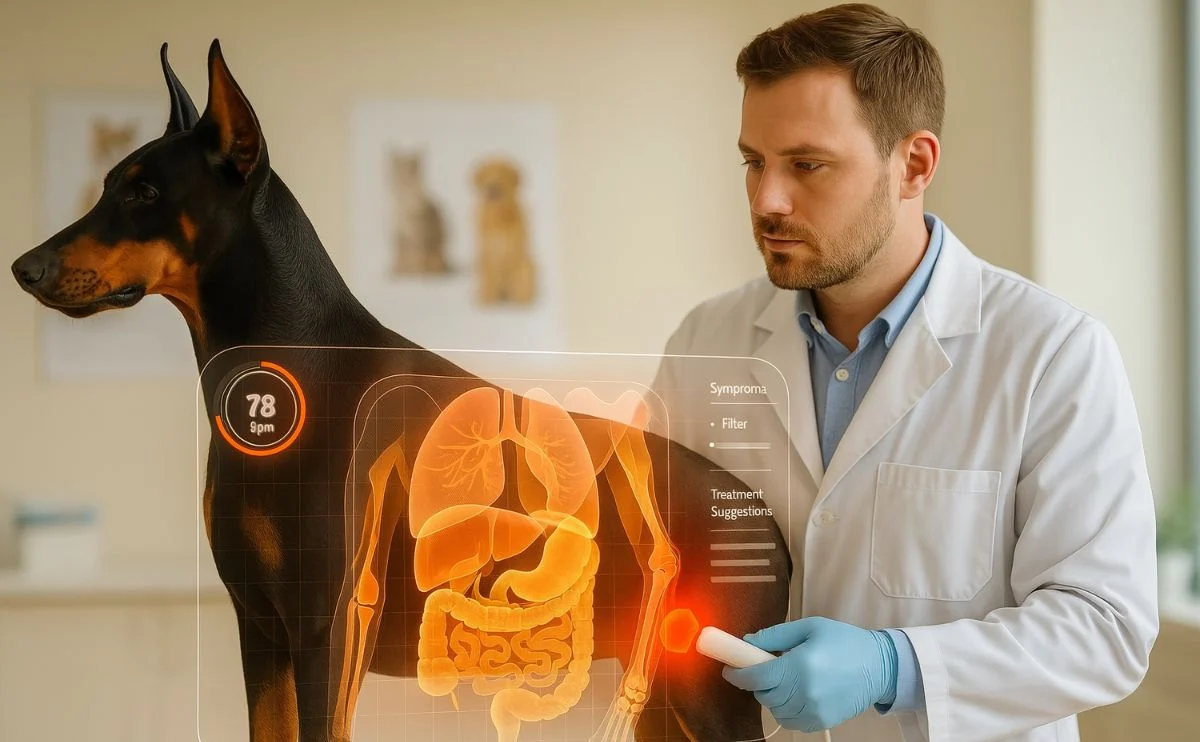
Chronic loose stools, excessive flatulence, a dull coat, frequent vomiting of bile, and obsessive paw-licking are common bio-signals that your dog’s gut health and immunity require professional assessment.
3. What is the difference between prebiotics and probiotics?
Probiotics are live, beneficial bacterial cultures that you introduce into the digestive tract. Prebiotics are the specialized non-digestible fibers that feed and sustain those beneficial cultures. Both are essential for optimizing dog gut health and immunity.
4. Can poor quality dog food cause a vaccine to fail completely?
While it rarely causes total failure, poor-quality Dog Food that degrades the gut lining can significantly lower the overall antibody count your dog produces, leaving them with weaker long-term protection.
5. Are raw diets better for building dog gut health and immunity than kibble?
High-quality, bacteriologically safe raw diets can offer superior bio-availability. However, a properly balanced, low-temperature baked kibble or human-grade fresh diet supplemented with prebiotics can achieve the exact same medical-grade gut optimization.
6. Should I run the prebiotic priming protocol before flea and tick medications too?
Yes. Oral parasiticides are powerful chemical compounds processed through the liver and gastrointestinal tract. Optimizing the gut baseline minimizes the risk of temporary digestive upset or systemic lethargy.
7. Is pumpkin a good prebiotic fiber to use for priming?
Plain, unsweetened pumpkin puree is an excellent source of soluble fiber and potassium. It works well as a foundational tool, but pairing it with specific pure prebiotics like inulin provides a more targeted boost for dog gut health and immunity.
Conclusion: The Professional Health Baseline
Engineering a vibrant, resilient life for your dog means optimizing every internal variable before stressful events occur. By utilizing the Prebiotic Priming Protocol, you turn the digestive tract into an efficient, supportive engine for your dog’s immune system.
Do not treat Dog Food as basic fuel, and do not treat vaccinations as simple checkmarks on a medical card. Recognize the powerful connection between dog gut health and immunity, honor the 14-day preparation window, and give your companion the ultimate biological advantage.
-
American Veterinary Medical Association (AVMA) for standardized vaccination schedules and safety metrics.
-
World Small Animal Veterinary Association (WSAVA) for global immune health and nutrition guidelines.