The Introduction
Bringing a new puppy home is a milestone, but the reality of “cleaning up another accident” can quickly drain the joy out of the experience. Most advice you find online is anecdotal—passed down from person to person without understanding the why behind the behavior.
As a Dog Care Expert, I look at potty training through the lens of biology and behavioral psychology. Puppies aren’t “being stubborn”; they are simply following their internal hardwiring. To speed up the process, we don’t need more paper towels—we need better science.
In this StyPets Masterclass, I’m revealing 5 science-backed secrets that move beyond the basics. We are going to tap into your puppy’s natural instincts to turn “potty time” into a predictable, stress-free routine. Let’s get your home clean and your puppy confident.
Zeke’s Pro Tip: Potty training is 10% about the puppy and 90% about your ability to read their silent biological cues.
1. The Biology of Choice: Understanding the “Den Instinct”
The most common mistake owners make is treating the entire house as the puppy’s “living space.” To a puppy, a 2,000-square-foot home is a vast landscape where one corner is for sleeping and the far corner is for “business.” To speed up potty training, we must tap into their Canine Den Instinct.
In the wild, a dog’s den is their sanctuary. Biologically, dogs are hardwired with a “cleanliness reflex”—an instinctual drive to avoid soiling the area where they eat and sleep. This isn’t about being “polite”; it’s a survival mechanism to keep the den free of parasites and scent-markers that might attract predators.
How to Apply the Science:
-
The “Micro-Environment” Strategy: By using a appropriately sized crate or a small gated area, you are artificially creating a “den.” Because of their biological hardwiring, the puppy will naturally try to “hold it” to keep their small space clean.
-
The Proximity Principle: If the space is too large (like a giant laundry room), the puppy will sleep in one corner and go potty in the other. The “den” must be small enough that the puppy identifies the entire area as their bed.
-
Feeding in the “Den”: To reinforce this instinct, I recommend feeding your puppy their meals inside their crate or designated small area. This scientifically links the “food source” to the “living space,” doubling the puppy’s instinctual desire to keep that specific area dry.
Zeke’s Expert Insight: We aren’t “locking the dog up”; we are providing them with a biological boundary that helps them develop bladder control faster than any “paper-training” method ever could.
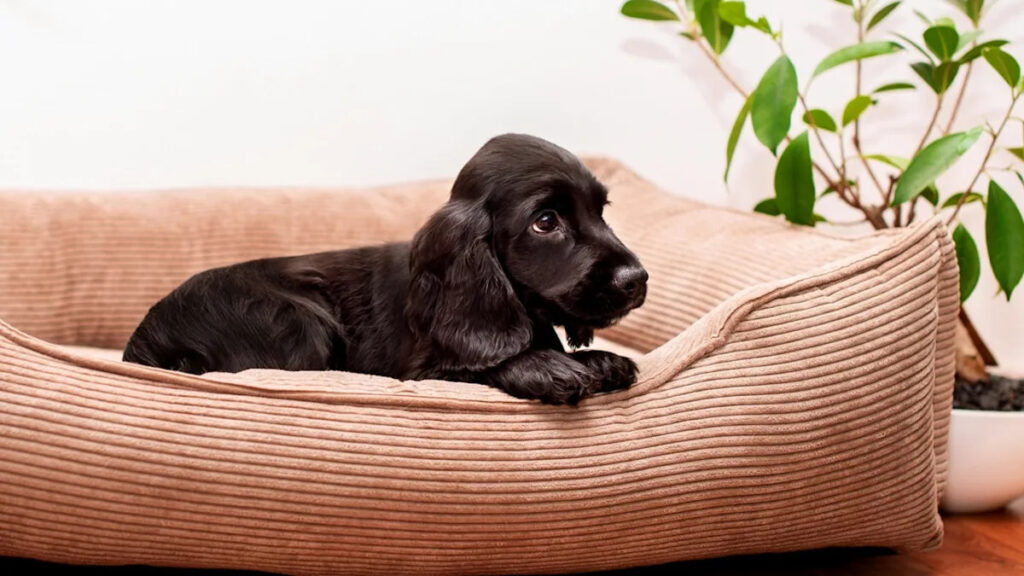
“The ‘Den Instinct’ is a biological survival tool. We aren’t just using a crate; we are giving the puppy a clean sanctuary.” — Zeke
2. Precision Timing: The 15-Minute Rule Post-Consumption
In the world of professional dog training, we don’t wait for the puppy to “ask” to go out. By the time a puppy paws at the door, their bladder is often already at a critical limit. Instead, we use the Gastrocolic Reflex to our advantage.
This is a physiological reflex that controls the motility (movement) of the lower gastrointestinal tract following a meal. In simple terms: when food or even water hits a puppy’s stomach, it sends a neurological signal to the colon and bladder that it’s time to “make room.”
The Science of the 15-Minute Window:
-
The “Input-Output” Connection: For puppies under 6 months old, the transit time between swallowing and the urge to eliminate is incredibly short. Science shows this reflex typically peaks between 5 and 15 minutes after eating or drinking.
-
The High-Activity Trigger: It’s not just food. Physical play increases heart rate and blood flow, which also stimulates the digestive system. If your puppy has been playing intensely for 10 minutes, their “internal clock” has just been fast-forwarded.
-
The Wake-Up Flush: Upon waking from a nap, a puppy’s blood pressure rises and their kidneys begin processing waste at a higher rate. This is the most predictable “must-go” moment in their day.
Zeke’s Expert Execution:
-
Timed Water Access: Don’t leave a “bottomless” water bowl out during active training hours. Offer water, wait 10 minutes, and then head straight to the designated potty spot.
-
The “Success Stacking” Method: By taking them out before they have the urge, you are ensuring they “succeed” outside. This allows you to reward them, which builds the mental connection far faster than waiting for an accident to happen inside.
Zeke’s Pro Tip: “Don’t set a timer for every hour; set a timer for 10 minutes after every meal, every drink, and every nap. That is the ‘Golden Window’ of potty training success.”
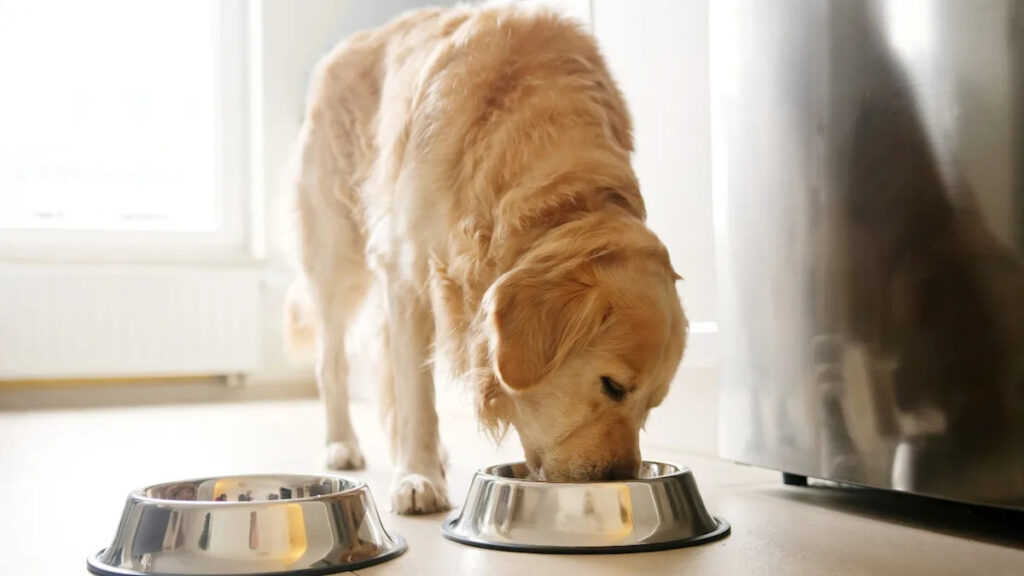
“Don’t watch the puppy; watch the clock. The 15-minute window is your most powerful tool for success.” — Zeke
3. High-Value Reward Science: Why ‘Good Boy’ Isn’t Enough
In behavioral science, the Timing of Reinforcement is the difference between a puppy that is “mostly” house-trained and one that is “perfectly” house-trained. When your puppy eliminates outside, you have a precise 2 to 3-second window to tell their brain: “This specific action in this specific location is the most profitable thing you can do.”
If you wait until you get back inside to give a treat, or if you only offer a pat on the head, the neurological connection is weak. To a puppy, being outside is full of competing stimuli—smells, sounds, and movement. To cut through that noise, we use High-Value Reward Science.
The Chemistry of the Reward:
-
Dopamine vs. Distraction: A “High-Value” reward (like a tiny piece of freeze-dried liver or plain chicken) triggers a surge of dopamine in the brain’s reward center. This chemical “stamp” marks the exact physical location where the puppy is standing as a “win zone.”
-
The “Jackpot” Effect: For the first 14 days of training, I recommend the “Jackpot” method. When they finish their business, don’t just give one treat. Give three tiny treats, one after another. This extended reward period forces the brain to focus longer on the success of the action.
-
Secondary Reinforcers: A verbal “Yes!” or a clicker acts as a bridge. It tells the puppy exactly when they did the right thing, even if it takes you two seconds to get the treat out of your pocket.
Zeke’s Expert Execution:
-
Be Prepared: Never take your puppy out without a treat pouch. If they go and you don’t have a reward, you’ve just missed a massive learning opportunity.
-
The ‘Zero-Second’ Rule: Deliver the reward the millisecond they finish. If you wait until they walk back to the door, you are rewarding them for “walking to the door,” not for going potty.
-
Quiet Success: Don’t throw a “praise party” while they are actually going. This can distract them and cause them to stop halfway through. Wait for the “finish,” then trigger the reward.
Zeke’s Expert Insight: “A pat on the head is a ‘thank you.’ A high-value treat is a ‘promotion.’ If you want professional results, you have to pay professional wages.”
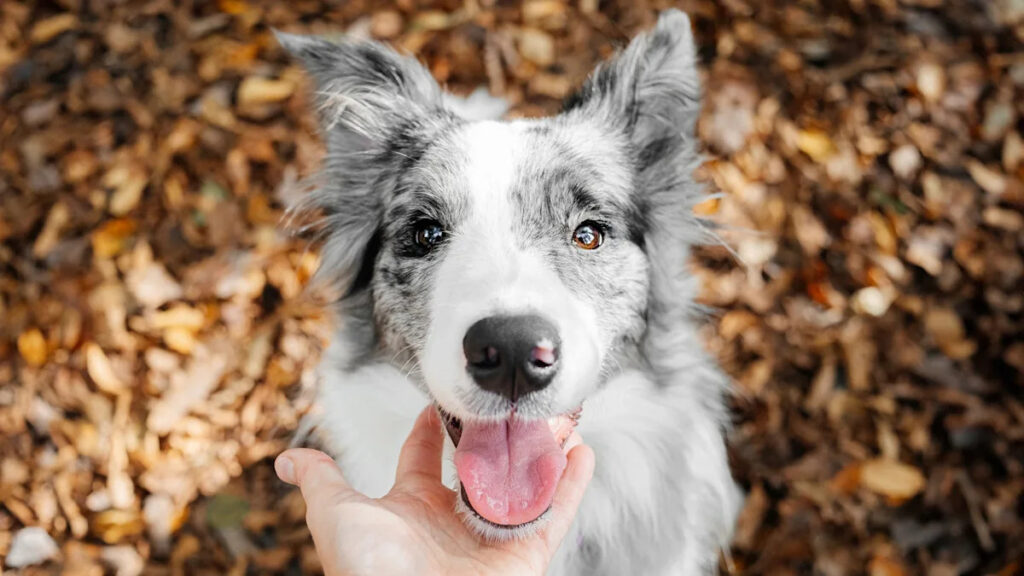
“Timing is everything. You have three seconds to turn a successful moment into a lifelong habit.” — Zeke
4. The Scent Association: Using Pheromones to Your Advantage
To a human, a cleaned-up accident smells like “lemon-fresh” cleaner. To a puppy, that same spot smells like a neon sign saying “Bathroom Here.” Traditional household cleaners often contain ammonia—a chemical compound also found in canine urine. When you clean with ammonia-based products, you are actually reinforcing the scent-marker rather than removing it.
As a Dog Care Expert, I teach owners to stop “cleaning” and start “decontaminating” using Enzymatic Science.
The Science of the Scent-Mark:
-
The Pheromone Loop: When a puppy goes potty, they leave behind specific pheromones. These chemical signals tell the puppy’s brain that this is a safe, established “elimination zone.” If those proteins aren’t fully broken down, the puppy will return to that exact spot the moment their bladder feels full.
-
Enzymatic Breakdown: Only “Enzymatic Cleaners” contain the live bacteria cultures needed to actually “eat” the uric acid and proteins in pet waste. This doesn’t just mask the smell; it physically removes the chemical trigger from the floor fibers.
-
The “Potty Spot” Anchor: You can use this same science in reverse. By taking a small piece of soiled paper towel to the outside area where you want the puppy to go, you are moving the “scent anchor.” You are essentially creating a GPS coordinate for their nose to follow.
Zeke’s Expert Execution:
-
Ditch the Ammonia: Throw away any cleaners containing ammonia or bleach for pet accidents. They are counterproductive to behavioral training.
-
Saturation is Key: Don’t just spray the surface. For carpets, you must saturate the area with an enzymatic cleaner so it reaches the padding where the pheromones hide.
-
The “Pre-Scented” Target: If your puppy is struggling to go outside, use a “scent post” or a pheromone-treated stake in the yard. It acts as a biological “trigger” that tells their brain it’s time to go.
Zeke’s Expert Insight: “You aren’t just cleaning a floor; you are editing a map. If you leave the ‘scent-trail’ active inside your house, you are giving the puppy permission to fail.”
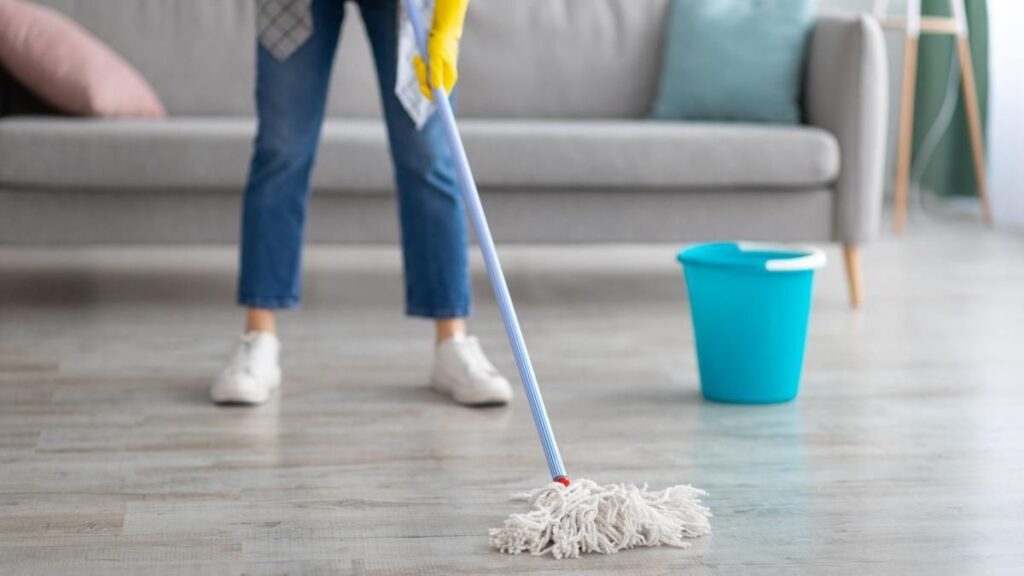
“You aren’t just cleaning a floor; you are editing a pheromone map. Your dog’s nose is a time machine.” — Zeke
5. Eliminating the ‘Middleman’: Why Puppy Pads Delay Success
Many owners start with puppy pads out of convenience, but from a behavioral science perspective, pads are often a “middleman” that needs to be fired. To a puppy, learning to go potty is largely about Substrate Preference—the physical feeling of the surface beneath their paws when they eliminate.
When a puppy consistently uses a paper or fabric pad, their brain creates a powerful association: “Soft, flat surfaces inside the house are my bathroom.” The problem? Your expensive rug, the bathmat, and the corner of your duvet feel remarkably similar to a puppy pad.
The Science of Surface Association:
-
Neurological Mapping: Between 8 and 16 weeks, puppies go through a critical “surface imprint” period. If they spend this time on pads, they are being biologically programmed to seek out indoor surfaces. Transitioning them to grass later requires “unlearning” a fundamental instinct.
-
The ‘Inside vs. Outside’ Binary: A dog’s brain works best with clear, binary rules. “Inside is for sleeping/eating” and “Outside is for potty.” By introducing a pad, you create a “Grey Zone” where some parts of the “Inside” are okay for potty. This confusion is the #1 cause of “regression” in older puppies.
-
The Confusion of Scent: As we discussed in Secret #4, pads are designed to hold scent. Keeping a soiled pad in the house is essentially keeping a “Scent Anchor” in your living space, telling the puppy’s nose that the house is a valid latrine.
Zeke’s Expert Execution:
-
Skip the Pads Entirely: If you have a yard or a safe outdoor space, start there on Day 1. It is easier to take them out 20 times a day than to retrain a 6-month-old dog to stop peeing on your rug.
-
The ‘Grass Patch’ Alternative: If you live in a high-rise apartment and truly cannot get outside quickly, use a Real Grass Patch (fresh sod) on your balcony. This maintains the “Substrate Preference” for grass, making the eventual transition to the park seamless.
-
Tethering: If you aren’t using pads, use the “Tether Method.” Keep the puppy on a 6-foot leash attached to you. This prevents them from wandering off to find a “soft surface” and ensures you catch their “pre-potty” circling immediately.
Zeke’s Expert Insight: “Puppy pads are a human convenience, not a canine necessity. If you want a house-trained dog, stop teaching them that the house is a bathroom.”
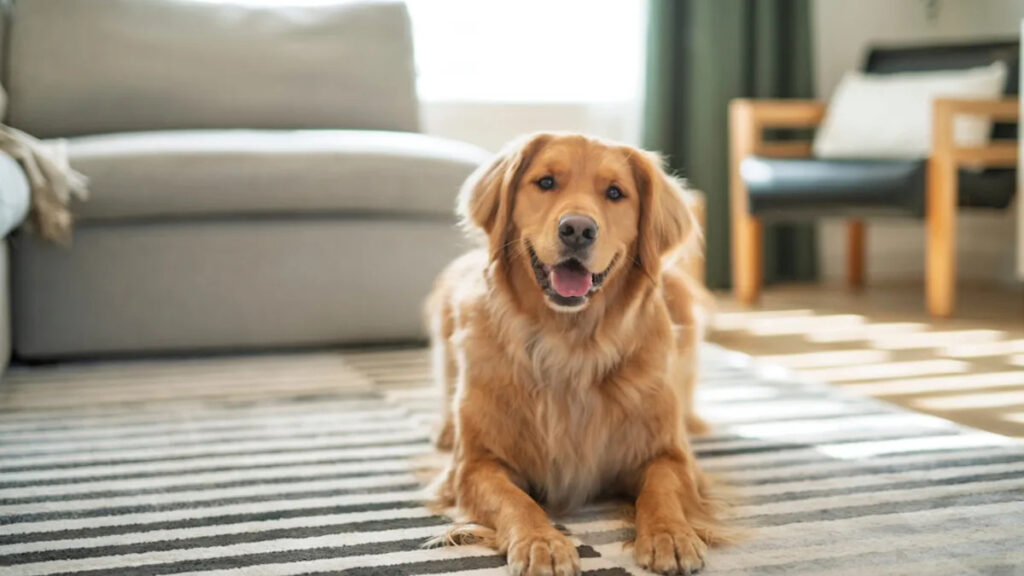
“A puppy pad is a human convenience, not a canine necessity. Stop teaching your dog that the house is a valid latrine.” — Zeke
Conclusion: Consistency is the Real Secret
Potty training isn’t a test of your puppy’s intelligence; it’s a test of your consistency. By understanding the biology of the “Den Instinct,” the timing of the “Gastrocolic Reflex,” and the chemistry of “Scent Association,” you are no longer guessing—you are leading.
Mastering these five secrets won’t just save your carpets; it will build the foundation of trust and communication that defines a StyPets relationship.
Ready to master the next level of puppyhood? Sign up for Zeke’s “Pet Parent Masterclass” newsletter below for weekly expert blueprints delivered to your inbox.
[The 10-Minute Daily Wellness Check Every Dog Owner Needs]
[Decoding the Label: What Your Dog’s Food is Actually Telling You]: