In the world of canine wellness, the mouth is often the most neglected frontier. Most owners view “dog breath” as a comical inevitability or a minor social nuisance. However, as a professional, I view it as a diagnostic warning siren.
By the age of three, 80% of dogs show signs of periodontal disease. This isn’t just about yellow teeth or missing molars; it is about the systemic gateway to organ failure. In this STYPETS Masterclass, we are cutting through the “chew toy” marketing and looking at the clinical reality of oral hygiene. Brushing your dog’s teeth isn’t a vanity project—it is a life-extending medical intervention.
1. The Oral-Systemic Connection: Beyond the Gums
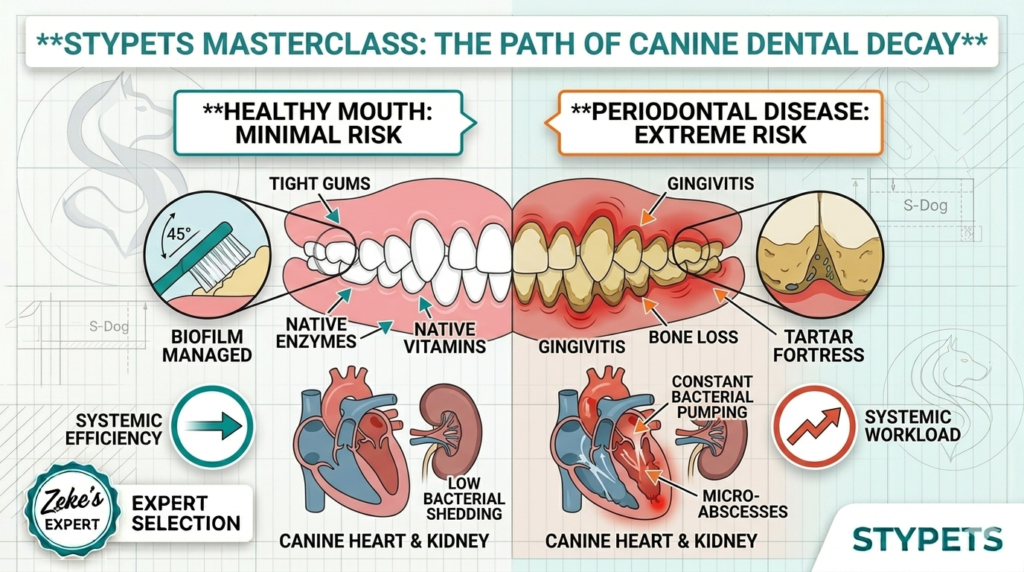
The canine mouth is a highly vascular environment. When plaque (soft bacteria) mineralizes into tartar (calculus), it creates a permanent fortress for anaerobic bacteria at the gum line. This leads to Gingivitis, but the damage doesn’t stay local.
The Path to Organ Damage
When the gums are inflamed and bleeding, the protective barrier between the mouth and the bloodstream is breached. Every time your dog chews, bacteria (specifically Porphyromonas) are “pumped” into the circulatory system.
-
Heart Disease: Bacteria can settle on heart valves, leading to endocarditis and congestive heart failure.
-
Kidney & Liver Failure: These organs act as the body’s filters. Constant bacterial shedding from a diseased mouth leads to chronic micro-abscesses and functional decline.
2. Anatomy of a Silent Killer: Stages of Periodontal Disease
Professionals categorize dental decline into four distinct stages. Recognizing these early is the difference between a $50 toothbrush and a $2,000 oral surgery.
-
Stage 1 (Gingivitis): Redness at the gum margin. This is the only reversible stage.
-
Stage 2 (Early Periodontitis): Minor bone loss and persistent “dog breath.”
-
Stage 3 (Established Periodontitis): Visible gum recession and deep “pockets” where infection hides.
-
Stage 4 (Advanced): Loose teeth, bone loss, and systemic risk. This stage is chronically painful, though dogs are experts at hiding it.
3. The “Kibble Myth” vs. The Brushing Reality
One of the most dangerous pieces of marketing noise is that “kibble cleans teeth.”
-
The Science: Most kibble is too small and brittle to provide mechanical abrasion. It shatters instantly. Furthermore, the high carbohydrate content in most kibble provides the exact sugars oral bacteria need to thrive.
-
The Pro Fix: Only mechanical friction—the physical act of a bristle breaking the biofilm—can prevent tartar. Dental chews are a supplement, never a replacement.
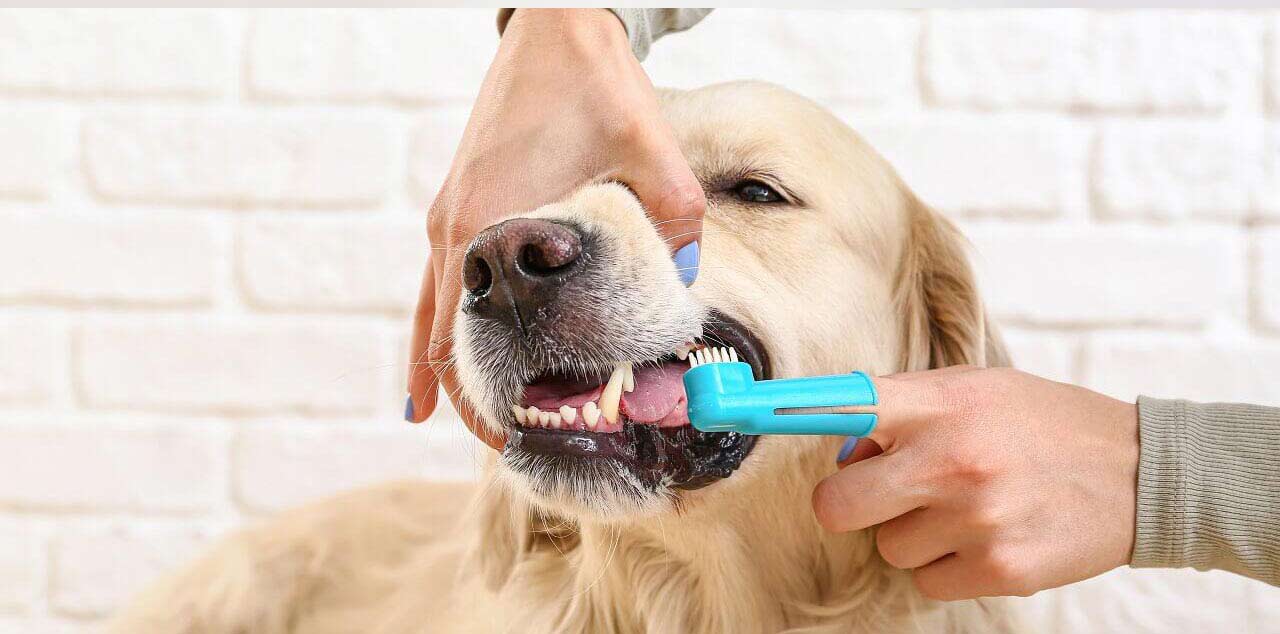
4. Zeke’s 3-Step “Low-Stress” Brushing Protocol
Introducing a toothbrush to an adult dog can be a battle unless you use a professional desensitization approach.
Step 1: The “Flavor Introduction” (Days 1–3)
Do not use a brush yet. Use a dog-specific enzymatic toothpaste (never human toothpaste, as fluoride/xylitol is toxic). Let them lick it off your finger. We want them to view the “dental session” as a treat.
Step 2: The “Finger Rub” (Days 4–7)
While they lick the paste, gently rub your finger along their outer gums and teeth. Focus on the upper molars—this is where the salivary glands are located and where tartar builds up fastest.
Step 3: The “45-Degree Angle” (Day 8+)
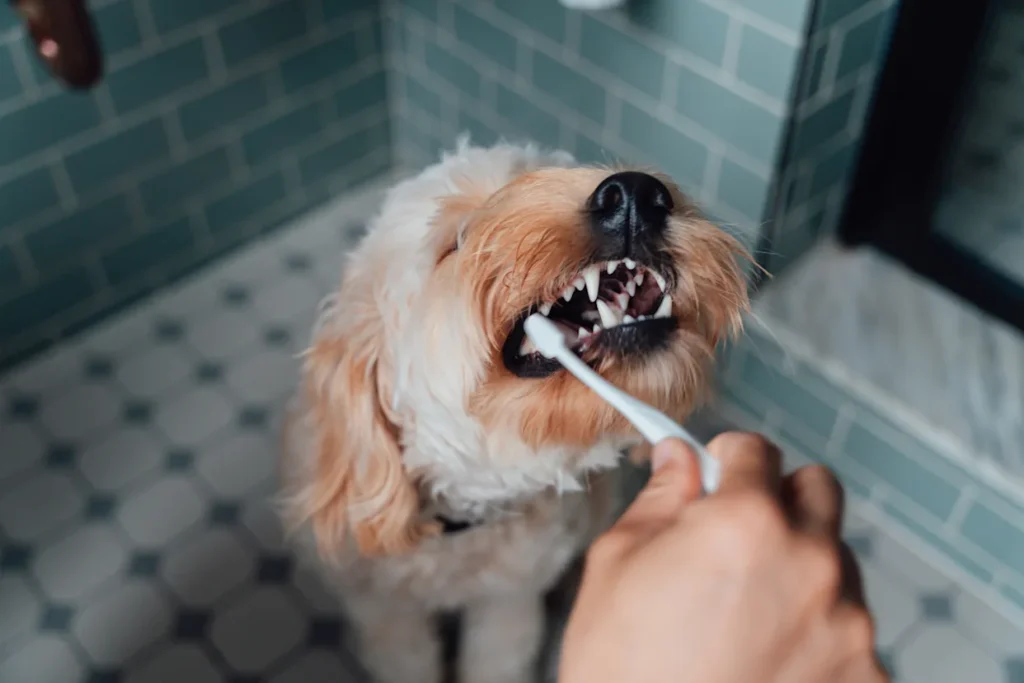
Introduce a soft-bristled brush. Aim at a 45-degree angle toward the gum line. You only need to brush the outside of the teeth; the dog’s tongue naturally manages much of the inside surface.
5. Professional Tools: What Actually Works?
-
Enzymatic Toothpaste: Look for brands containing Glucose Oxidase and Lactoperoxidase. These enzymes continue to break down plaque even after you stop brushing.
-
VOHC Seal of Acceptance: When buying water additives or chews, only trust products with the Veterinary Oral Health Council seal. This is the only independent verification that a product actually reduces plaque.
Zeke’s Final Word:
“If you wouldn’t go five years without brushing your teeth, don’t ask your dog to do it. A clean mouth isn’t just about fresh breath; it’s about adding years to your dog’s life by protecting their heart and kidneys from the inside out.” — Zeke