Potty training is the first major psychological hurdle in the relationship between a human and a dog. For most owners, it is a period of frustration, interrupted sleep, and ruined carpets. However, from a professional perspective, potty training is not about “discipline”—it is a lesson in bio-behavioral synchronization.
At STYPETS, we don’t believe in just “waiting for the dog to get it.” We believe in engineering an environment where success is the only biological option. In this Masterclass, we are moving beyond the basic “take them out often” advice and diving into the neuro-science of canine elimination. Whether you have a 10-week-old puppy or a senior rescue with no house manners, this is the professional blueprint to achieving total house reliability in record time.
1. The Biological Clock: Understanding the “Holding Capacity”
The biggest mistake owners make is overestimating a puppy’s physical hardware. A puppy’s bladder and bowel control are governed by the autonomic nervous system, which doesn’t fully mature until around six months of age.
The Math of Muscle Control
There is a professional rule of thumb: A puppy can typically hold their bladder for one hour for every month of age, plus one.
-
8 Weeks: 2–3 hours max.
-
12 Weeks: 3–4 hours max.
-
16 Weeks: 4–5 hours max.
However, these numbers only apply when the dog is at rest. During active play, the metabolic rate increases, and the kidneys process fluids faster. If your puppy is running around the living room, that “3-hour window” shrinks to 15 minutes.
2. The Den Instinct: Leveraging the Power of the Crate
The most effective tool in the professional arsenal is the crate. This isn’t about “locking up” the dog; it is about leveraging Thigmotaxis (a dog’s natural desire for a confined, safe space) and their innate instinct not to soil where they sleep.
The “Sizing” Secret
If a crate is too large, the puppy will use one corner as a bedroom and the other as a bathroom. To accelerate potty training, the crate must be just large enough for the dog to stand up, turn around, and lie down comfortably. If you have a large-breed puppy, use a divider panel to grow the space as they grow. By keeping the space “cozy,” you are using the dog’s own biology to encourage them to hold their bladder until they are released.
3. The Gastrocolic Reflex: Timing the Input to Predict the Output
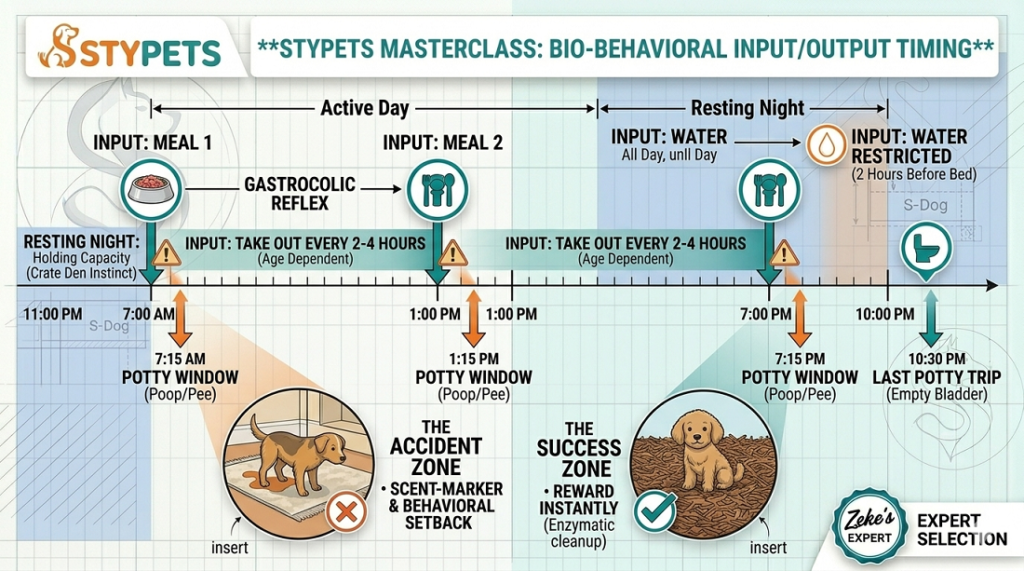
Predictable output is impossible without predictable input. If you “free-feed” (leave food out all day), your dog’s elimination schedule will be random and impossible to track.
The “Schedule-Sync” Protocol
When a dog eats, the stretching of the stomach triggers the gastrocolic reflex, which sends a signal to the colon to make room. This means that, for most puppies, the urge to defecate will occur between 5 and 20 minutes after a meal.
-
Action: Feed at the exact same time every day.
-
Action: Pick up the water bowl two hours before the final bedtime.
-
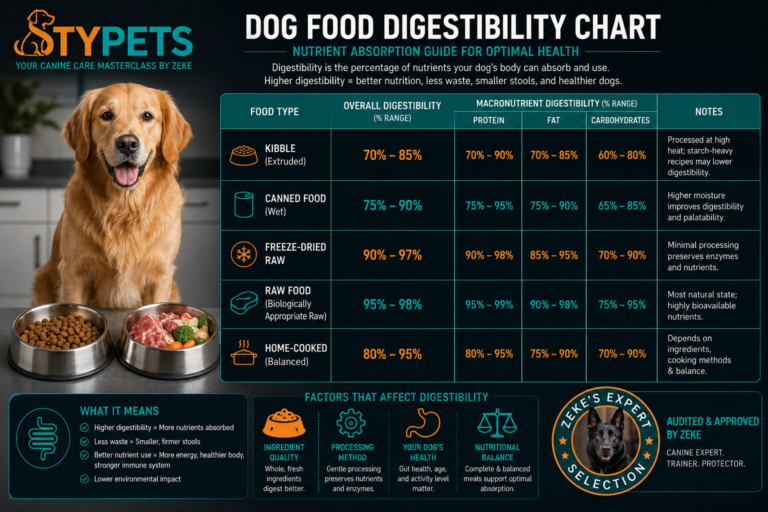
Action: Transition from high-carb kibble to a high-bioavailability diet to reduce fecal volume and frequency.
4. The “Zero-Error” Management Phase
Every “accident” in the house is a setback, not because of the mess, but because of the scent-marker left behind. Dogs are highly olfactory; if a spot smells like a bathroom, it is a bathroom.
The Umbilical Cord Method
If the dog is not in the crate, they should be attached to you via a 6-foot leash (the Umbilical Method) or inside a small exercise pen. This prevents the “sneaky squat” in the guest bedroom. By keeping the dog in your peripheral vision, you can catch the “Pre-Potty Cues”:
-
The Intense Sniff: Shifting from casual sniffing to localized, frantic sniffing.
-
The Circle: Tucking the tail and walking in tight circles.
-
The Disconnect: Suddenly stopping play and heading toward a door or corner.
The Neutralization Factor
If an accident occurs, standard household cleaners won’t work. Ammonia-based cleaners actually smell like urine to a dog, encouraging them to go there again. You must use an enzymatic cleaner that actually “eats” the uric acid crystals.
5. The “Pay Zone”: The Psychology of Reward
Potty training is the first time we teach a dog that their “internal state” can earn them external rewards.
High-Value Reinforcement
Do not just say “Good boy.” To a puppy, a piece of boiled chicken or a high-drive toy is a much stronger motivator.
-
The Timing: You must reward within 1.5 seconds of the act being completed. If you wait until they come back inside the house, you are rewarding them for coming inside, not for going potty.
-
The Cue Word: As the dog is actually going, softly whisper your cue word (e.g., “Business” or “Hurry Up”). Over time, this creates a Pavlovian response where the sound of the word triggers the urge to eliminate.
6. Common Roadblocks: Why the “Science” Fails
Submissive/Excitement Urination
This is not a potty training issue; it’s a confidence issue. If your dog pees when you come home, do not scold them. This is an involuntary muscular release. Ignore the dog until they are calm, then take them outside immediately.
Weather Aversion
Many dogs refuse to go in the rain or snow. This is often because they haven’t been desensitized to different textures (wet grass, gravel, mulch).
-
The Pro Fix: Feed your dog on the “scary” texture. This changes the emotional association of the surface from “uncomfortable” to “rewarding.”
7. The Professional Checklist for Total Reliability
| Step | Action | Why it Works |
| 1 | Strict Crate Sizing | Uses the “Den Instinct” to prevent soiling. |
| 2 | Timed Feedings | Triggers the Gastrocolic Reflex for predictable timing. |
| 3 | Enzymatic Cleanup | Removes “scent-pathways” that lead to repeat accidents. |
| 4 | Texture Exposure | Prevents “surface preference” issues later in life. |
| 5 | The Umbilical Method | Eliminates the possibility of unsupervised accidents. |
Zeke’s Final Word:
“Potty training is a test of your consistency, not the dog’s intelligence. If you control the clock, the crate, and the kitchen, you control the outcome. Stop waiting for your dog to tell you they need to go—start telling your dog when the ‘Success Window’ is open.” — Zeke