You are filling your dog’s bowl with premium, expensive kibble, confident that you are delivering top-tier nutrition. But if that food is formulated with low-quality, highly processed ingredients, your dog’s digestive tract cannot actually shatter those complex molecular chains. Instead of fueling cellular repair, muscle growth, and immune function, those costly nutrients pass straight through the gastrointestinal tract completely unused.
Many well-meaning owners judge the quality of a diet solely by the guaranteed analysis panel on the back of the bag. They see a high protein percentage and assume their nutritional job is done.
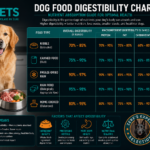
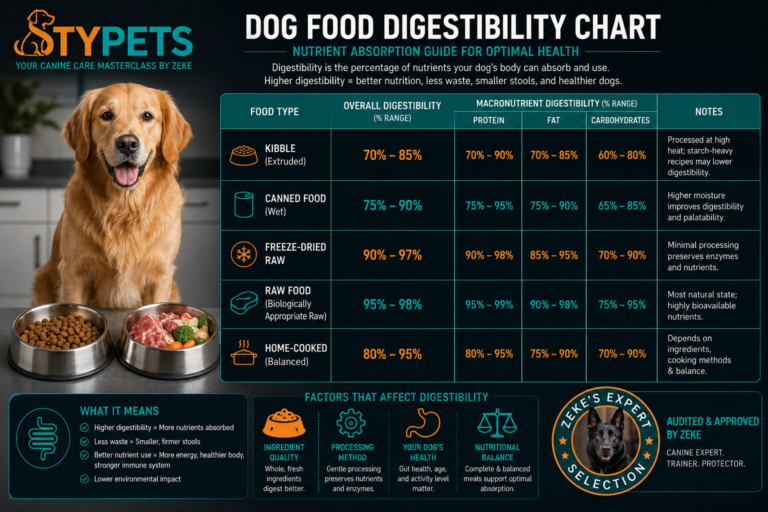
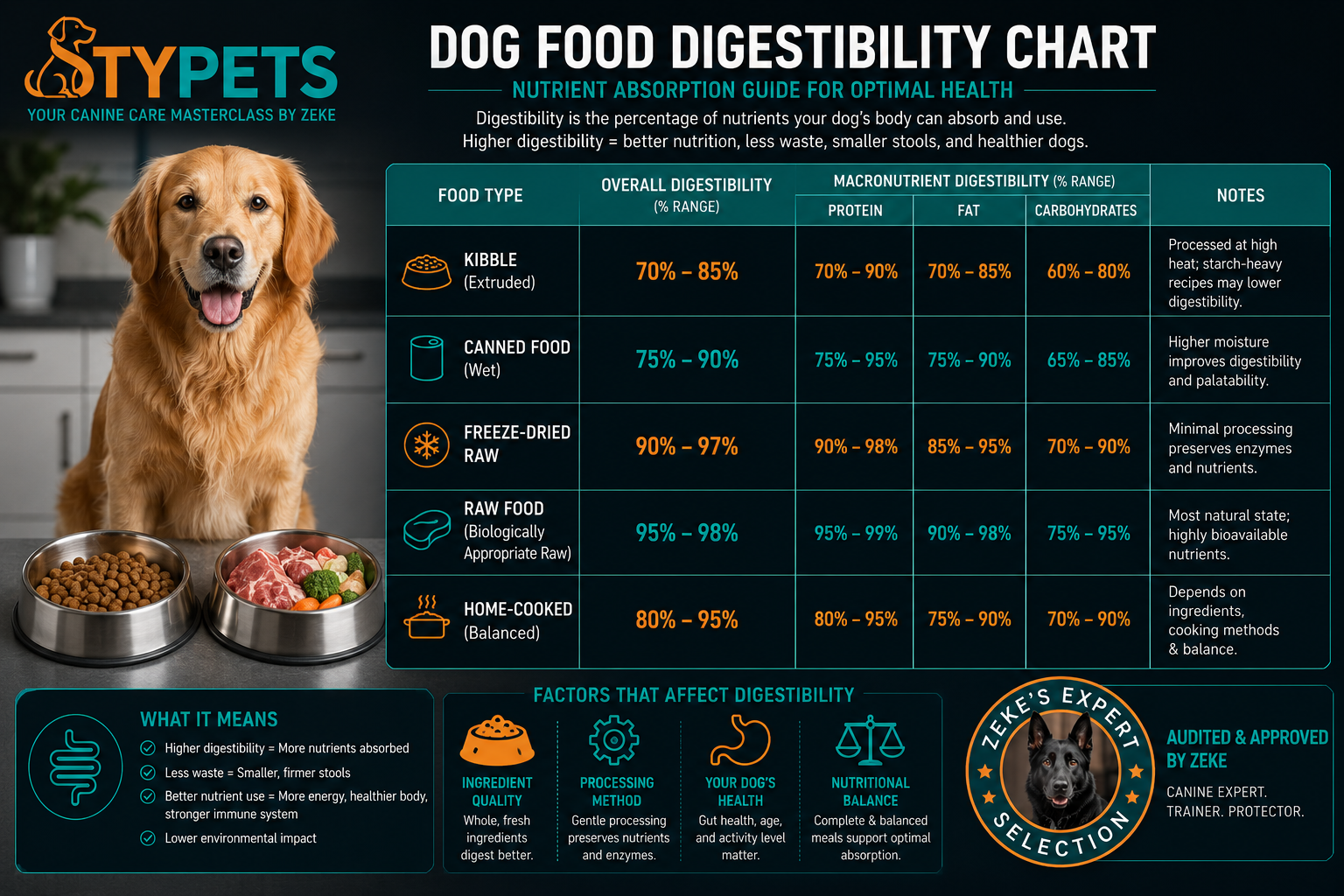
This oversight is one of the most common mistakes in modern companion animal care. A high protein number means nothing if the biological availability of that protein is low. To truly understand what your canine companion is absorbing, you must look at the data provided by a scientific dog food digestibility chart.
[Ingested Nutrient Profile] ──> [Gastrointestinal Breakdown] ──> [Bioavailable Cellular Absorption] ──> [Stool Waste Output]
Evaluating a formula through a data-driven dog food digestibility chart is the ultimate dividing line between guessing at pet nutrition and scientifically optimizing your dog’s health. By understanding how the canine body breaks down organic matter, you can slash your dog’s stool volume, eliminate systemic inflammation, and ensure every dollar spent on nutrition is actually absorbed.
At STYPETS, we approach canine dietary formulation as a precise biological science. This masterclass will provide you with a comprehensive framework to decode ingredient bioavailability, read a digestive chart, and permanently optimize your dog’s nutritional uptake.
1. The Science of Nutrient Bioavailability: What is Digestibility?
To understand how a dog food digestibility chart functions, we must look at the biological definition of digestion. True digestibility represents the percentage of an ingested food item that is successfully broken down by gastric juices and absorbed across the intestinal wall into the bloodstream.
The Biological Blueprint
Dogs possess a relatively short, highly acidic gastrointestinal tract designed by evolution to process nutrient-dense, easily breakable proteins and fats. When you feed ingredients with low cellular availability, the pancreas must work overtime, secreting excess enzymes to force digestion.
[Low-Bioavailability Diet] ──> [Pancreatic Stress & Overwork] ──> [Intestinal Fermentation] ──> [Chronic Loose Stool]
If the food cannot be broken down quickly within this short digestive window, it moves unchanged into the large intestine. There, opportunistic bacteria ferment the raw matter, leading to gas, cramping, systemic inflammation, and massive, loose stools. High digestibility means the food is absorbed early in the small intestine, leaving minimal waste behind.
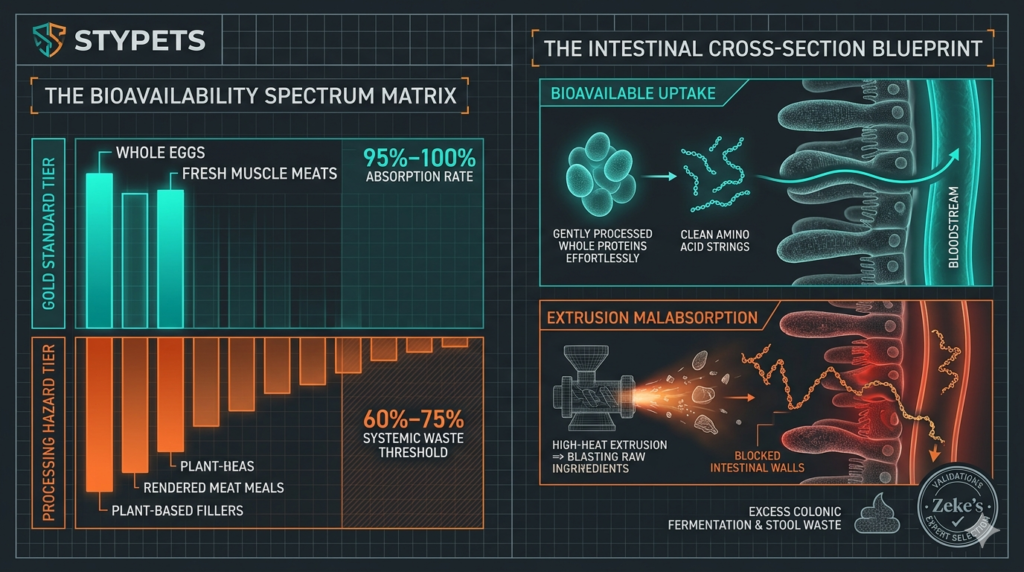
2. Reading the Matrix: The Official Dog Food Digestibility Chart
When analyzing a commercial diet or a home-cooked formulation, ingredients sit on a wide spectrum of nutrient absorption. High-quality Dog Food should maintain an overall dry matter digestibility rating greater than 80%.
The following data maps out how common dietary ingredients compare when subjected to controlled nutritional testing.
| Food Ingredient Category | Digestibility Rating (Bioavailability) | Primary Gastrointestinal Impact |
| Whole Whole Eggs | 97% to 100% | The gold standard biological reference; near-perfect amino acid profile absorbed entirely with zero waste. |
| Fresh Muscle Meat (Beef/Chicken) | 90% to 95% | Highly bioavailable proteins that feed cellular repair without stressing the liver or kidneys. |
| Organ Meats (Liver, Heart, Kidney) | 88% to 93% | Densely packed with essential trace minerals and micronutrients that enter the bloodstream rapidly. |
| Rendered Meat Meals (Chicken Meal) | 75% to 82% | Varies wildly based on processing heat; high ash content can drop actual protein absorption metrics significantly. |
| Refined Grains (White Rice, Oatmeal) | 72% to 78% | Provides accessible glucose reserves but requires significant pancreatic amylase enzyme output to process. |
| Plant Proteins (Corn Gluten, Soy Meal) | 60% to 68% | Often used to artificially inflate the protein numbers on a bag; contains phytates that can block mineral absorption. |
💡 Featured Snippet Diagnostic: How to Calculate Your Dog’s Food Absorption Rate
To determine if your current commercial formula meets professional athletic or clinical standards, run this rapid diagnostic test based on standard animal nutrition formulas:
Audit the Daily Waste Volume: If your dog passes stool more than three times per day, or if the volume of the stool matches or exceeds the volume of food ingested, the overall diet digestibility is less than 75%.
Check the Dry Matter Ingredient Log: Look for the top five ingredients. If plant-based proteins, grains, or high-fiber fillers dominate the top spots, the biological utility of the food drops instantly.
The Target Absorption Threshold: Professional veterinary diets aim for an overall absorption rate greater than 85%. If your current choice fails this threshold, your dog is living in a state of hidden sub-clinical malnutrition.
3. The Thermal Processing Hazard: How Extreme Heat Destroys Nutrients
The biggest invisible threat to a high-ranking dog food digestibility chart placement is the commercial manufacturing process known as extrusion. This process can unintentionally turn premium raw ingredients into low-value, hard-to-absorb waste.
The Mechanics of Protein Denaturation
To manufacture standard kibble, ingredients are mixed into a slurry and pushed through an extruder machine at temperatures exceeding 300°F (149°C) under extreme hydraulic pressure.
[Premium Raw Ingredients] ──> [High-Heat Extrusion Processing] ──> [Cross-Linked Intact Proteins] ──> [Blocked Intestinal Absorption]
This intense heat causes a destructive chemical reaction where amino acids cross-link with sugars, altering the physical shape of the protein molecules. Because the shapes have changed, your dog’s natural digestive enzymes can no longer latch onto them to break them down. The package label may still claim “30% Crude Protein,” but the physical availability of that protein has been severely damaged by the cooking process.
4. The Role of Fiber and Micro-Nutrients in Gastrointestinal Efficiency
While maximizing the scores on a dog food digestibility chart is essential for deep cellular energy, you must not accidentally reduce structural fiber to zero. Balance is critical to keeping the digestive tract moving smoothly.
Structuring the Micro-Environment
Adding targeted, non-digestible soluble fibers acts as a natural guide for the entire digestive process, keeping things moving at an optimal pace.
[Soluble Fiber Ingestion] ──> [Prebiotic Microbiome Fuel] ──> [Short-Chain Fatty Acid Production] ──> [Strengthened Gut Barrier]
-
Prebiotic Fuel Source: Ingredients like chicory root and beet pulp do not show high scores on an absorption chart, but they serve an essential purpose. They feed the beneficial bacteria in your dog’s gut microbiome.
-
Short-Chain Fatty Acids: As these specialized fibers ferment cleanly in the large intestine, they produce short-chain fatty acids (SCFAs) like butyrate. These compounds directly fuel and repair the cells lining the colon wall.
-
Intestinal Transit Regulation: Proper fiber inclusion ensures that the food slurry moves through the digestive tract at the perfect speed, allowing maximum time for vital nutrients to cross into the bloodstream.
5. Recognizing Malabsorption: Stool Indicators and Metabolic Signs
When a dog’s daily intake consistently scores low on a dog food digestibility chart, their body will display clear physical signs of nutritional stress. As a dedicated handler, you must learn to read these external warning signs.
The Physical Signs of Nutritional Starvation
-
The Chronically Voluminous Stool: A clear sign of low-absorption food is a dog that produces large, pale, foul-smelling stools. This indicates that the proteins and fats are fermenting in the lower gut rather than being absorbed.
-
Dull Coat and Brittle Claws: The canine body prioritizes internal organs over outward appearance. If a diet scores poorly on a biological availability chart, the skin and coat are the first areas to lose nourishment, resulting in dandruff, chronic shedding, and dry skin.
-
Advanced Metabolic Imbalances: In some cases, chronic lack of nutrient absorption can trigger significant medical issues. Over time, these digestive strains can mimic or worsen system-wide metabolic issues, such as canine hypothyroidism, which slows down the body’s entire metabolic rate and further reduces its ability to process food efficiently.
FAQ: Advanced Nutritional Digestibility Dynamics
1. Where can I find an official dog food digestibility chart for my specific pet food brand?
Most mainstream commercial pet food brands do not print their exact digestibility scores on the packaging. To find this data, you must contact the manufacturer directly and ask for their peer-reviewed “apparent pup digestibility coefficients” or consult independent veterinary reference texts.
2. Is raw food always more digestible than dry kibble?
Generally, yes. High-quality raw or gently cooked fresh diets typically score between 85% and 95% on an absorption chart, whereas standard high-heat extruded kibbles usually average between 70% and 80% due to processing damage.
3. Can a dog food have a digestibility rating that is too high?
Yes. If a diet scores close to 98% and contains zero structural fiber, the stool can become overly soft or nonexistent, which prevents the natural expression of the anal glands during bowel movements. A small amount of healthy fiber is always necessary.
4. How do I know if “chicken meal” is highly digestible?
The absorption rate of a meat meal depends heavily on its ash content, which reflects how much bone was included in the mix. High-quality low-ash meat meals are very digestible, while cheap, high-ash versions are difficult for the body to process.
5. Does a high-protein food guarantee high nutrient absorption?
Not at all. The “Crude Protein” percentage on a bag measures total nitrogen content, not how easily that protein is absorbed. A food made with low-quality plant proteins can show the exact same protein percentage as a fresh meat formula while offering far fewer bioavailable nutrients.
6. How long does it take for a dog to completely digest high-quality food?
For a highly bioavailable diet, the complete journey through the stomach and small intestine takes roughly 4 to 8 hours. Lower quality, high-fiber foods take much longer to process, often sitting in the colon for up to 24 hours while undergoing heavy bacterial fermentation.
7. Can food allergies alter a dog food digestibility chart score?
Yes. If your dog has an underlying food intolerance, their intestinal lining will become inflamed and swollen whenever they eat that trigger ingredient. This inflammation damages the microscopic villa structures in the gut, severely lowering their ability to absorb any nutrients from their food.
Conclusion: Investing in Real Biological Absorption
Elevating your approach to Dog Food choices requires moving past clever marketing labels and looking closely at real nutrient availability. A high protein number on a bag is meaningless if the ingredients fail to pass basic biological absorption standards.
Stop measuring your dog’s nutrition solely by the weight of their food bowl. Focus on high bioavailability, prioritize gently processed or whole-food ingredients, and use a trusted digestive framework to guide your choices. By ensuring your dog can actually absorb their nutrients, you build a foundation for vibrant energy, a glowing coat, and long-term health.
[The Lifestyle Audit: High-Energy vs. Low-Energy Breeds] – Align your dog’s daily bioavailable caloric intake with their true genetic activity profile.
[The Bio-Film Risk: Decoding Chronic Licking and Gut Health] – Explore how poor nutrient absorption can trigger systemic skin irritation and chronic paw licking.
External Authoritative Sources: Reference the Association of American Feed Control Officials (AAFCO) for official nutrient profile guidelines and the National Research Council (NRC) for historical peer-reviewed data regarding canine daily raw nutrient requirements.