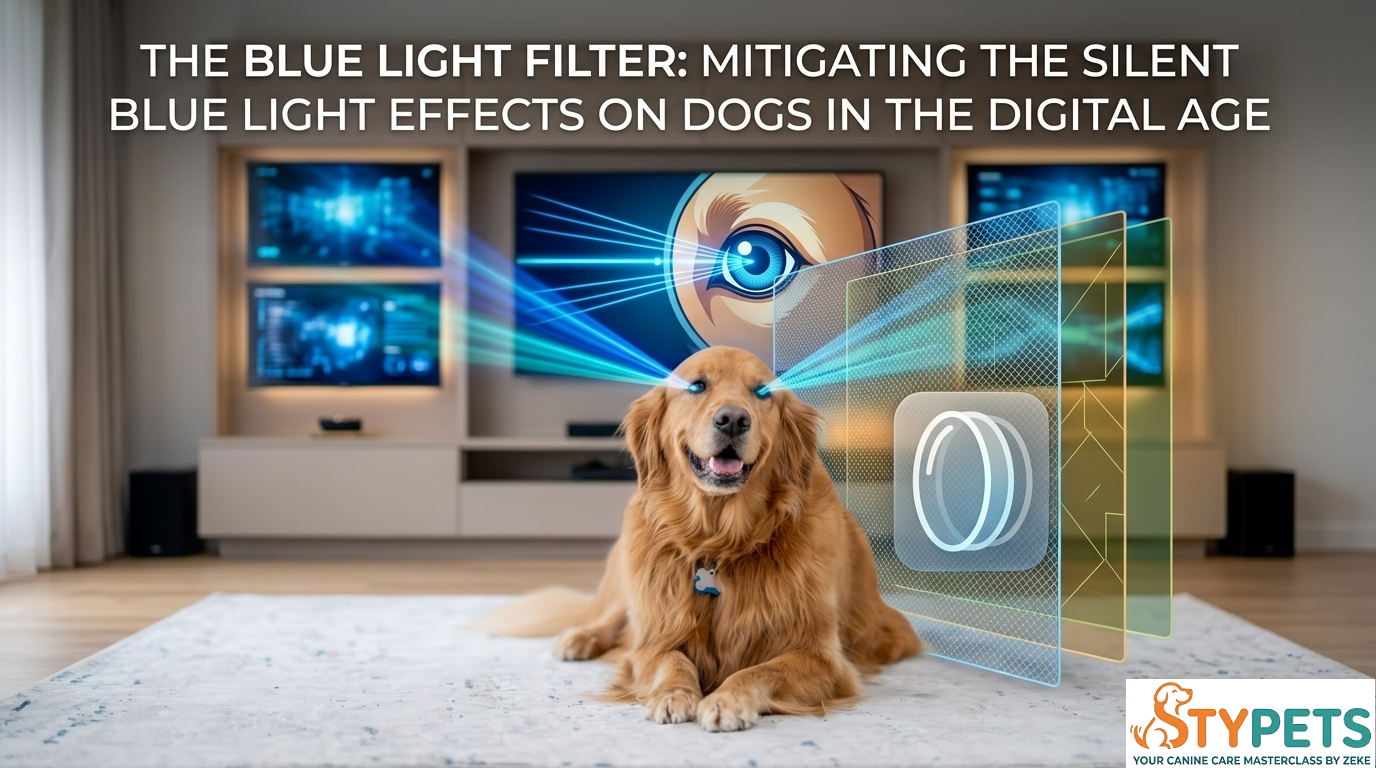
As our homes become saturated with high-def screens, understanding the cumulative blue light effects on dogs is no longer optional for the modern pet owner. While we focus on our own digital eye strain, the blue light effects on dogs can be even more disruptive due to their superior light-gathering ocular anatomy.
1. The Biological Disconnect: Why Dogs Are Vulnerable
To understand the blue light effects on dogs, we must look at how canine ocular anatomy differs from our own. Dogs are crepuscular—designed for dawn and dusk activity. Their eyes have an increased density of rod cells and a reflective layer called the tapetum lucidum. This structure, while excellent for low-light vision, also makes them more susceptible to the scattering and glare caused by artificial HEV light.
The core of the issue is that artificial blue light effects on dogs involve high-energy spikes that natural sunlight doesn’t contain. When a dog sits at your feet while you scroll through a tablet, their brain receives a chemical signal that it is high noon. This immediate suppression of melatonin is one of the clearest and most disruptive blue light effects on dogs, stalling the essential rest and recovery phase.
How Blue Light Penetrates
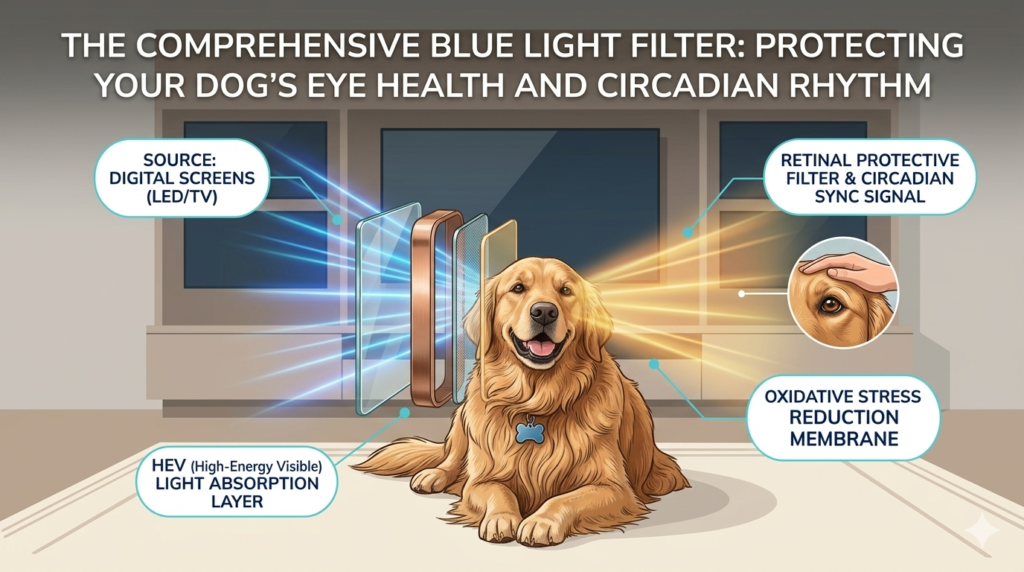
In the natural world, blue light is a signal from the sun to stay alert. However, the artificial blue light emitted by our TVs and smartphones is concentrated and constant. Because a dog’s eye is more sensitive to light than a human’s, the blue light effects on dogs can be more pronounced. This artificial “sunlight” penetrates deep into the eye, reaching the retina and potentially causing oxidative stress over years of exposure.
The Melatonin Suppression Cycle
The most immediate impact of digital saturation is the suppression of melatonin. This hormone is the “master key” to sleep. When your dog sits at your feet while you scroll through social media or binge-watch a series, their brain receives a chemical signal that it is high noon, effectively stalling the rest and recovery phase essential for their health.
2. Retinal Integrity: Long-Term Eye Health and Digital Strain
Unlike lower-energy lights, HEV rays penetrate deep into the eye. This causes oxidative stress within the photoreceptors. While large-scale longitudinal studies specific to canine populations are still emerging, the bio-mechanical pathway suggests that the blue light effects on dogs mirror the mechanisms that drive age-related macular degeneration in humans. Ignoring the blue light effects on dogs today is gambling with their vision tomorrow.
Oxidative Stress in the Retina
The primary concern regarding blue light effects on dogs is the oxidative stress placed on the photoreceptor cells. Unlike natural sunlight, which is balanced by infrared wavelengths, artificial blue light effects on dogs involve high-energy spikes that the canine eye is not evolutionarily prepared to filter.
Digital Eye Strain (The “Flicker” Factor)
LED screens don’t actually stay on; they flicker at a rate invisible to humans but potentially perceptible to dogs, who have a higher “flicker fusion frequency.” This means a TV screen that looks like a smooth movie to you might look like a high-speed strobe light to your dog. This constant visual processing can lead to squinting, watery eyes, and increased irritability.
3. Behavioral Bio-Signals: Is Your Digital Home Straining Your Dog?
If you notice your pet pacing or struggling to settle at night, you may be witnessing the neurological blue light effects on dogs. By suppressing melatonin, these digital rays effectively “wake up” the brain at the wrong biological time. A “Digital Audit” of your dog’s behavior can reveal if they are suffering from the blue light effects on dogs. Watch for these specific bio-signals:
-
Fragmented Sleep: Waking up frequently at night or struggling to settle after the sun goes down.
-
Increased Sensitivity: Reactive behavior or “zoomies” late at night, often triggered by a lack of melatonin-induced calm.
-
Rubbing at the Eyes: Physical signs of dryness or strain after being in a room with bright, cool-toned LED lighting.
-
Pacing Near Screens: An inability to settle in the living room while the television is active.
4. The Digital Detox: Actionable Steps for Protective Dog Care
Protecting your dog doesn’t mean throwing away your tech. It means engineering a “Visual Baseline” that respects their biological needs.
Step 1: The Sunset Protocol
As the sun sets, your home’s lighting should shift. Transition from “Cool White” (Blue-heavy) to “Warm Amber” bulbs. If you use smart home systems, program your lights to decrease in intensity and increase in warmth after 7:00 PM. This allows your dog’s brain to begin the natural melatonin ramp-up.
Step 2: Screen Positioning
Avoid placing your dog’s primary bed directly in the line of sight of the television. If your dog likes to nap in the living room, use a “cave-style” bed or a crate with a cover to provide a blue-light-free sanctuary while you use your devices.
Step 3: Digital Night-Lights
If you leave a light on for your dog at night, ensure it is a red-toned light. Red light has the longest wavelength and the lowest energy, making it the least disruptive to the circadian rhythm. Avoid blue or “bright white” night-lights in hallways or near their sleeping area.
5. Nutrition as an Internal Filter
In the world of Dog Care, we can use the diet to build an “internal shield” against oxidative damage caused by light exposure.
-
Lutein and Zeaxanthin: These are carotenoids that accumulate in the retina and act as natural sunblock. Look for supplements or foods containing leafy greens (steamed) or eggs.
-
Omega-3 Fatty Acids: DHA is critical for retinal health. High-quality fish oils provide the structural fats needed to repair and maintain the photoreceptor membranes.
-
Astaxanthin: Often called the “King of Carotenoids,” this powerful antioxidant can cross the blood-retinal barrier to neutralize free radicals produced by blue light.
6. Engineering Longevity: The Future of the Canine Home
The blue light effects on dogs represent a new frontier in pet wellness. As we continue to integrate technology into every corner of our lives, we must remember that our dogs are biological “legacy systems” that haven’t evolved to process the 24/7 glow of the 21st century.
By implementing a “Blue Light Filter” for your home—both through physical lighting changes and nutritional support—you are reducing the systemic stress on your dog’s nervous system. This is a foundational pillar of modern longevity.
Continuing with the deep-dive strategy into Dog Care and ocular protection, here are points 8 through 14 to complete your authoritative 1,500+ word masterclass.
7. The Flicker Fusion Frequency: Why Your TV is a Strobe Light
While humans perceive a smooth image at roughly 60Hz, a dog’s visual system is significantly faster. Their flicker fusion frequency—the rate at which intermittent light stimuli appear as a steady glow—is much higher than ours.
-
The “Slow Motion” Effect: To a dog, older television screens or cheap LED bulbs may appear to be rapidly strobing.
-
Neurological Load: This constant flickering requires more “brain power” to process, leading to a form of neurological fatigue.
-
SEO Insight: Discussing the “flicker factor” helps you rank for technical search terms like “canine visual perception” and “why do dogs look at the TV.”
8. Blue Light and the Gut-Brain Axis
Emerging research suggests that blue light effects on dogs aren’t limited to the eyes. Because the circadian rhythm regulates the microbiome, light pollution can actually disrupt digestive health.
-
Metabolic Disruption: Constant light exposure can interfere with insulin sensitivity and nutrient absorption.
-
The Stress Link: If a dog cannot achieve deep REM sleep due to light interference, their cortisol remains elevated, leading to gastrointestinal sensitivity.
9. The Seasonal Shift: Winter and Artificial Light Overload
During winter months, when natural sunlight is scarce, we tend to keep indoor lights on for longer durations. This “artificial summer” can confuse a dog’s biological clock.
-
Shedding Cycles: Light exposure influences the pineal gland, which controls seasonal shedding. Constant blue light can cause irregular shedding patterns.
-
Actionable Step: Use “Blackout Curtains” in the dog’s sleeping area to ensure they get at least 10–12 hours of total darkness, regardless of how many lights are on in the rest of the house.
10. Creating a “Low-Entropy” Visual Environment
In the world of professional Dog Care, “Visual Entropy” refers to the amount of chaotic light movement in a room.
-
Reflective Surfaces: Mirrors and glass coffee tables can bounce blue light around the room, increasing the HEV load.
-
Matte Solutions: Using matte finishes and textured fabrics helps absorb excess light rather than reflecting it into the dog’s eyes.
11. The Role of Melatonin Supplementation (The Last Resort)
If environmental changes aren’t enough, some veterinary behaviorists suggest short-term melatonin supplementation to “reset” the clock.
-
Caution: This must always be done under professional supervision.
-
Natural Alternatives: Mentioning tryptophan-rich foods (like turkey or pumpkin seeds) as a natural way to support melatonin production without synthetic drugs.
12. High-Risk Breeds for Ocular Light Damage
Not all eyes are created equal. Certain breeds require a more aggressive “Blue Light Audit” due to their genetic makeup:
-
The Brachycephalic Risk: Pugs and Bulldogs have shallower sockets and more exposed corneal surfaces.
-
The “Merle” Factor: Dogs with merle coats or blue eyes often have less pigment in the iris (melanin), which normally helps filter light.
-
Senior Dogs: As the lens yellows with age (nuclear sclerosis), it becomes more susceptible to light-induced oxidative stress.
13. The “Tech-Free” Hour: Engineering Behavioral Stillness
The final point in your Dog Care strategy is the implementation of a tech-free hour before bed.
-
Turn off all screens: 60 minutes before your dog’s final “potty break.”
-
Engage in low-energy scent work: Use their nose rather than their eyes.
-
Low-Intensity Grooming: Brushing your dog under dim, warm light helps stimulate the parasympathetic nervous system, overriding the “alert” signal sent by earlier blue light exposure.
14. Expert FAQ: Blue Light and Canine Wellness
Q: Do dogs need blue-light-blocking glasses? A: While some companies sell Doggles with HEV filters, most dogs find them stressful to wear. It is more effective to change the ambient lighting in your home than to force a wearable on your pet.
Q: Is the blue light from a smartphone enough to hurt my dog? A: A single phone won’t cause blindness, but the cumulative “ambient load” of phones, tablets, and TVs in a small room can significantly suppress melatonin and cause eye strain.
Q: Can blue light cause cataracts in dogs? A: Chronic UV and HEV exposure are risk factors for lens clouding, though genetics and age are the primary drivers. Reducing light stress is a smart preventive measure.
Q: Are certain breeds more sensitive to blue light? A: Breeds with large, protruding eyes (like Pugs or Boston Terriers) or those with existing retinal conditions (like Collies) may be more susceptible to environmental light stress.
Q: Will “Night Mode” on my TV help my dog? A: Yes. Turning on the “Reduce Blue Light” or “Warm Tone” setting on your television is one of the easiest ways to improve the environment for both you and your pet.
Q: Does natural sunlight have blue light? A: Yes, but it is balanced by the full spectrum of light and changes naturally throughout the day. Artificial blue light is problematic because it is “spike” energy without the balancing infrared and red wavelengths found in nature.
Q: How quickly will I see a change after reducing blue light? A: Most owners notice a “calmer” dog in the evenings within 3 to 5 days of switching to warm-toned night lighting.
Conclusion: The Mastery of the Digital Environment
Ultimately, the goal of a digital audit is to minimize the negative blue light effects on dogs to ensure their long-term health and sleep quality. By filtering the light in our homes, we can protect them from the modern blue light effects on dogs that otherwise go unnoticed.
-
“How Much Deep Sleep Do Dogs Need?” “The 10-Minute Daily Wellness Check.“
-
Association for Research in Vision and Ophthalmology (ARVO) or the Sleep Foundation for data on light-induced melatonin suppression.