The “Grain-Free” revolution was supposed to be the ultimate solution for canine health, promising a return to ancestral diets. However, for many owners, the switch didn’t result in the vibrant health they expected. Instead, a new set of issues emerged: itchy skin, digestive upset, and chronic lethargy. The culprit isn’t what was removed from the bowl, but what was added to replace it. Specifically, the massive influx of lectins in dog food—a category of “anti-nutrients” found in legumes and tubers—may be sabotaging your dog’s gut health from the inside out.
1. What Are Lectins? The Plant’s “Chemical Defense” System
Plants cannot run away from predators. To survive, they have evolved sophisticated chemical defense mechanisms. Lectins are a type of protein that binds to carbohydrates. In the wild, they act as a natural pesticide, making the seeds or leaves of a plant difficult for an insect or animal to digest.
The Problem with Binding
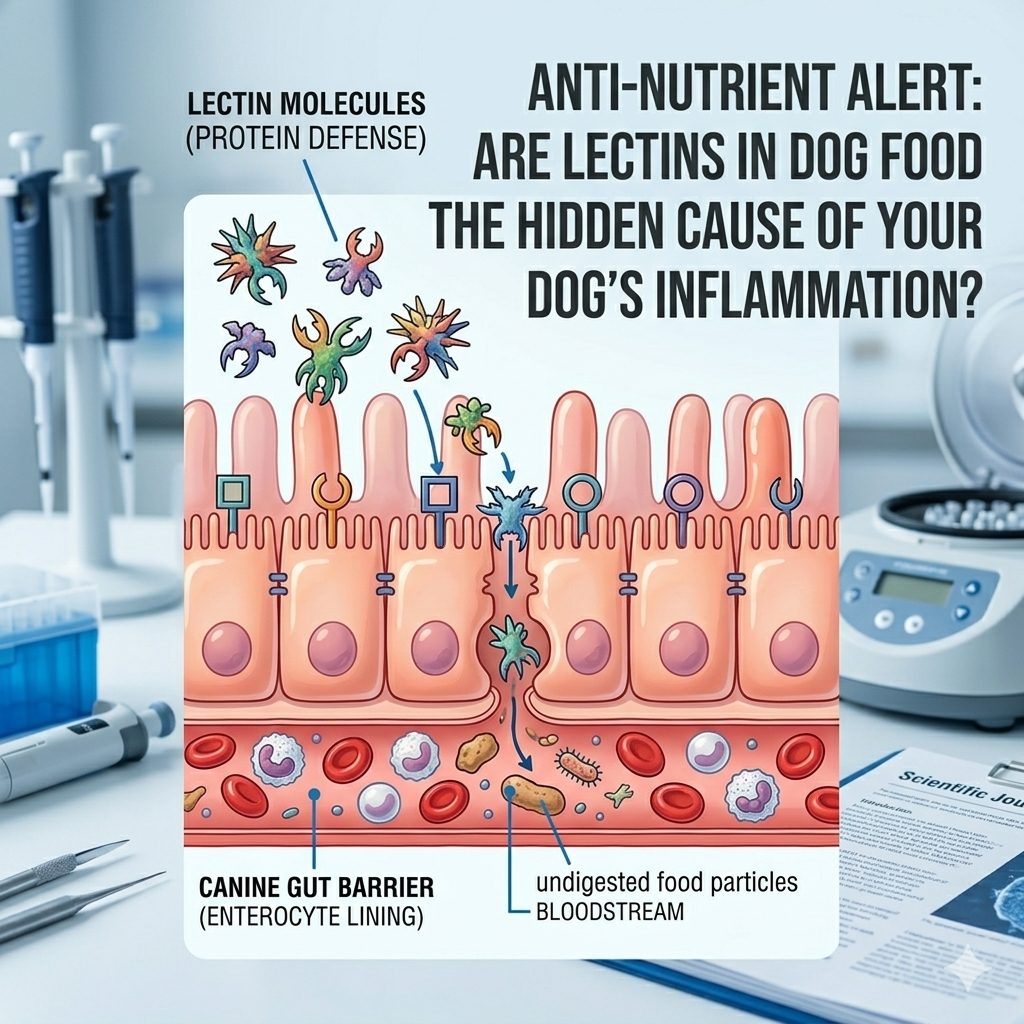
When your dog consumes high levels of lectins in dog food, these proteins don’t just pass through the digestive tract. They are “sticky.” They bind to the sugar molecules on the lining of the small intestine. This interference can lead to a breakdown in the intestinal barrier, often referred to by experts in Dog Food formulation as “Leaky Gut Syndrome.”
Grain-Free vs. Grain-In
Ironically, the move away from grains led manufacturers to lean heavily on peas, lentils, chickpeas, and potatoes. While these are “grain-free,” they are significantly higher in certain types of aggressive lectins than many of the grains they replaced.
2. The Biological Impact: How Lectins Disrupt Canine Physiology
To understand the danger, we have to look at the “Biological Audit” of the canine gut. A dog’s digestive system is designed for rapid protein breakdown, not for navigating complex plant defense chemicals.
Intestinal Permeability (Leaky Gut)
When lectins bind to the intestinal wall, they can cause tiny gaps between the cells that line the gut. This allows undigested food particles, bacteria, and toxins to “leak” into the bloodstream. Once in the blood, the immune system views these particles as invaders, triggering a state of chronic, systemic inflammation.
Nutrient Malabsorption
Lectins are classified as anti-nutrients because they interfere with the absorption of vital minerals. High concentrations of lectins in dog food can bind to calcium, iron, phosphorus, and zinc, effectively “locking” them away so your dog’s body cannot use them. This is why a dog can eat a nutrient-dense food but still show signs of deficiency.
3. Identifying the High-Lectin Culprits in Popular Formulas
If you are auditing your dog’s current diet, you need to look past the marketing “Power Titles” and scrutinize the ingredient panel. The following ingredients are the primary sources of lectin stress:
-
Legumes: Peas, lentils, chickpeas, and soybeans.
-
Nightshades: White potatoes, tomatoes, and eggplant.
-
Grains (if used): Wheat germ and corn (though often excluded in grain-free, these are high-lectin grains).
The “Pea Fiber” Epidemic
Many modern formulas use “pea protein” or “pea fiber” to boost the protein percentage on the bag without the cost of real meat. This concentrated legume byproduct is a massive source of lectin exposure that many dogs simply cannot process.
4. Symptoms of Lectin Sensitivity: Is Your Dog at Risk?
Recognizing lectin-induced stress requires a professional eye for “bio-signals.” Unlike a standard allergy that might cause an immediate hive, lectin damage is often cumulative.
-
Intermittent Diarrhea or “Soft Serve” Stool: A sign of a struggling intestinal lining.
-
Chronic Paw Licking: Often a secondary sign of systemic inflammation and “leaky gut.”
-
Joint Stiffness: Inflammatory markers triggered in the gut often settle in the joints.
-
Gas and Bloating: Signs of the microbiome struggling to ferment high-lectin plant material.
-
Dull Coat and Brittle Nails: Evidence of the nutrient malabsorption mentioned earlier.
5. The Recovery Protocol: How to Reduce Lectin Stress
You don’t necessarily need to switch to a raw diet overnight, but you do need to engineer a “Lectin Audit” for your dog’s bowl.
Step 1: Phase Out the Legumes
Look for foods that use low-lectin binders. Sweet potatoes and tapioca are generally lower in aggressive lectins than peas or white potatoes. If the first five ingredients include peas or lentils, consider a transition.
Step 2: The Power of Fermentation
Fermented foods, like goat milk or fermented vegetables, contain bacteria that can actually help break down lectin proteins before they hit the intestinal wall.
Step 3: Proper Preparation
If you cook for your dog, remember that pressure cooking is one of the only ways to significantly reduce lectin content in legumes and grains. Simply boiling is often not enough to deactivate these “sticky” proteins.
6. Engineering Longevity: A Scientific Approach to Dog Food
The goal of any high-ranking Dog Food strategy should be the reduction of biological stress. By minimizing lectins in dog food, you are reducing the workload on the immune system. This allows the body to focus on cellular repair and longevity rather than constant inflammatory defense.
Bioavailable Alternatives
Prioritize animal-based fats and proteins. When the primary energy source comes from meat rather than starch-heavy binders, the lectin load naturally drops.
7. Expert FAQ: Decoding Lectins in Dog Food
Q: Are all lectins bad for dogs? A: Not all. There are thousands of types. However, “Pro-inflammatory” lectins found in legumes and nightshades are the ones that typically cause the most harm to canine gut health.
Q: Why does my vet recommend grain-free if it’s high in lectins? A: Grain-free was originally designed to avoid gluten and common grain allergies. Many vets are only now beginning to see the data regarding “legume-heavy” grain-free diets and their link to heart issues (DCM) and gut stress.
Q: Can I “neutralize” lectins in my dog’s kibble? A: It is difficult to neutralize them once they are processed into kibble. Adding digestive enzymes and probiotics can help support the gut, but removing the source is more effective.
Q: Is “Leaky Gut” a real medical diagnosis in dogs? A: In functional medicine, yes. It is technically known as increased intestinal permeability. It is widely recognized as a precursor to autoimmune issues.
Q: Does pressure cooking really help? A: Yes, high-pressure steam breaks the chemical bonds of many lectins. However, this isn’t practical for dry kibble users; it’s a tip for those doing home-cooked diets.
Q: Will switching to a low-lectin diet help with my dog’s allergies? A: Often, what we think are “allergies” are actually inflammatory responses to a compromised gut. Healing the gut by removing lectins frequently resolves “skin allergies.”
Q: Are potatoes as bad as peas? A: White potatoes are high in lectins and have a high glycemic index. Sweet potatoes are a much better, lower-lectin alternative.
Conclusion: Take Control of the Bowl
The presence of lectins in dog food is a reminder that “Grain-Free” does not always mean “Species-Appropriate.” As an owner, you are the final auditor of your dog’s health. By choosing ingredients that respect canine physiology and minimizing the chemical defenses of plants, you are engineering a life of less inflammation and more vitality.