You spend hundreds of dollars on premium, human-grade Dog Food, but have you audited the vessel delivering that nutrition? In the technical world of canine engineering, we often overlook the “delivery mechanism.” If you are using a standard plastic dish, your dog is likely ingesting more than just kibble. Finding safe dog food bowls no plastic is no longer a luxury—it is a biological necessity to prevent the leaching of endocrine disruptors into your dog’s system.
At STYPETS, we view the food bowl as a piece of medical equipment. Every scratch in a plastic surface is a breeding ground for biofilm and a source of microplastic shedding. This masterclass will provide a technical audit of the materials available today, ensuring you select safe dog food bowls no plastic to protect your dog’s long-term hormonal health.
1. The Endocrine Threat: Why Plastic is a Failed Material
The pet industry has relied on plastic for decades because it is cheap and durable. However, from a biological standpoint, it is a failed material for Dog Food consumption.
The Leaching Mechanism
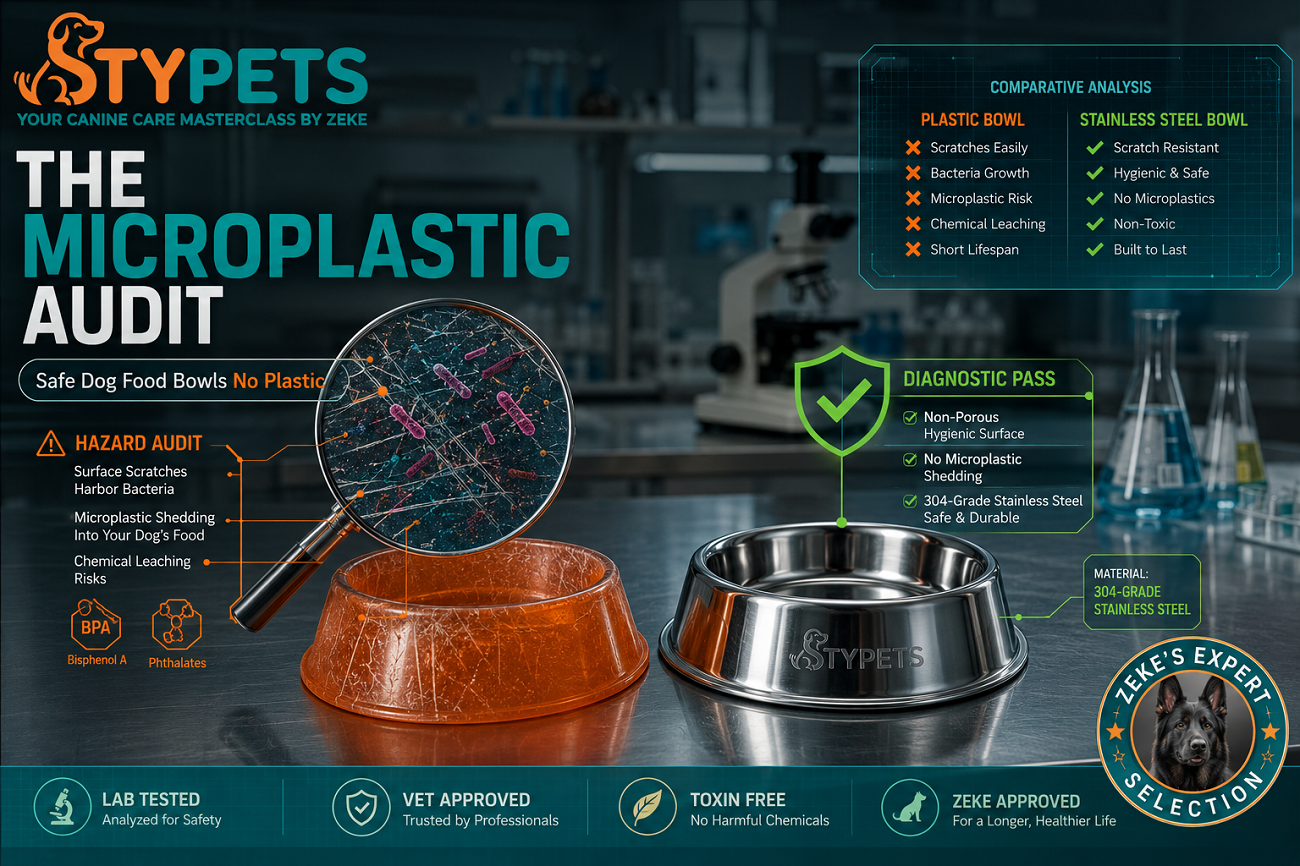
When plastic is exposed to heat (like a dishwasher) or acidic fats (found in high-quality Dog Food), the chemical bonds begin to degrade. This release includes Bisphenol A (BPA) and phthalates—compounds known as endocrine disruptors. These chemicals mimic hormones, potentially interfering with your dog’s thyroid function, reproductive health, and metabolic ROI. Endocrine disruption often manifests as skin issues or systemic inflammation.
-
Microplastic Shedding: Every time your dog’s tongue or a cleaning brush scrapes the bowl, microscopic particles are released.
-
Porous Surfaces: Plastic is porous. Even after washing, it can trap bacteria that lead to “canine acne” and systemic inflammation.
2. Auditing the Alternatives: Finding Safe Dog Food Bowls No Plastic
If we are moving away from plastic, we must evaluate the “ROI” of alternative materials. Not all non-plastic bowls are created equal. To find truly safe dog food bowls no plastic, we look at three primary categories: Stainless Steel, Ceramic, and Glass.
304-Grade Stainless Steel: The Industrial Standard
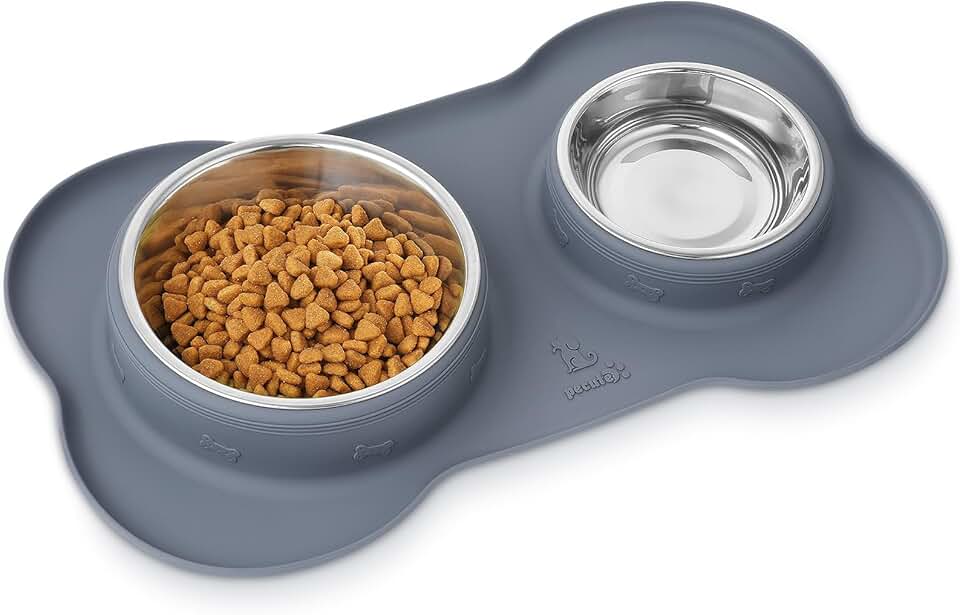
Stainless steel is the gold standard for safe dog food bowls no plastic. However, you must look for “304” or “18/8” food-grade certification.
-
Pros: Non-porous, virtually indestructible, and dishwasher safe.
-
Cons: Cheap versions can contain heavy metals like lead or mercury.
-
The STYPETS Audit: Always perform a “magnet test.” While not foolproof, high-quality 304 steel is generally non-magnetic.
Human-Grade Ceramic: The Lead Warning
Ceramic is an excellent choice for safe dog food bowls no plastic, provided the glaze is lead-free.
-
Pros: Heavy and stable, preventing “bowl chasing” during meals.
-
Cons: Cracks can harbor bacteria. Many imported ceramics use glazes that leach lead or cadmium into Dog Food.
-
The Verdict: Only purchase ceramics labeled “Prop 65 Compliant” or “Human-Grade.”
3. The Biofilm Audit: Preventing the “Pink Slime”
Even with safe dog food bowls no plastic, you must manage the “Serratia marcescens”—the pink slime often found in dog dishes.
-
The Daily Mechanical Scrub: A simple rinse isn’t enough. Biofilm is a protective matrix for bacteria.
-
Temperature Control: Wash bowls in water exceeding 140°F (60°C) to denature bacterial proteins.
-
Drying Protocol: Bacteria thrive in moisture. Always air-dry bowls completely before the next feeding of Dog Food.
4. Engineering the Feeding Station: Height and Stability
Selecting safe dog food bowls no plastic is the first step; the second is the mechanical setup. For large breeds, the angle of consumption affects digestion and joint stress.
To Elevate or Not?
While elevated feeders were once recommended for all large dogs, recent studies suggest they may increase the risk of Bloat (GDV) in certain breeds.
-
The STYPETS Rule: If your dog is a “gulper,” use a slow-feeder insert (ensure it is silicone or stainless steel, not plastic).
-
Stability: Ensure the bowl stand is made of powder-coated metal or bamboo, avoiding plastic trays that collect stagnant water.
5. Red Flags: 3 Ingredients in Your Bowl Setup to Avoid
As an expert in canine management, I have a zero-tolerance policy for these three environmental toxins:
-
Red Flag #1: Melamine. Often mistaken for ceramic, melamine is a nitrogen-rich plastic that can leach into wet Dog Food.
-
Red Flag #2: Painted Interior Bowls. Never buy a bowl with a decorative pattern inside the feeding area. The paint can chip and contain toxic pigments.
-
Red Flag #3: Plastic Slow-Feeders. Many owners use plastic “maze” bowls to slow down eating. These are high-friction environments that shed microplastics at an accelerated rate.
Avoiding environmental toxins is a core pillar of our 15-year life span engineering protocol.
6. The Water Bowl Variable: The 24/7 Exposure Risk
While your dog eats for minutes, they hydrate throughout the entire day. This makes the water bowl the most consistent source of microplastic exposure. In our audit of safe dog food bowls no plastic, we prioritize the water vessel for its cumulative impact on the endocrine system.
-
Stagnation and Heat: Water sitting in a plastic bowl, especially in sunlight, accelerates the leaching of chemical stabilizers.
-
The STYPETS Standard: We recommend 304-grade stainless steel or lead-free glass for water. If you use a fountain, ensure the pump housing is the only plastic component and that it is filtered through high-grade carbon to catch particulates.
7. Analyzing “Slow Feeders”: The Friction Problem
Many owners use plastic “maze” bowls to prevent bloat. However, from an engineering perspective, these are high-friction environments. As your dog’s tongue forcefully navigates these plastic ridges, the mechanical abrasion increases microplastic shedding directly into the Dog Food.
-
The Alternative: To maintain the benefits of slow feeding without the toxin risk, look for safe dog food bowls no plastic that utilize stainless steel center-posts or heavy ceramic ridges.
-
Pro Tip: A large, smooth river stone (sanitized and larger than the dog’s throat) placed in a stainless steel bowl acts as a natural, non-leaching obstacle.
8. The Travel Gear Audit: Silicone vs. Plastic
For the urban dog on the move, collapsible bowls are a necessity. While these are often marketed as “Safe,” we must distinguish between medical-grade silicone and cheap TPE (Thermoplastic Elastomers).
-
Silicone is the Compromise: Food-grade silicone is not “plastic,” as it is derived from silica rather than petroleum. It is significantly more stable under heat and less likely to leach.
-
The Travel Protocol: Use silicone for hydration on the go, but revert to your primary safe dog food bowls no plastic for all structured meals at home. Never leave Dog Food sitting in a collapsible bowl for extended periods.
9. Secondary Infrastructure: The Feeding Mat Audit
The environment surrounding the bowl is the next layer of our Microplastic Audit. Most feeding mats are made of low-grade PVC or recycled rubber, which off-gas VOCs (Volatile Organic Compounds) directly where your dog is breathing while eating.
-
The Inhalation Risk: Dogs have their noses inches from these mats. If a mat has a strong “plastic” smell, it is off-gassing phthalates.
-
The STYPETS Setup: Swap synthetic mats for food-grade silicone, natural cork, or easy-to-clean tempered glass mats. This ensures the entire feeding station supports the goal of safe dog food bowls no plastic.
10. Measuring the ROI: Long-Term Biological Resilience
Switching to safe dog food bowls no plastic isn’t about immediate visible changes; it’s about reducing the “Total Toxic Burden.” By removing endocrine disruptors from the daily routine, you are protecting the integrity of the thyroid and adrenal glands.
-
Systemic Success: Owners who switch often report a reduction in “chin acne” and chronic lip-fold dermatitis within 30 days.
-
The 15-Year Baseline: Every chemical you remove from the “Input” side of your dog’s life increases the potential for longevity on the “Output” side. Choosing safe dog food bowls no plastic is a foundational step in engineering a resilient, toxin-free dog.
FAQ: Mastering Safe Dog Food Bowls No Plastic
1. Is “BPA-Free” plastic safe for my dog? No. Most BPA-free plastics use BPS (Bisphenol S), which may be just as disruptive to the endocrine system. For true safety, stick to safe dog food bowls no plastic.
2. Can I use a human glass bowl for my dog? Yes, tempered glass (like Pyrex) is incredibly safe and non-porous. However, it is prone to breaking if your dog is an aggressive eater.
3. How often should I replace a stainless steel bowl? If you use high-quality 304-grade steel, it can last a lifetime. Replace it only if you see deep scratches or signs of rust. FDA Guidelines on Food Contact Substances
4. Why does my dog have bumps on their chin? This is often “canine acne,” caused by bacteria trapped in the pores of plastic bowls. Switching to safe dog food bowls no plastic usually resolves this within weeks.
5. Are silicone bowls safe? Food-grade silicone is a better alternative than plastic, but it is less durable than steel. It is acceptable for travel but not recommended for a primary feeding station.
6. Does the dishwasher kill all bacteria in dog bowls? Mostly, but only if the dishwasher hits the high-heat sanitization cycle. Hand-scrubbing to break the biofilm before dishwashing is the STYPETS gold standard.
7. Should I worry about the water bowl too? Yes. Your dog drinks more often than they eat. The water bowl should follow the same safe dog food bowls no plastic protocol.
Conclusion: The Professional Verdict on Canine Vessels
Engineering a 15-year life for your dog requires auditing every variable. You wouldn’t eat off a scratched, chemical-leaching plate; your dog shouldn’t either. By transitioning to safe dog food bowls no plastic, you are removing a hidden source of systemic inflammation and hormonal disruption.
The “Gold Standard” is 304-grade stainless steel. It is a one-time investment in your dog’s biological infrastructure. Remember: the quality of the Dog Food only matters if the vessel delivering it is untainted.