
Most dog owners accept a 10 to 12-year life expectancy as an unchangeable law of nature. At STYPETS, we view that timeline as a baseline that is meant to be challenged. While genetics provides the source code, environmental engineering provides the operating system. If you are researching how to increase dog lifespan, you must stop viewing health as the absence of disease and start viewing it as the optimization of biological infrastructure. This Masterclass provides a technical blueprint for how to increase dog lifespan by engineering a 15-year biological baseline.
1. The Genetic Audit: Understanding Your Dog Breed’s “Ceiling”
Every Dog Breed comes with a unique set of biological predispositions. To understand how to increase dog lifespan, you must first perform a “Loci Audit” of your dog’s specific lineage. Whether you are managing a large breed prone to cardiac stress or a small breed with joint sensitivity, the fundamental question of how to increase dog lifespan always begins with proactive breed diagnostics.
Understanding breed-specific risks allows for proactive mitigation. For example, if your breed is prone to Hemangiosarcoma (like Golden Retrievers) or Mitral Valve Disease (like Cavalier King Charles Spaniels), your engineering strategy must prioritize cardiac support and antioxidant loading from year one, not year ten.
Proactive Breed Diagnostics
-
Large Breeds: Focus on skeletal integrity and cardiac output.
-
Brachycephalic Breeds: Focus on respiratory efficiency and temperature regulation.
-
Working Breeds: Focus on joint lubrication and oxidative stress management.
2. Nutritional Engineering: Bioavailability and Glycemic Control
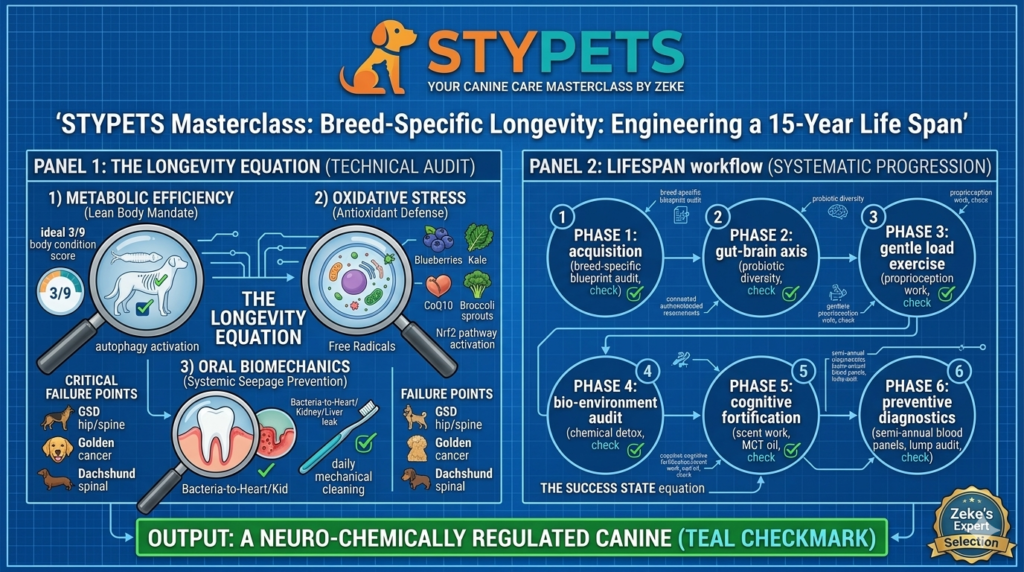
If you want to know the most immediate lever for how to increase dog lifespan, you must look at metabolic management. Obesity is the single greatest “Longevity Thief.” To master how to increase dog lifespan, we prioritize Bioavailability and Glycemic Control over generic caloric counts. Promoting autophagy—the body’s natural process of clearing out damaged cells—is a core requirement for anyone looking at how to increase dog lifespan through nutritional engineering.
The Maillard Reaction and Metabolic ROI
Standard high-heat processed kibble often contains “denatured” proteins. This heat processing triggers the Maillard Reaction, creating Advanced Glycation End-products (AGEs). AGEs are linked to systemic inflammation and accelerated cellular aging.
-
The Blueprint: Prioritize high-bioavailability proteins.
-
The 25% Rule: Replacing just 25% of processed kibble with fresh, whole foods (like blueberries, sardines, or steamed broccoli) can drastically reduce systemic oxidative stress.
Caloric Restriction and Autophagy
Studies (such as the landmark Purina Lifespan Study) have proven that dogs kept at a slightly “lean” body condition live significantly longer. Keeping your dog at a 4/9 on the Body Condition Score (BCS) promotes autophagy—the body’s natural process of clearing out damaged cells.
3. Kinetic Maintenance: Protecting the Structural Frame
You cannot engineer a long life if your dog’s heart is being constantly showered with bacteria from the gums. When considering how to increase dog lifespan, we must address the “Bacterial Shower Breach.” Chronic periodontal disease keeps the immune system in a state of hyper-alert, which is a direct contradiction to our goal of how to increase dog lifespan. Daily mechanical disruption of biofilm is a non-negotiable step in the STYPETS blueprint for how to increase dog lifespan.
The Low-Impact Audit
As a dog ages, high-impact activities (like jumping for frisbees) create “micro-fractures” in the cartilage. To increase lifespan, pivot to “Kinetic Maintenance” strategies:
-
Hydrotherapy: Zero-gravity resistance training to maintain muscle mass without joint stress.
-
Proprioception Exercises: Using balance discs to engage the small stabilizing muscles.
-
Targeted Supplementation: Integrating Glucosamine, Chondroitin, and Omega-3 Fatty Acids (EPA/DHA) before clinical signs of arthritis appear.
4. The Oral-Systemic : Protecting the Internal Organs
As established in our previous audits, the mouth is the gateway to the heart and kidneys. You cannot engineer a long life if your dog’s heart is being constantly showered with bacteria from the gums.
Chronic periodontal disease keeps the immune system in a state of “Hyper-Alert.” This constant inflammatory load exhausts the body’s resources, leading to premature organ failure.
-
Actionable Step: Daily mechanical disruption of biofilm (brushing) is non-negotiable for the 15-year goal.
5. Environmental Toxin Audit: Cortisol and Chemical Exposure
The modern home is often a “Toxicological Minefield” for a creature that lives six inches from the floor. To increase your dog’s lifespan, you must audit their sensory and chemical environment.
Reducing the Chemical Load
-
Floor Cleaners: Switch to vinegar-based or enzymatic cleaners. Dogs absorb floor chemicals through their paw pads and ingest them through grooming.
-
Lawn Chemicals: Eliminate pesticides and herbicides (specifically Glyphosate), which have been linked to significantly higher rates of canine lymphoma.
Cortisol Management
Chronic stress is a biological corrosive. A dog living in a high-entropy, high-noise environment has a baseline cortisol level that suppresses the immune system. Engineering a “Safe Zone” for your dog to achieve deep REM sleep is critical for cellular repair.
6. Advanced Diagnostics: The “Early Detection” Blueprint
The 15-year dog is rarely the one who “never got sick.” It is the dog whose owner caught the “Bio-Signals” of disease before they became catastrophic.
The STYPETS Bi-Annual Audit
Once your dog reaches 50% of their breed-expected lifespan, shift to bi-annual blood panels.
-
SDMA Testing: Detects kidney decline far earlier than standard Creatinine tests.
-
ProBNP: A cardiac biomarker that can signal heart stress before a murmur is audible.
-
Full Abdominal Ultrasound: A “Safety Scan” to catch internal growths while they are still operably manageable.
7. The Biological Value (BV) Scale: Not All Proteins are Created Equal
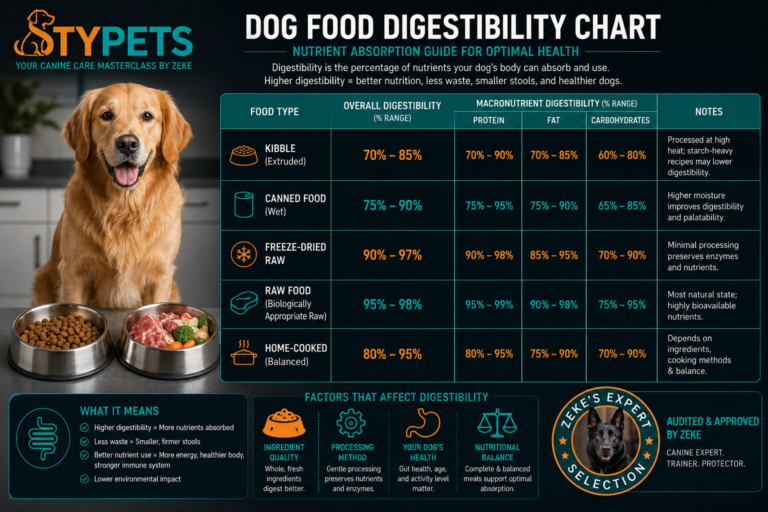
In canine engineering, we measure protein quality through Biological Value (BV). This is a scale that represents the percentage of a given nutrient that is actually absorbed and utilized by the body.
The BV Rankings
-
Eggs ($100\%$): The gold standard. Eggs have the most complete amino acid profile for a canine processor.
-
Fish/Muscle Meats ($92\% – 94\%$): High-efficiency fuel with minimal metabolic waste.
-
Organ Meats ($90\%$): The “Multivitamin” of the canine world, packed with high-bioavailability minerals.
-
Plant Proteins (Soy/Corn/Wheat) ($40\% – 60\%$): These are “Low-ROI” fillers. While they technically raise the “Crude Protein” number on the bag, the dog’s digestive tract struggles to break down the cellulose walls to access them.
The Audit: If your dog’s food relies on “Pea Protein” or “Corn Gluten Meal” to hit its $30\%$ protein target, you are paying for filler that the dog cannot use. You are overworking the kidneys to filter out the nitrogenous waste of low-quality protein.
8. Enzyme Exhaustion: The Pancreas Under Pressure
The canine pancreas is a finite biological resource. It produces Protease, Amylase, and Lipase to break down food. However, the modern canine diet is heavily weighted toward starches and carbohydrates—macronutrients the canine “operating system” was never designed to process in bulk.
The Starch Strain
When a dog eats a diet that is $40\%$ or $50\%$ carbohydrate (the average for most dry kibble), the pancreas must overproduce Amylase to keep up.
-
The Result: Enzyme Exhaustion. Over time, this chronic overproduction leads to sub-clinical pancreatitis and digestive inefficiency.
-
The STYPETS Fix: Integrate “Live Enzyme Anchors” like raw green tripe or unpasteurized goat milk. These provide exogenous enzymes that assist in the “Mechanical Breakdown” of food, giving the pancreas a much-needed break.
9. The Poop Audit: Measuring Metabolic Waste
At STYPETS, we aren’t afraid to look at the “Output” to judge the “Input.” Your dog’s stool is a real-time diagnostic report of their nutritional efficiency.
Visual Cues of Low ROI
-
Massive Volume: If the volume of waste is nearly equal to the volume of food ingested, the bioavailability is near zero.
-
Soft/Yellow Stool: This indicates “Rapid Transit” and malabsorption. The food is moving through the small intestine too fast for the body to extract nutrients.
-
Chronic Flatulence: This is a bio-signal of “Hindgut Fermentation.” It means undigested proteins or fibers are rotting in the colon because they weren’t absorbed in the small intestine.
The Goal: High-ROI nutrition results in small, firm, dark stools that decompose quickly. This indicates that the body has successfully “harvested” nearly all the biological value from the meal.
10. The Maillard Reaction: How Heat Destroys ROI
Even the best ingredients can be ruined by poor manufacturing. Most kibble is produced through “Extrusion”—a high-heat, high-pressure process.
Chemical Alteration
When proteins and sugars are heated together, they undergo the Maillard Reaction. This creates cross-linked proteins that are chemically “locked.“
-
The Biological Cost: These cross-linked proteins are resistant to digestive enzymes. They pass through the small intestine unabsorbed and enter the colon, where they feed “Bad” bacteria and trigger systemic inflammation.
-
The Audit: Look for “Gently Cooked,” “Air-Dried,” or “Freeze-Dried” labels. These processes preserve the molecular integrity of the protein, ensuring a $90\%+$ Metabolic ROI.
11. Engineering the “Bowl Additive” Strategy
You don’t have to switch to a $100\%$ raw diet to improve your dog’s ROI. You can “Engineer” a standard kibble bowl to increase its biological value by applying the STYPETS 80/20 Rule.
The Top 3 ROI Boosters:
-
The Hydration Hack: Kibble is dehydrated. To process it, the dog’s body must pull moisture from its own organs. Add bone broth or water to “pre-hydrate” the food.
-
The Omega Anchor: Most kibble fats are rancid by the time the bag is opened. Add a fresh, high-quality Omega-3 (Sardines or Salmon Oil) to protect the brain and coat.
-
The Fermented Shield: Add a tablespoon of plain kefir or fermented vegetables to provide the probiotics necessary for a healthy “Microbiome Infrastructure.“
FAQ: Engineering Canine Longevity How to Increase Dog Lifespan
1. How can I increase my dog’s lifespan starting today? Start by auditing their weight. Reducing a dog’s weight to a “lean” condition is the most scientifically proven way to add years to their life.
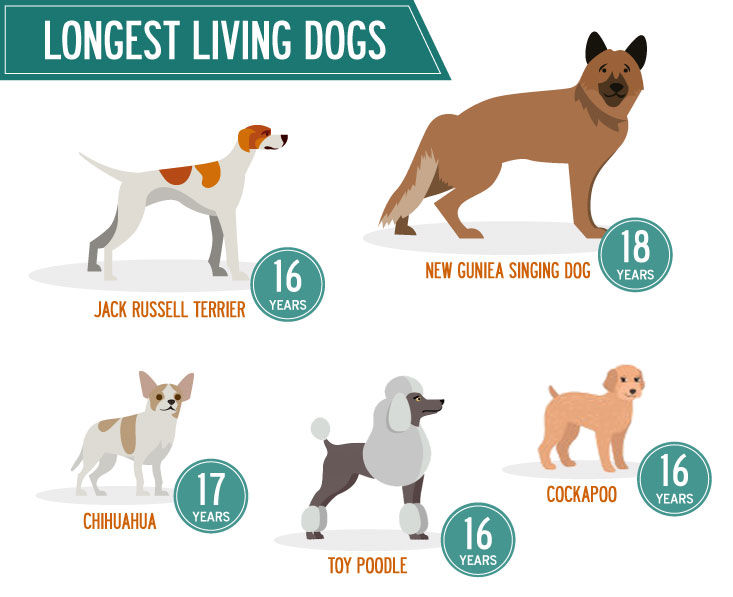
2. Does dog breed really affect how long they live? Yes. Smaller breeds generally live longer due to a slower growth rate and lower metabolic strain. However, regardless of the dog breed, environmental optimization can push them past the average.
3. What supplements actually help with longevity? Focus on anti-inflammatories and antioxidants: Omega-3 fish oils, CoQ10 for heart health, and Curcumin for systemic inflammation.
4. Can exercise shorten a dog’s life? High-impact, repetitive stress (like jumping on hard surfaces) can cause joint failure, which leads to a sedentary lifestyle and obesity. Switch to low-impact, high-resistance exercises as they age.
5. How often should I take my senior dog to the vet? For “Longevity Engineering,” we recommend a full diagnostic audit every 6 months once the dog is a senior.
6. Is grain-free food better for lifespan? Not necessarily. The focus should be on Bioavailability and avoiding high-glycemic fillers (like corn or potatoes) that spike insulin and cause inflammation.
7. Does dental cleaning really prevent heart disease? Yes. Removing the source of chronic bacteremia protects the heart valves from endocarditis and the kidneys from interstitial nephritis.
Conclusion: The 15-Year Commitment
Engineering a 15-year life is the cumulative result of a thousand small biological audits. From weight management to chemical exposure, knowing how to increase dog lifespan requires a shift from reactive care to proactive engineering. At STYPETS, we believe that when you master the biological variables, you finally crack the code on how to increase dog lifespan. The “Genetic Lottery” no longer controls the outcome; your commitment to how to increase dog lifespan does.
At STYPETS, we believe that every dog deserves an owner who treats their health with the precision of an engineer. When you master the biological variables, the “Genetic Lottery” no longer controls the outcome. You do.
External Authoritative Sources to Mention: