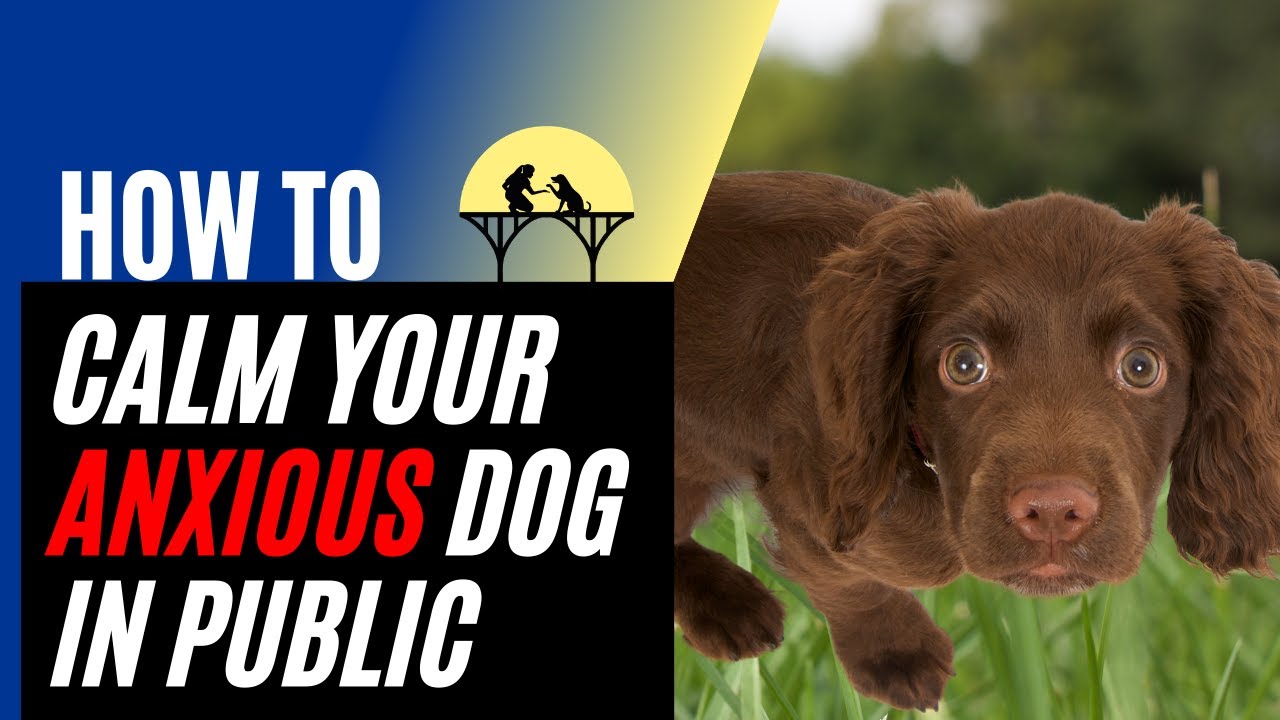
Does your dog lose it at the sight of another dog across the street? Does a knock at the door send them spiraling into a barking frenzy? You are not alone — and more importantly, it is not your dog’s fault.
Learning how to calm an anxious dog is one of the most searched and most misunderstood topics in dog training. Most owners try suppressing the reaction. Experts change the emotion behind it. That difference is everything. Welcome to counter-conditioning — the science of replacing fear with calm, one repetition at a time.
What Is Counter-Conditioning? A Clear Definition
Counter-conditioning is a behavioral science technique that changes how a dog feels about a trigger — not just how they respond to it.
Here is the core principle: every emotion is paired with a physiological state. Fear triggers cortisol. Safety triggers oxytocin and dopamine. Counter-conditioning systematically pairs the anxiety trigger (another dog, a stranger, a loud noise) with something the dog genuinely loves — usually a high-value treat — until the trigger itself predicts the reward.
The result? The brain rewires. The dog sees the trigger and feels anticipation instead of dread.
This is not distraction. This is not suppression. This is neurological change at the associative memory level.
Understanding Dog Reactivity: Why Your Dog Reacts the Way They Do
Before you can learn how to calm an anxious dog, you need to understand what is happening inside their nervous system when they react.
The Fight-or-Flight Circuit
When your dog encounters a trigger — another dog, a bicycle, a uniformed stranger — their amygdala fires before the prefrontal cortex (the reasoning brain) even activates. This means the reaction is faster than rational thought. You cannot think your dog out of this. You have to condition a new pathway.
Reactivity vs. Aggression: Know the Difference
These two terms are often confused, but they require different interventions.
- Reactivity = an emotional overreaction driven by fear, frustration, or overstimulation
- Aggression = intent to cause harm, often with a specific target
Most anxious, barking, lunging dogs are reactive — not aggressive. Understanding this shifts your approach from correction to compassionate reconditioning.
The 6 Signs Your Dog Is Anxious Before the Explosion
Catching anxiety early is critical. Dogs telegraph their emotional state long before they bark or lunge. Watch for these pre-reactive signals:
- Whale eye — the whites of the eyes become visible
- Lip licking or yawning when there is no food or tiredness present
- Stiff body posture and a high, rigid tail
- Scanning behavior — constant head movement, unable to settle
- Panting without heat or exercise
- Piloerection — hackles raised along the spine
Recognizing these signals gives you a 3 to 10 second window to intervene before your dog crosses their threshold. This window is where counter-conditioning does its most powerful work.
The Counter-Conditioning Protocol: Step-by-Step
This is the actionable core of your training. Follow this sequence precisely. Skipping steps stalls progress.
Step 1 — Identify the Threshold Distance
Your dog’s threshold is the distance at which they notice a trigger but can still take food and respond to you. It might be 50 feet from another dog. It might be 100. Start there — never closer.
Working below threshold is the non-negotiable foundation of this protocol.
Step 2 — Select Your High-Value Reward
The treat must be extraordinary. This is not kibble territory. Use:
- Boiled chicken
- Freeze-dried liver
- Real cheese cubes
- Sardines (low sodium)
The reward needs to outcompete the emotional state. A dry biscuit will not override a cortisol spike.
Step 3 — Run the “See It / Feed It” Drill
This is the foundational counter-conditioning exercise:
- Find a spot where you can see the trigger at threshold distance
- The moment your dog sees the trigger, mark with a calm “yes” and immediately deliver a treat
- If the dog looks away from the trigger to take the treat — that is a win
- Repeat for 3 to 5 minutes, then end the session before fatigue sets in
The timing is everything: trigger appears → mark → treat. Not trigger appears → dog reacts → treat. That is conditioning a reaction, not calmness.
Step 4 — Decrease Distance Incrementally (Over Days, Not Hours)
Only move closer when your dog is consistently calm and food-motivated at the current distance. A 10% decrease in distance per session is a safe rule. Rushing this phase causes regression.
Step 5 — Introduce Duration and Distractions
Once your dog stays calm at close range, begin extending the duration of exposure. Then introduce other variables: different triggers, different environments, different times of day. This is called proofing — and it is what makes training stick in real life.
Common Counter-Conditioning Mistakes That Slow Results
Even committed owners make these errors. Eliminate them from your training practice:
- Training above threshold — if your dog is already barking, the learning window is closed
- Inconsistent timing — the treat must arrive within 1 to 2 seconds of the trigger appearing
- Using low-value rewards — the treat must genuinely excite the dog in that moment
- Ending sessions on a failure — always engineer a final success, even if it means increasing distance
- Training too long — sessions over 10 minutes produce diminishing returns; short, frequent sessions win
How Long Does Counter-Conditioning Take?
Realistic expectations matter. This is not a two-session fix. Most dogs show measurable improvement within 3 to 6 weeks of consistent daily practice. Full integration — where the dog is reliably calm around their primary triggers — can take 3 to 6 months depending on the severity and history of the anxiety.
The variable that matters most is consistency, not speed. Two 5-minute sessions every day outperform a single 30-minute session on weekends.
When to Bring in a Professional
Counter-conditioning is a powerful tool, but some cases need professional support:
- History of bite incidents (even small nips)
- Reactivity that is worsening despite consistent training
- Multi-dog household conflicts
- Severe generalized anxiety that prevents baseline functioning
In these cases, consult a Certified Applied Animal Behaviorist (CAAB) or a veterinary behaviorist. Some anxiety cases also respond well to short-term behavioral medication in combination with training — this is a conversation worth having with your vet.
Frequently Asked Questions: How to Calm an Anxious Dog
Q1: How long does counter-conditioning take to work in dogs?
Most dogs show noticeable improvement within 3 to 6 weeks of consistent daily sessions. Full desensitization to a major trigger typically takes 3 to 6 months. Progress depends on the severity of anxiety, the dog’s history, and the consistency of training.
Q2: Can counter-conditioning work for all types of dog anxiety?
Counter-conditioning is effective for most fear-based and frustration-based reactivity. It is particularly successful with trigger-specific anxiety such as fear of other dogs, strangers, or noises. Generalized anxiety disorders may require veterinary behavioral support alongside training.
Q3: What is the difference between counter-conditioning and desensitization?
Desensitization reduces the emotional intensity of a trigger through gradual, repeated low-level exposure. Counter-conditioning changes the emotional association from negative to positive using rewards. Most effective protocols combine both — this is called DS/CC (desensitization and counter-conditioning).
Q4: Is counter-conditioning safe for puppies?
Yes — it is one of the safest and most effective early interventions. Starting between 8 and 16 weeks during the socialization window produces the fastest results. However, the protocol is equally valid for adult and senior dogs.
Q5: What treats work best for counter-conditioning an anxious dog?
High-value, soft, and fast-to-consume treats work best. Good options include boiled chicken, freeze-dried liver, string cheese, or canned fish. The treat must be genuinely motivating in the presence of the stressor — if your dog won’t eat it near the trigger, find something better.
Q6: Can I use counter-conditioning without professional help?
Many owners successfully implement basic counter-conditioning at home, especially for mild reactivity. If your dog has a bite history, is escalating despite training, or shows signs of clinical anxiety, professional help is strongly recommended.
Q7: Does punishment stop a reactive dog faster?
No — and it makes the problem worse. Punishing a fearful dog confirms that the trigger leads to bad outcomes (pain, fear, correction). This deepens the negative emotional association and suppresses warning signals without resolving the underlying anxiety. Evidence-based behavior science consistently favors reward-based approaches for reactive dogs.
Q8: Should I use a muzzle during counter-conditioning sessions?
A properly fitted basket muzzle is a responsible safety tool, especially in public or with a dog that has a bite history. It does not interfere with counter-conditioning and can reduce owner anxiety, which in turn helps the dog stay calmer. Introduce the muzzle using the same positive association principles before using it during sessions.
Conclusion: Calm Is a Skill, Not a Personality Trait
Your anxious dog is not broken. They are operating on a nervous system that has learned the world is unpredictable and threatening. Counter-conditioning does not change your dog’s personality — it updates their operating system.
The science is clear, the steps are proven, and the outcome is achievable. What it requires from you is patience, consistency, and the willingness to meet your dog at the edge of their comfort zone — not beyond it.
Start today with one 5-minute session at threshold distance. That is the beginning of a fundamentally different life for your dog.
- “The ‘Off-Switch’ Protocol: Engineering Impulse Control in High-Drive Dogs“
- “Sensory Processing: Creating a Low-Stress Environment for Reactive Dogs“
- “The Soundscape Audit: Using Bio-Acoustics to Cure Separation Anxiety“
- “Recall Mastery: How to Get Your Dog to Come Every Single Time“
- American Veterinary Society of Animal Behavior (AVSAB) — position statements on punishment-free training
- Journal of Veterinary Behavior — peer-reviewed research on counter-conditioning outcomes