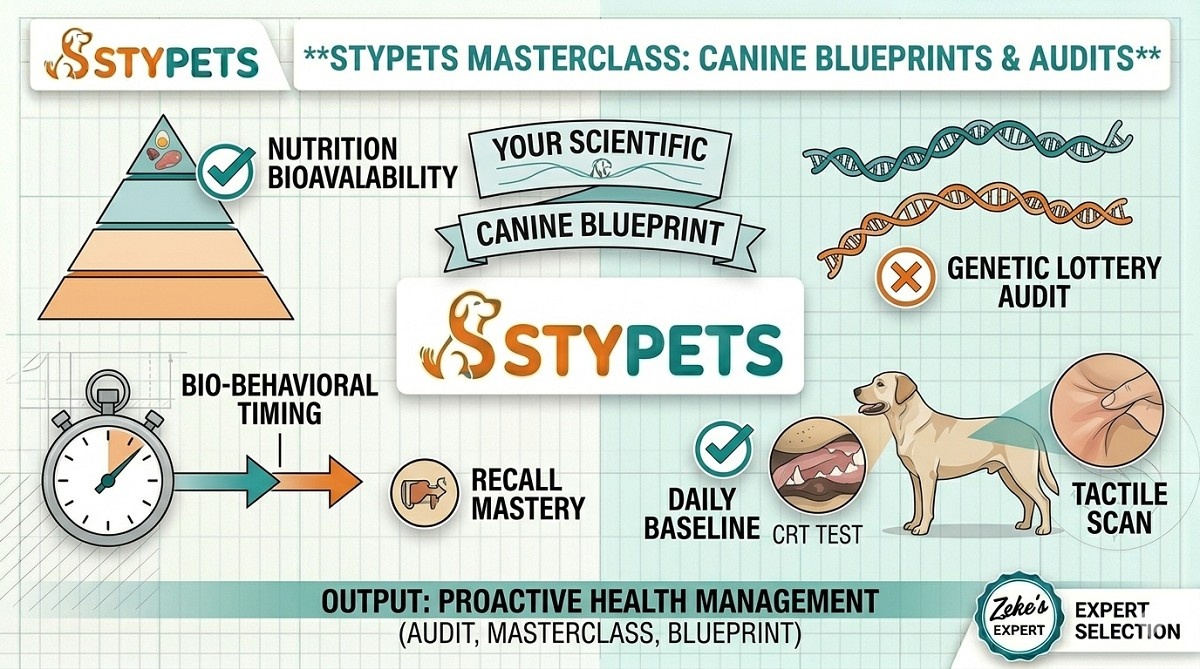
In the world of professional canine management, there is a fundamental law: Biological anomalies are easier to manage when they are detected in the “pre-symptomatic” phase. Most owners wait for their dog to limp, vomit, or stop eating before they realize something is wrong. By that point, the body is already in a state of high-level inflammatory response or crisis. At STYPETS, we don’t wait for the crisis. We utilize the Daily Baseline Protocol—a high-level, 10-minute professional audit designed to detect the subtle “bio-signals” of illness before they manifest as emergencies.
This is not a replacement for a veterinarian. This is a Professional Audit that equips you with the data your veterinarian needs to save your dog’s life.
1. The Concept of the “Baseline”
Before you can identify an anomaly, you must know what “normal” looks like for your specific dog. Every dog has a unique physiological signature. A heart rate that is normal for a sighthound might be tachycardic for a Mastiff.
The STYPETS Rule: You are not looking for “perfect” health; you are looking for deviation from the baseline. If you perform this 10-minute scan every morning, you become the world’s leading expert on your dog’s specific biology.
2. The Ocular and Nasal Audit (Minutes 0–2)
The head is the dashboard of the canine nervous system and hydration levels.
Ocular (Eyes)
-
The Scan: Are the pupils equal in size? Is the sclera (the white part) clear, or is there injection (redness)?
-
Bio-Signal: Cloudiness can indicate early-stage cataracts or uveitis. Yellowing (Jaundice) in the sclera is a critical indicator of liver dysfunction.
-
Discharge: Clear tearing is often environmental. Thick, yellow, or green discharge is a signal of a bacterial load or an immune system under stress.
Nasal (Nose)
-
The Scan: Is the nose moist or crusty?
-
The Myth: A dry nose doesn’t always mean a fever, but a unilateral discharge (coming from only one nostril) is a major red flag for a foreign body or a nasal tumor.
3. The Oral Audit: Gums and CRT (Minutes 2–4)
The mouth provides a direct window into the circulatory system and oxygenation.
Capillary Refill Time (CRT)
This is a professional diagnostic tool you can do at home. Press your finger firmly against the dog’s gums until they turn white. Let go.
-
Normal: The color should return to pink in under 2 seconds.
-
The Red Flag: If it takes 3–4 seconds, the dog is likely dehydrated or in early-stage shock.
Gum Color Chart
| Color | Meaning | Action |
| Bubblegum Pink | Normal/Healthy Oxygenation | Continue Protocol |
| Pale/White | Anemia, Shock, or Internal Bleeding | Emergency Vet |
| Brick Red | Sepsis, Heatstroke, or Severe Infection | Emergency Vet |
| Blue/Purple | Cyanosis (Lack of Oxygen) | Emergency Vet |
4. Tactile Palpation: The “Lump & Bump” Sweep (Minutes 4–7)
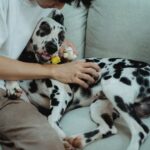
Using your hands to “scan” the body is the only way to find masses that are hidden by the coat.
Skin Turgor (The Hydration Test)
Gently pinch the skin between the shoulder blades and let go.
-
Baseline: The skin snaps back instantly.
-
Deviation: If the skin “tents” or slides back slowly, the dog is suffering from clinical dehydration.
Lymph Node Check
Focus on the submandibular (under the jaw) and popliteal (behind the knee) nodes. They should feel like small, firm beans. If they feel like golf balls, the immune system is actively fighting a high-level pathogen or cellular abnormality.
5. Mobility and Joint Integrity (Minutes 7–9)
A professional audit includes a “Gait Analysis.” Watch your dog as they move toward their food bowl or the door.
-
The “Weight-Shift”: Does the dog favor one side when standing?
-
The “Bunny Hop”: Are the back legs moving together? This is often a sign of hip dysplasia or stifle (knee) discomfort.
-
Paw Audit: Check between the toes. 80% of “allergies” are actually localized infections or foreign bodies (like foxtails) lodged in the webbing of the paw.
6. The Vital Metrics (Minute 10)
If your audit has flagged an anomaly, you must take the “Vitals.”
-
Temperature: Normal is 38.3°C to 39.2°C (101°F to 102.5°F). Anything over 39.4°C (103°F) is a fever.
-
Heart Rate: Small dogs (100–140 bpm), Large dogs (60–100 bpm).
-
Respiratory Rate: 10–35 breaths per minute at rest. Pantonly (heavy breathing while resting in a cool room) is a major bio-signal of pain or cardiac stress.
7. The STYPETS Health Log
A scan is only useful if the data is recorded. Keep a small notebook or a digital file.
-
Entry: “April 14: CRT 1.5s, Gums pink, Lungs clear, Left popliteal node slightly reactive. Will monitor.”
This log turns you from a “pet owner” into a Canine Health Manager. When you walk into a vet clinic with six months of baseline data, you change the diagnostic game.
Zeke’s Final Word:
“Your dog cannot speak, but their biology is shouting at you every single day. If you don’t take the time to learn the language of their baseline, you’ll always be one step behind the illness. Spend the 10 minutes. It’s the cheapest insurance policy you’ll ever buy.” — Zeke