Bringing a new dog into your home is one of life’s greatest joys, but for the animal, it’s an entry into a world of alien textures, enticing scents, and—hidden behind every baseboard—potential hazards. Most owners stop at moving the shoes; a professional stops only when they have analyzed the home through the eyes of a scavenger.
In this STYPETS Masterclass, we are moving beyond the basics. We are applying a professional “Hazard Analysis” to every room in your house. Whether you are bringing home a curious puppy or a senior rescue, your home should be a sanctuary, not a series of emergency vet visits waiting to happen.
1. The Scavenger’s Eye: The Psychology of Pet-Proofing
Before you pick up a single child-safety lock, you must change your perspective. A dog does not see a “living room”; they see a vertical landscape of heights, a collection of “mouth-available” objects, and a series of chemical puzzles.
Professionals use the Ground-Level Audit. Get down on your hands and knees in every room. At 15 inches off the ground, a loose thread on a rug isn’t just a blemish—it’s a surgical obstruction risk. A dangling power cord isn’t just a trip hazard—it’s a teething toy with 120 volts of electricity.
2. The Kitchen: The High-Stakes Zone
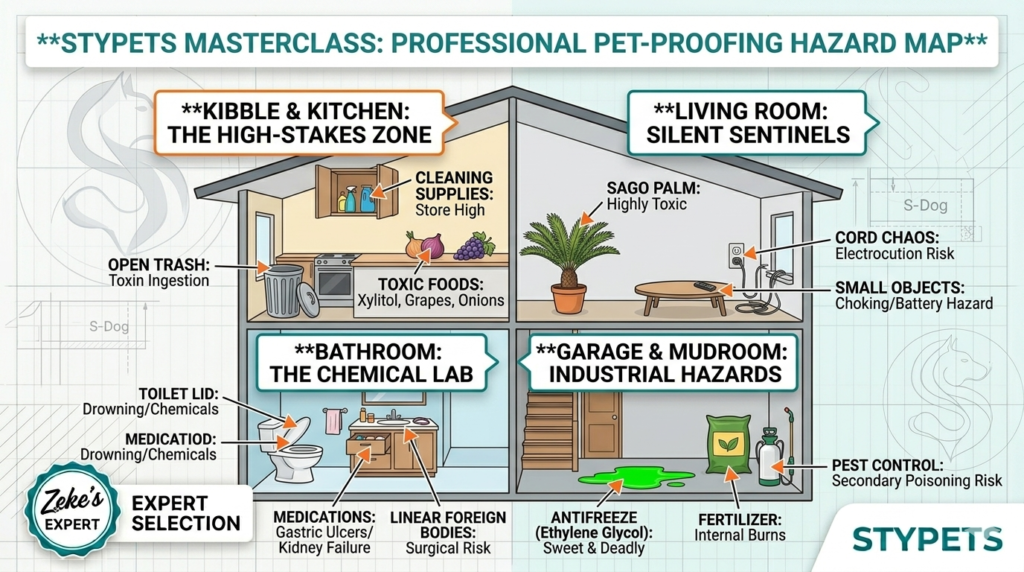
The kitchen is the most dangerous room in the house. It is the center of “High-Value” scents and the highest density of toxic substances.
The Trash Can Protocol
A standard lid is an invitation, not a barrier. Dogs are remarkably skilled at using their snouts as levers.
-
The Pro Fix: Use a step-on bin with a locking lid or, better yet, house the trash inside a reinforced pull-out cabinet with a child-safety latch.
-
The Risk: Beyond the obvious “garbage gut” (gastroenteritis), the hidden killers are Xylitol (birch sugar) found in gum wrappers, coffee grounds (caffeine toxicity), and cooked bones that splinter.
The Invisible Toxins
Most owners know about chocolate, but a professional-grade pet-proofing audit looks for:
-
Grapes and Raisins: Can cause acute kidney failure.
-
Onions and Garlic: Cause oxidative damage to red blood cells.
-
Macadamia Nuts: Lead to temporary paralysis and tremors.
-
Cleaning Supplies: Store all “under-sink” chemicals in overhead cabinets. Even “natural” cleaners can contain essential oils like tea tree or citrus that are irritants to dogs.
3. The Living Room: Comfort and Curiosities
Your place of relaxation is often where the most “passive” hazards reside.
Electrical Management
“Chew-proofing” cords is non-negotiable for puppies.
-
The Pro Fix: Use split-loom tubing or PVC pipe to encase cords. Never leave chargers plugged in when not in use; the small current draw is enough to cause a localized burn if the “live” end is mouthed.
The Botany of Danger
Indoor plants add life to a room, but many are “Silent Sentinels” of toxicity.
-
Sago Palms: Extremely toxic; even a single seed can be fatal.
-
Aloe Vera: Causes severe vomiting and diarrhea.
-
Philodendrons: Contain calcium oxalate crystals that cause immediate mouth swelling and respiratory distress.
-
The Strategy: Only keep verified pet-safe plants like Spider Plants or Boston Ferns within reach.
4. The Bathroom: The Chemical Lab
The bathroom is often overlooked, but it contains small, swallowable items that lead to expensive surgeries.
-
The Toilet Lid Rule: Keep it down. Not just for hygiene, but to prevent the ingestion of cleaning “drop-in” tablets and to prevent small puppies from falling in and drowning.
-
Medication Management: A single dropped ibuprofen or naproxen pill can cause a gastric ulcer or kidney failure in a dog. Always close the sink drain before opening a pill bottle.
-
The “Floss and Hair Tie” Trap: These are “linear foreign bodies.” If swallowed, they can “saw” through the intestines as the body tries to pass them. They must be stored in drawers, never on the counter.
5. The Garage and Mudroom: The Industrial Hazards
If your dog has access to the garage, the stakes are at their highest.
The Antifreeze Warning
Ethylene glycol (antifreeze) has a sweet taste that dogs love. However, a single tablespoon can be fatal to a medium-sized dog.
-
The Pro Fix: Switch to Propylene Glycol-based antifreeze (labeled “Pet-Safe”) and always pressure-wash any spills on the driveway immediately.
Pest Control
Never use “bait stations” for rats or ants in areas your dog can access. Even if the dog can’t get into the station, “secondary poisoning” (eating a rodent that has consumed the poison) is a real risk.
6. The Bedroom: The Fabric and Fragrance Zone
-
Laundry Piles: Socks and underwear are the #1 cause of intestinal blockages. To a dog, these carry your strongest scent and are comforting to mouth and swallow. Keep laundry in a tall, lidded hamper.
-
Essential Oil Diffusers: Many oils (Cinnamon, Citrus, Peppermint) can cause respiratory irritation or even liver damage when diffused in small, unventilated rooms with dogs.
7. Creating the “Yes” Space
Professional pet-proofing isn’t just about saying “No.” It’s about creating a “Safe Haven” where the answer is always Yes.
-
The Crate/Den: A high-quality crate is a dog’s bedroom. It should be a place where they are 100% safe from the environment.
-
Engagement Stations: If you take away the “illegal” chew toys (shoes/cords), you must provide “legal” ones. Stuffed frozen KONGs and safe chews prevent the boredom that leads to “exploratory destruction.”