In the professional management of a canine athlete, the mouth is often the most overlooked biological gateway. Most owners view dental health as a cosmetic issue—something to be solved with a “breath treat” or an occasional cleaning. However, at STYPETS, we view the oral cavity as a critical entry point for systemic pathogens.
When dental hygiene fails, the result isn’t just “bad breath” (halitosis); it is the beginning of a Bacterial Infiltration that targets the most vital organs in the dog’s body: the heart and the kidneys. This Masterclass decodes the Oral-Systemic Link, providing you with the scientific blueprint to protect your dog’s internal infrastructure from the ground up.
1. The Biofilm Breach: From Plaque to Pathogen
Dental disease starts with the formation of a Biofilm. Within hours of eating, bacteria colonize the surface of the teeth, creating a sticky film known as plaque. If this plaque is not mechanically removed, it mineralizes into Calculus (tartar) within 48 to 72 hours.
The Periodontal Pocket
Once tartar builds up along the gumline, it begins to irritate the gingiva, causing inflammation (gingivitis). This inflammation creates “pockets” where the gum detaches from the tooth. These pockets are anaerobic (low-oxygen) environments where the most dangerous, gram-negative bacteria thrive.
-
The Inflammatory Loop: The body’s immune system sends white blood cells to the gums to fight the bacteria. This chronic state of inflammation doesn’t just damage the gums; it causes the tissue to become hyper-permeable.
-
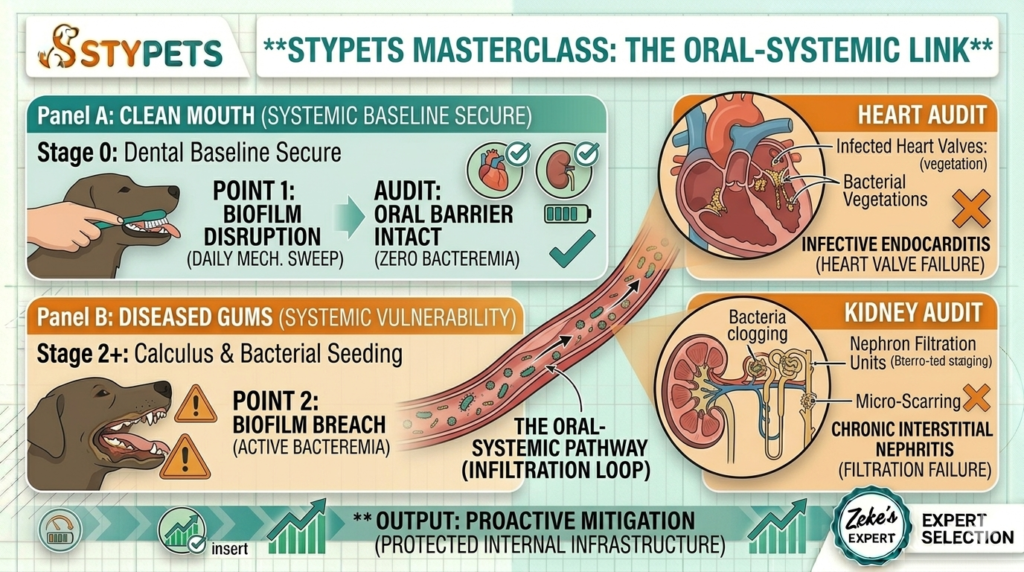
The Breach: In a healthy mouth, the “Gingival Barrier” keeps bacteria out of the bloodstream. In a diseased mouth, every chew or bark causes a “micro-hemorrhage,” allowing bacteria to enter the circulatory system.
2. Heart Mechanics: The Threat of Endocarditis
Once bacteria from the mouth enter the bloodstream (a condition called Bacteremia), they travel directly to the heart. The canine heart is a high-pressure pump, and its valves must be perfectly smooth to function.
Bacterial Seeding
The bacteria most commonly associated with dental disease (Porphyromonas) have a specific affinity for heart tissue. They “seed” themselves onto the heart valves, creating small, infected growths called Vegetations.
-
The Biological Result: This leads to Infective Endocarditis. As these vegetations grow, they prevent the heart valves from closing properly, leading to heart murmurs, decreased cardiac output, and eventually, congestive heart failure.
-
The STYPETS Audit: If your dog has Stage 2 periodontal disease or higher, their heart is effectively being “showered” with bacteria daily. This isn’t a future risk; it is a current mechanical strain.
3. Kidney Infrastructure: The Filtration Failure
The kidneys are the body’s primary filtration system, processing the entire blood volume every few minutes. They are composed of thousands of delicate filters called Nephrons.
Chronic Interstitial Nephritis
When the blood is constantly seeded with oral bacteria, the kidneys must filter them out. This process causes “micro-scarring” within the nephrons.
-
The Filtration Trap: The bacteria and the inflammatory by-products they produce clog the delicate filtration membrane. Over time, this leads to Chronic Interstitial Nephritis—the irreversible loss of kidney function.
-
The Silent Decline: Because the kidneys have a massive “reserve capacity,” symptoms of failure (increased thirst/urination) don’t appear until 75% of the kidney function is already gone. By the time you notice the symptoms, the “Oral-Systemic Link” has already done permanent damage to the biological infrastructure.
4. The 4-Stage Dental Audit
To manage this risk, you must perform a weekly audit of your dog’s oral health. Stop looking at the front teeth and start checking the Upper Fourth Premolars (the large “carnassial” teeth in the back).
| Stage | Visual Cues | Systemic Risk | STYPETS Status |
| Stage 0 | White teeth, coral-pink gums. | Zero | Baseline Secure |
| Stage 1 | Thin red line at the gumline (Gingivitis). | Low | Audit Required |
| Stage 2 | Visible tartar, minor gum recession. | Active Bacteremia | Immediate Intervention |
| Stage 3 | Bleeding gums, heavy tartar, odor. | Organ Damage Likely | Surgical Rescue Only |
5. Engineering the Solution: The STYPETS Dental Protocol
A professional dental strategy is multi-modal. You cannot rely on a single “chew” to protect the heart and kidneys.
I. The Mechanical Sweep (Daily Brushing)
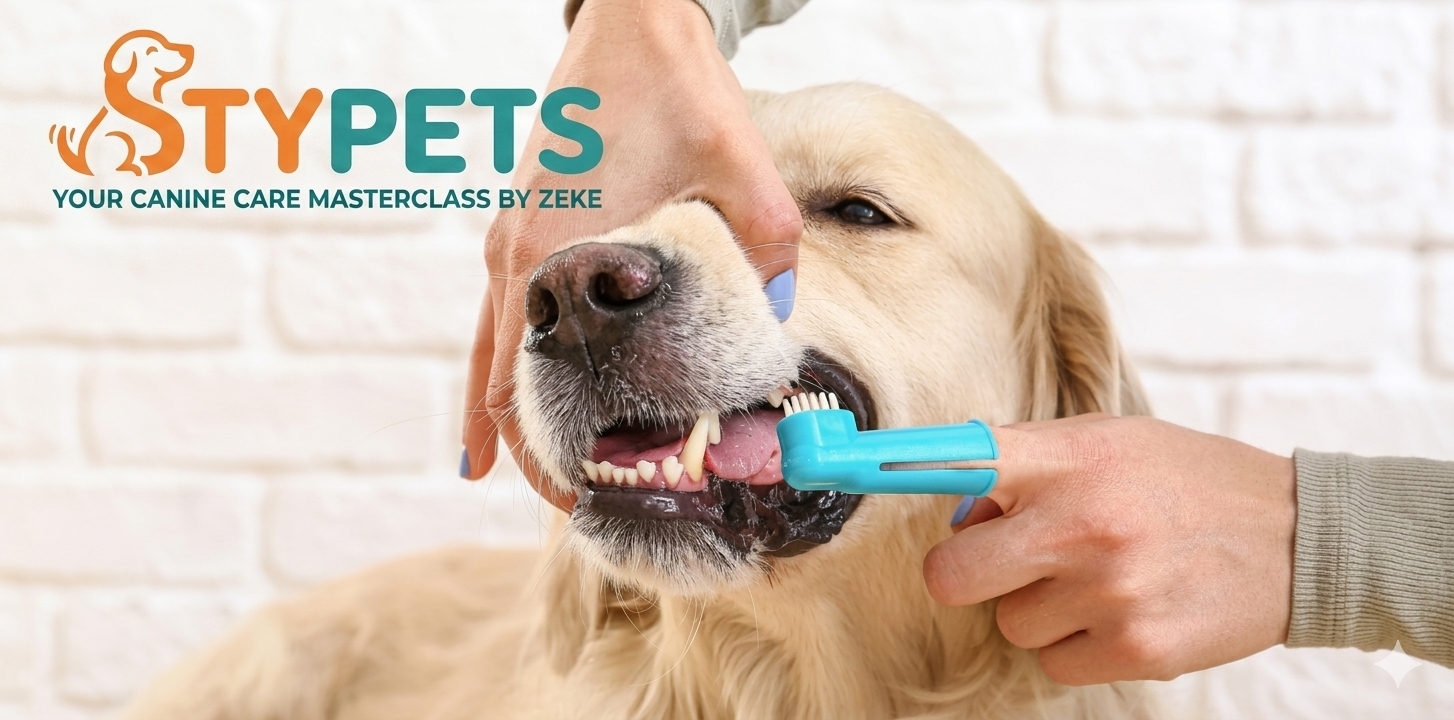
Brushing is the only way to disrupt the Biofilm before it mineralizes.
-
The Tool: Use a soft-bristled brush and enzymatic toothpaste.
-
The Technique: Focus on the outside of the upper teeth. The dog’s tongue handles much of the inside cleaning; your job is to audit the “high-friction” zones where tartar accumulates.
II. Bio-Mechanical Cleaning (Raw Bones)
In nature, dogs clean their teeth by shearing meat and connective tissue off bones.
-
The Blueprint: Feed raw, “meaty” bones (like turkey necks or lamb ribs) twice a week.
-
The Physics: The action of the tooth sinking into the raw meat acts as a natural “floss,” scraping the plaque away mechanically without the heat-damage of processed dental chews.
III. Water Additives and Probiotics
You can utilize “Chemical Intervention” to lower the bacterial load in the mouth.
-
The Audit: Look for water additives that contain Zinc Gluconate or specific oral probiotics (S. salivarius). These prevent bacteria from adhering to the tooth surface, disrupting the Biofilm formation.
IV. Professional Veterinary Cleanings
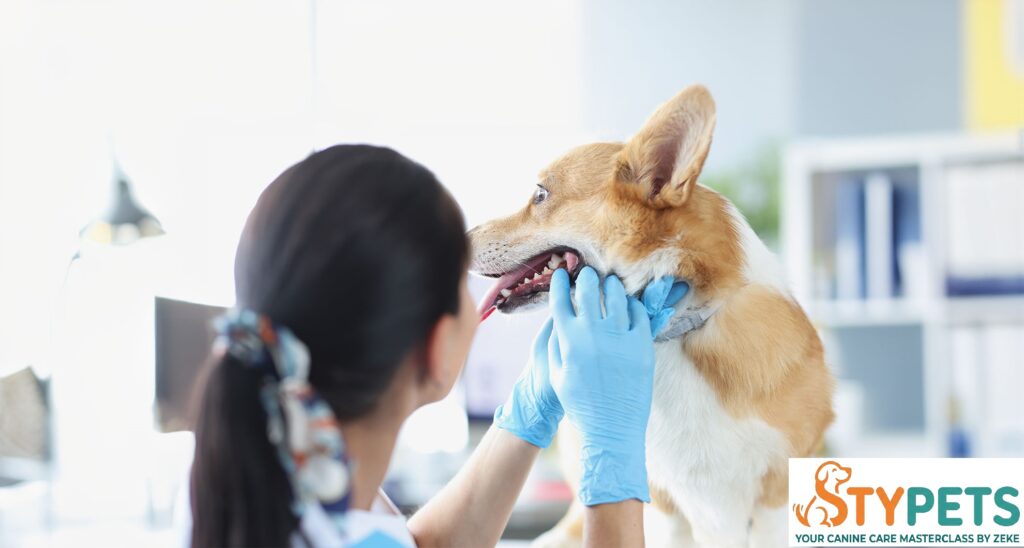
If your audit reveals Stage 2 or 3 disease, home care is no longer enough. You need a professional “Sub-Gingival Scaling” under anesthesia. This is the only way to clean the “Periodontal Pockets” where the systemic damage begins.