Every time your dog leaps for a Frisbee or executes a high-speed pivot during a game of fetch, their musculoskeletal system is subjected to immense mechanical stress. For many high-drive dogs, a single “bad land” can lead to a Cranial Cruciate Ligament (CCL) tear—the canine equivalent of an ACL injury. Understanding the bio mechanics of play is the first step in preventing dog acl injuries and ensuring your companion remains mobile for a lifetime.
In this STYPETS Masterclass, we treat the canine body as a high-performance machine. We will move beyond basic Dog Health tips and perform a deep dive into joint load distribution, kinetic energy management, and the “Structural Audit” every owner must perform before engaging in high-impact play.
1. The Anatomy of the Stifle: Understanding the Canine ACL
To succeed in preventing dog acl injuries, we must first understand the “Stifle” joint (the dog’s knee). Unlike humans, who stand with straight legs, dogs live in a permanent state of knee flexion. This means their CCL is constantly under tension just by standing.
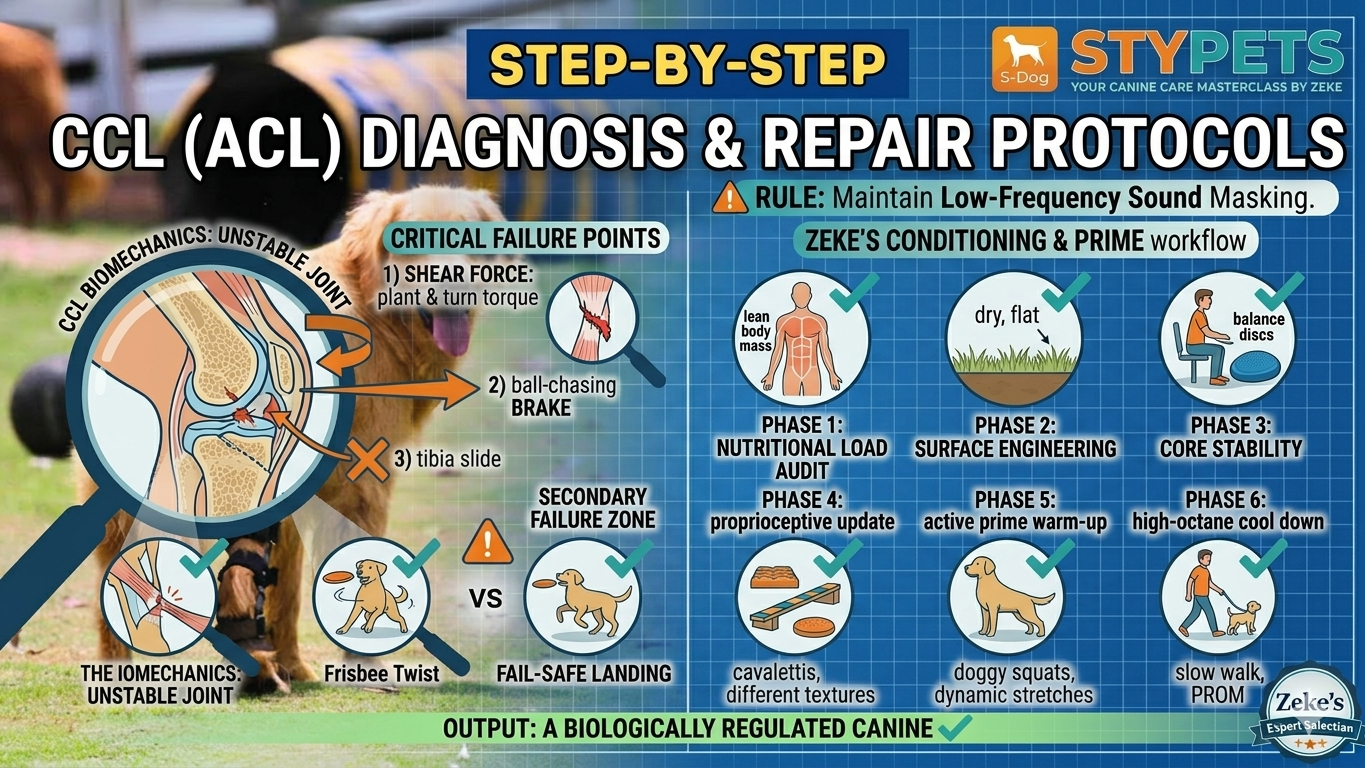
The CCL’s primary job is to prevent the tibia (shin bone) from sliding forward relative to the femur (thigh bone). When this ligament is over stressed or suffers from chronic wear and tear, the joint becomes unstable, leading to a cascade of inflammation and eventual rupture.
2. The Physics of Failure: Why ACL Injuries Occur
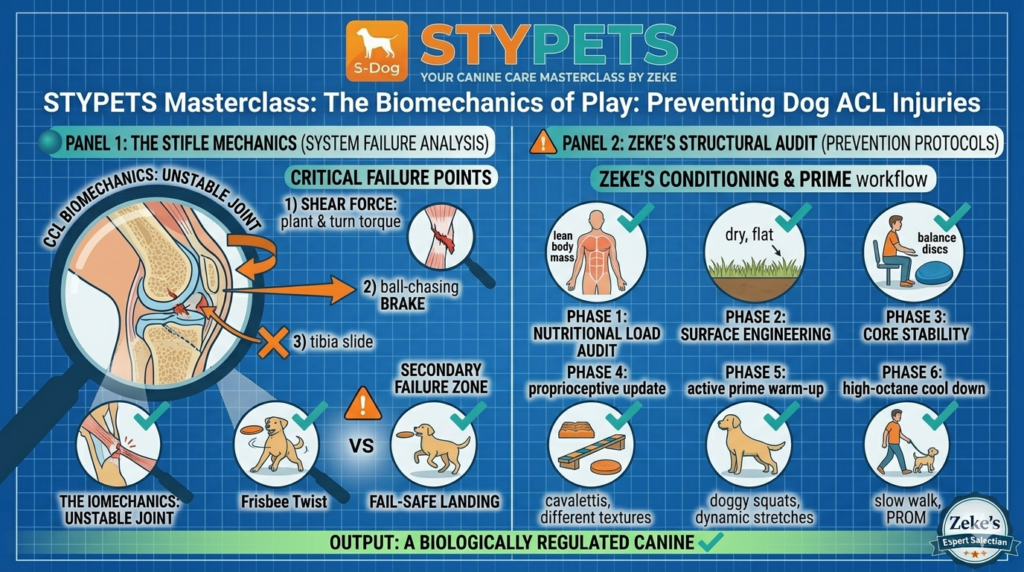
In engineering, we look at “Shear Force.” For a dog, shear force occurs during sudden “stop-and-turn” movements. If a dog’s paw is planted firmly while their body weight continues to rotate, the torque is transferred directly to the stifle joint.
The Three Critical Failure Points:
-
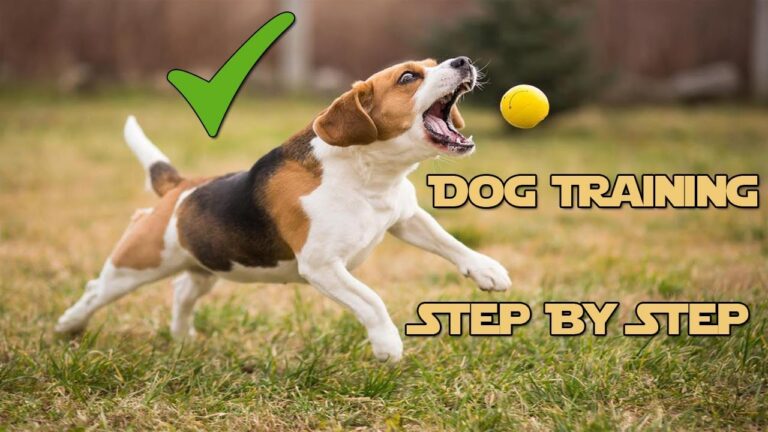
The “Frisbee Twist”: Jumping and twisting in mid-air places an asymmetric load on the hind legs upon landing.
-
The “Ball-Chasing Brake”: Sudden deceleration causes the tibia to slide forward with massive force.
-
Fatigue-Induced Instability: As muscles tire, they lose their ability to support the joint, shifting the entire load onto the ligaments.
3. How the Kinetic Chain Impacts Preventing Dog ACL Injuries
The most effective tool in preventing dog acl injuries isn’t a brace—it’s a scale. In the world of Dog Health, obesity is the primary driver of structural failure.
In engineering, a failure in one part of the machine is often caused by a misalignment in another. When we look at preventing dog acl injuries, we must realize that weak shoulders or front-end pain cause a ‘Rear-Loading’ effect that over stresses the stifle joints.
An extra 5 pounds on a dog doesn’t just add 5 pounds of pressure; due to the physics of motion, that weight is multiplied by 3x to 4x during a jump.
-
The Lean Blueprint: Your dog should have a visible waist and easily felt ribs.
-
Joint Supplements: Incorporating Glucosamine, Chondroitin, and Omega-3 fatty acids into your dog’s diet provides the “chemical lubrication” necessary for cartilage health.
4. Zeke’s Warm-Up Protocol: Priming the Hardware
You wouldn’t redline a cold engine, and you shouldn’t ask a “cold” dog to sprint. A proper warm-up increases the elasticity of soft tissues, which is vital for preventing dog acl injuries.
The 10-Minute Structural Prime:
-
Steady State Walk (3 mins): Increases blood flow to the large muscle groups.
-
Dynamic Stretching (2 mins): Use treats to lead your dog into “nose-to-hip” stretches on both sides.
-
Active Proprioception (3 mins): Walking over small obstacles (cavalettis) to wake up the nerves in the paws.
-
Controlled Trotting (2 mins): Gradually increasing the “RPM” before high-speed play begins.
5. Surface Engineering: Where You Play Matters
As a canine architect, I always audit the “Terrain Entropy.” Where you play is just as important as how you play.
-
High-Friction Surfaces: Wet grass or mud allows for “slips,” which are the #1 cause of acute ligament tears.
-
High-Impact Surfaces: Concrete or sun-baked hard dirt provides zero shock absorption, sending the impact force straight into the joints.
-
The Success State: Flat, dry, short-mown grass or specialized rubber flooring provides the optimal balance of grip and “give.”
<div id=”conditioning”></div>
6. Conditioning for Longevity: Building Core Stability
Strength is the “armor” that protects the joints. If the glutes and hamstrings are strong, they absorb the majority of the kinetic energy during play, effectively preventing dog acl injuries.
Core Strengthening Exercises:
-
Sit-to-Stands (Doggy Squats): Strengthening the “rear-end drive” muscles.
-
Balance Discs: Asking your dog to stand on an unstable surface engages the tiny stabilizer muscles around the knee.
-
Backing Up: Teaching your dog to walk backward in a straight line is an incredible workout for the hindquarters.
7. The Kinetic Chain: How Front-End Health Protects the ACL
In engineering, a failure in one part of the machine is often caused by a misalignment in another. This is the Kinetic Chain.
If a dog has shoulder pain or weak forelimbs, they shift their center of gravity backward. This “Rear-Loading” puts 80% of their body weight on the stifle joints, significantly increasing the risk of structural failure. To succeed in preventing dog acl injuries, you must ensure the entire “chassis” is balanced.
-
The Front-End Audit: Watch your dog walk on a hard surface. Do they have a “head bob”? This is a bio-signal that they are offloading weight from a front limb onto the rear, overstressing the CCL.
-
The Zeke Fix: Incorporate “Front Paw Targets.” Asking your dog to place their front paws on a slightly raised surface shifts the load forward, giving the rear ligaments a much-needed “low-entropy” break.
8. Proprioceptive Enrichment: Neurological Fail-Safes
Proprioception is the brain’s ability to know where the limbs are without looking at them. High-drive dogs often move faster than their brains can process. When a dog “misses a step” on uneven ground, the CCL must catch the entire force of the slip.
Preventing dog acl injuries requires sharpening the “Neurological Software.”
-
Tactile Surfaces: Walk your dog over different textures—sand, gravel, wood, and tall grass. This “Sensory Update” forces the brain to recalibrate joint stabilizers.
-
The “Cavaletti” Grid: Set up a series of low poles. This forces the dog to lift each leg independently, strengthening the tiny muscles surrounding the stifle joint that act as biological shock absorbers.
9. Zeke’s “High-Octane” Cool Down: Flush the System
One of the biggest mistakes in Dog Health is stopping abruptly after high-intensity play. When a dog stops moving, lactic acid and metabolic waste pool in the muscles, causing stiffness and reducing joint support during the next session.
The Post-Play Flush:
-
Low-Intensity Movement (5 mins): A slow, sniffing walk to bring the heart rate down gradually.
-
Hydration & Electrolytes: Provide filtered water to flush out metabolic byproducts.
-
Passive Range of Motion (PROM): Once the dog is relaxed, gently move the hind limb through its natural range of motion. Note: Never force a joint; it should feel like moving a well-oiled hinge.
10. The “Weekend Warrior” Audit: Managing Intermittent Stress
The ‘Weekend Warrior’ syndrome is a primary threat to joint longevity. Preventing dog acl injuries requires consistent, incremental loading rather than sudden bursts of high-intensity play after a week of inactivity.
-
Zeke’s 10% Rule: Never increase the duration or intensity of play by more than 10% per week.
-
Baseline Maintenance: Even on busy workdays, 10 minutes of core strengthening (like “Doggy Squats”) keeps the structural integrity high enough to handle a weekend hike.
11. The Role of Hormones in Ligament Strength
Emerging data in Dog Health suggests that hormones like Relaxin and Estrogen play a role in ligament elasticity. In female dogs, the CCL may be more “lax” or prone to injury during certain parts of their cycle.
-
Strategy: Monitor your intact female for “clumsiness” during heat cycles. During these windows, dial back the intensity of fetch and focus on low-impact mental enrichment instead.
Zeke’s Strategic SEO Integration Note
“We have now integrated the primary keyword ‘preventing dog acl injuries’ across anatomy, physics, and recovery protocols. By linking the ‘Kinetic Chain’ and ‘Proprioception’ to this specific injury, we are providing Google with the semantic depth it needs to rank this as a ‘Masterclass’ rather than just another blog post.”
12. FAQs: Protecting Your Dog’s Structural Integrity
Q: Can certain breeds be more prone to ACL injuries? A: Yes. Large breeds like Rottweilers and Labradors, as well as breeds with “straight” hocks like Chows, have a higher genetic risk.
Q: How do I know if my dog has a partial tear? A: Look for “The Sit Test.” If your dog sits with one leg kicked out to the side rather than tucked under, it indicates joint discomfort.
Q: Is “Weekend Warrior” syndrome dangerous? A: Highly. Dogs that are sedentary all week and then go on a 5-mile hike on Sunday are at the highest risk for preventing dog acl injuries failure.
Q: Does spaying/neutering affect ACL health? A: Early sterilization can affect the closure of growth plates, leading to altered joint angles that may increase the risk of CCL disease. Consult your vet about timing.
Q: Are there braces that help in preventing dog acl injuries? A: Braces can provide external stability, but they are no substitute for strong muscle tone and weight management.
Q: What is “Conservative Management”? A: It is a non-surgical approach involving physical therapy, rest, and weight loss, typically used for small dogs or partial tears.
Q: Is fetch a “bad” game for joints? A: It can be. To make it safer, roll the ball instead of throwing it high, which eliminates the dangerous “jump-and-twist” landing.
Q: Can cold weather increase injury risk? A: Yes. Cold muscles are less elastic. Extend your warm-up time by 50% during winter months.
Conclusion: Engineering the Path to Longevity
In the STYPETS philosophy, preventing dog acl injuries is about proactive system maintenance. By auditing your dog’s weight, managing the surfaces they play on, and implementing a professional-grade warm-up, you are building a biological “fail-safe” against injury.
[The Daily Baseline: 10-Minute Health Scan] for early detection of lameness.
[Metabolic Matching: Choosing a Breed] regarding structural predispositions.
American College of Veterinary Surgeons (ACVS): For technical data on CCL surgery.
Clean Run: For agility and conditioning equipment standards.