In the professional audit of canine nutrition, we must move past the emotional marketing of “freshness” or “convenience” and look strictly at the Biological Value (BV) of the inputs. At STYPETS, we don’t care about the picture of the farm on the bag; we care about the molecular integrity of the protein and its ability to cross the intestinal wall.
This is the Bioavailability Battle. It is a scientific comparison between a diet of raw, species-appropriate whole foods and a diet of high-heat, ultra-processed kibble. To understand which is superior, we must audit the manufacturing process and the enzymatic cost of digestion.
1. Defining Bioavailability and Biological Value
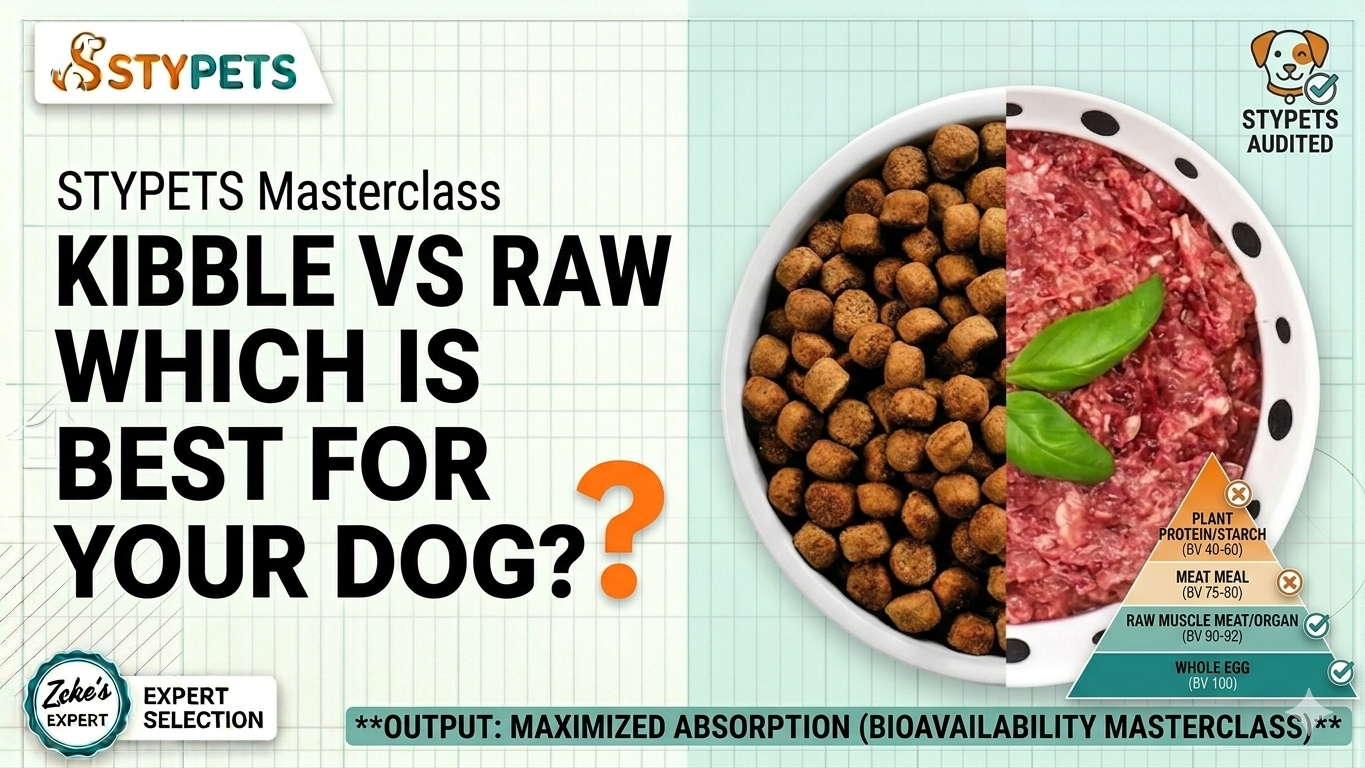
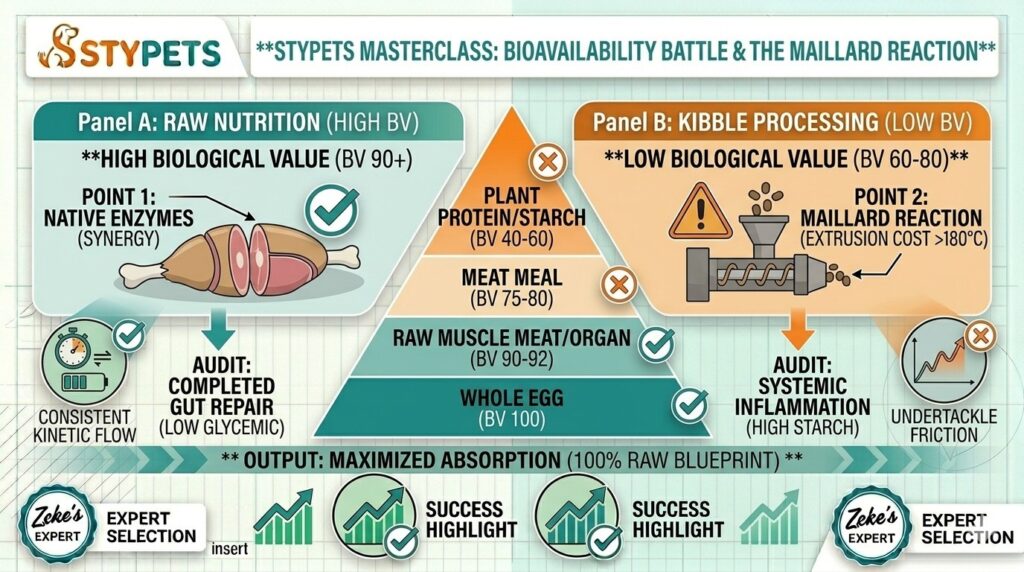
Bioavailability is the proportion of a nutrient that is digested, absorbed, and utilized for metabolic functions. Biological Value (BV) is the measure of how efficiently the body can utilize a specific protein source.
-
Egg: BV 100 (The gold standard for absorption).
-
Fresh Muscle Meat: BV 90–92.
-
Meat Meal (Kibble base): BV 75–80.
-
Plant Proteins (Corn/Wheat/Soy): BV 40–60.
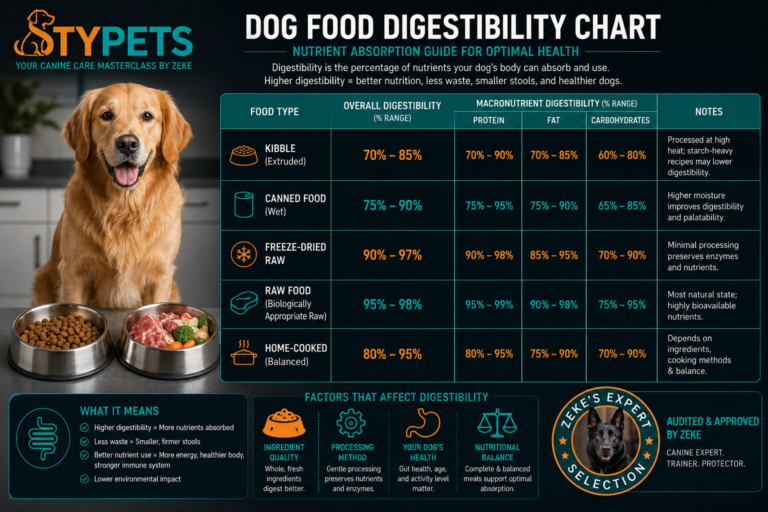
When you feed a food with low bioavailability, the dog’s system must work twice as hard to extract half the nutrients. The “waste” you pick up in the yard is the literal physical manifestation of low bioavailability.
2. The Extrusion Cost: Why Kibble is “Dead” Food
Most kibble is manufactured through a process called Extrusion. This involves mixing ingredients into a dough, which is then subjected to extreme pressure and temperatures exceeding 180°C (350°F).
The Maillard Reaction
From a scientific lens, high heat triggers the Maillard Reaction—a chemical reaction between amino acids and reducing sugars. While this makes food “smell” better to a dog, it creates Advanced Glycation End-products (AGEs).
-
The Problem: AGEs are pro-inflammatory compounds linked to chronic kidney disease, diabetes, and cellular aging.
-
The Nutrient Loss: High heat denatures proteins, essentially “unfolding” the amino acid chains and making them harder for canine enzymes to lock onto.
The Synthetic Add-Back
Because the heat destroys most naturally occurring vitamins and enzymes, manufacturers must “add back” a synthetic vitamin pack. These are often inorganic minerals (like copper sulfate or zinc oxide) which have a much lower bioavailability than the chelated minerals found in whole, raw foods.
3. Raw Nutrition: The Enzymatic Advantage
A raw diet is built on the principle of Nutrient Synergy. In a raw state, the enzymes required to digest the food are often present within the food itself.
The Gastric pH Factor
A dog fed a raw, high-protein diet maintains a highly acidic stomach (pH 1.0–2.0). This acidity is a biological requirement for:
-
Pathogen Defense: Neutralizing bacteria like Salmonella or E. coli before they reach the small intestine.
-
Mineral Ionization: Breaking down raw bone into absorbable calcium and phosphorus.
When a dog eats high-carb kibble, their stomach pH rises to 4.0 or 5.0. This “alkaline shift” makes the dog less efficient at digesting protein and more susceptible to bacterial overgrowth.
4. The Starch Blueprint: Hidden Inflammation
The biggest differentiator in the Bioavailability Battle isn’t just the meat—it’s the Starch Binder. To make a kibble “nugget” hold its shape, it requires a significant percentage of carbohydrates (starch), usually between 30% and 60%.
Dogs have no biological requirement for carbohydrates.
-
The Insulin Loop: Chronic intake of high-starch kibble keeps the dog in a state of constant insulin spikes.
-
Metabolic Load: The pancreas must overproduce amylase to deal with the starch, diverted energy away from systemic repair and immune function.
In a raw diet, the carbohydrate load is typically under 5%, mirroring the glycemic profile of a dog’s ancestral diet.
5. Auditing the Waste: The Digestibility Test
A professional way to measure bioavailability at home is the Audit of the Output.
| Metric | Kibble Fed (Low Bioavailability) | Raw Fed (High Bioavailability) |
| Stool Volume | Large, bulky, and soft. | Small, firm, and compact. |
| Stool Odor | Strong, fermented smell (Starch rot). | Minimal odor (Efficient protein use). |
| Frequency | 3–4 times daily. | 1–2 times daily. |
| Decomposition | Takes days/weeks to break down. | Turns white and crumbles within 24 hours. |
Large stools are a bio-signal that the “Ingredients List” on the bag was a marketing illusion; the body could not actually absorb the material.
6. The Verdict: Balancing Utility and Biology
While a raw diet is scientifically superior in terms of bioavailability and metabolic efficiency, it requires a Professional Audit of the ratios (80/10/10) to be safe. Feeding “just meat” is as dangerous as feeding low-quality kibble.
The STYPETS Recommendation: If you cannot commit to a 100% raw “Blueprint,” you can still win the Bioavailability Battle by utilizing Fresh Toppers. Replacing just 20% of a kibble bowl with raw eggs, sardines, or green tripe can significantly lower the inflammatory load and provide the “living” enzymes the dog’s system craves.