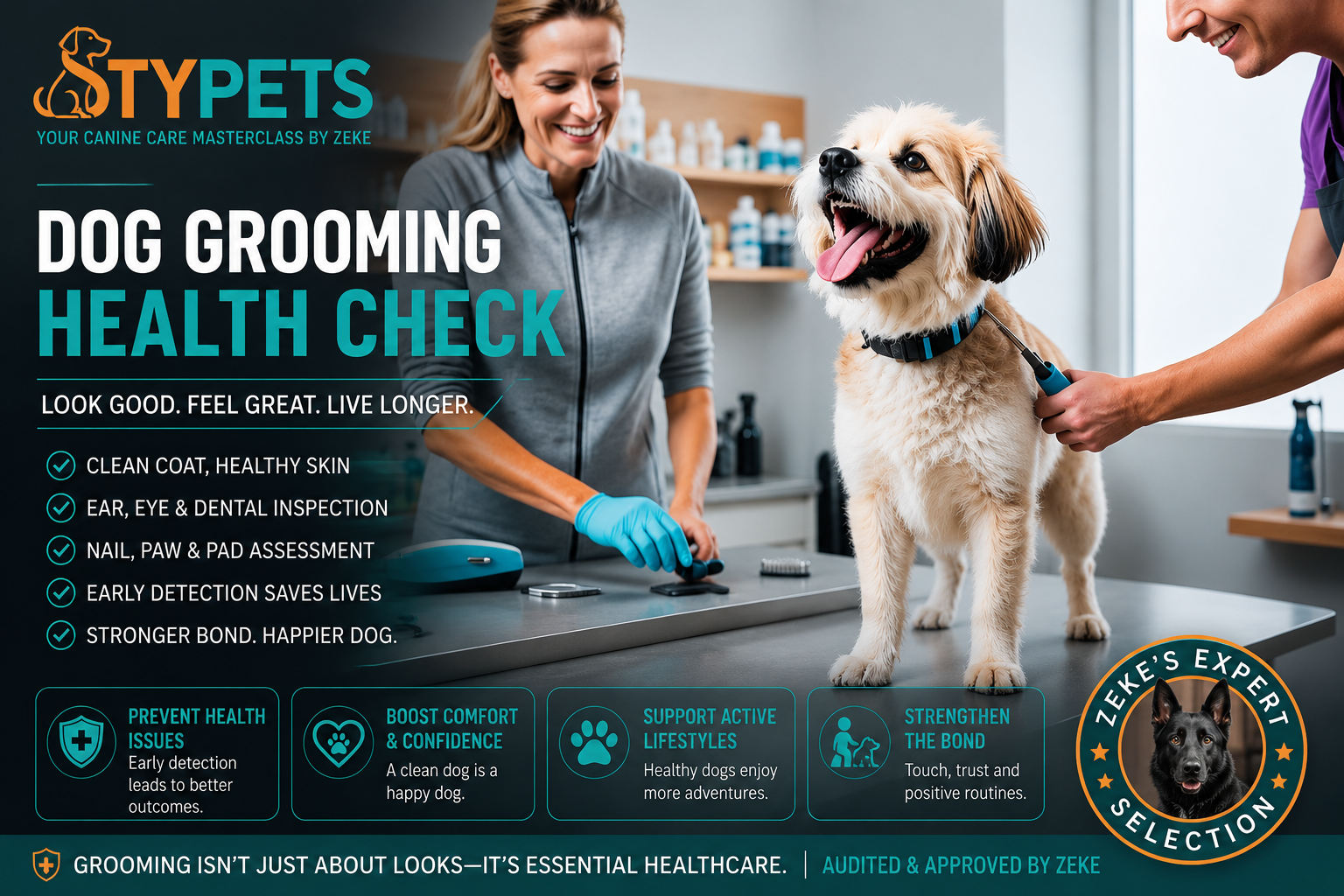
Every pet parent approaches bath day with the same basic checklist: wash away the mud, eliminate the wet-dog smell, and restore a soft, fluffy texture to the coat. We treat bathing as a cosmetic chore—a routine task to keep our living rooms clean and our dogs looking presentable. It is one of the most persistent oversights in modern Dog Care, and it could be causing you to miss early-stage biological breakdowns.
The bath is not a beauty salon; it is a clinical window. When your dog’s coat is thoroughly saturated with water, the protective layers of fur are flattened, exposing the raw canvas of the epidermis, peripheral circulatory pathways, and structural joints.
A truly proactive dog grooming health check shifts your perspective from aesthetic maintenance to forensic diagnostic observation. By utilizing the unique conditions of the bath, you can intercept silent internal pathologies—from aggressive mast cell malignancies to systemic metabolic failures—long before they manifest as clinical emergencies.
At STYPETS, we view the grooming tub as your home diagnostic airlock. This masterclass will provide you with an exhaustive, step-by-step framework to transform your standard bath routine into a professional-grade dog grooming health check.
1. Epidermal Inspection: Decoding Lumps, Bumps, and Pigment Shifts
When a dog is dry, their coat acts as a heavy curtain, masking structural skin anomalies. Once the hair is fully saturated with water and parted under bright, direct light, performing a dog grooming health check makes the skin look completely transparent to the trained eye.
The Malignancy Audit: Spotting Silent Growths
During your saturated dog grooming health check, run your fingertips firmly across the skin against the grain of the hair. You are tracking physical topography changes, paying strict attention to three highly dangerous oncological profiles:
-
Mast Cell Tumors (MCT): Known as the “great imitators,” these immune-system malignancies can look like harmless, soft fatty lipomas or present as raw, red, ulcerated nodules. They commonly manifest on the limbs, lower abdomen, and chest.
-
Malignant Melanoma: While many dark spots are completely benign, malignant melanomas are aggressive, fast-growing, and highly metastatic. Inspecting the nail beds during a dog grooming health check is critical because melanomas frequently develop here. Look closely around the lips, oral mucous membranes, and directly inside the digit joints. A dark, raised lump on a toe or a sudden swelling of the subungual crest requires an immediate veterinary biopsy.
-
Squamous Cell Carcinoma (SCC): Often linked to UV radiation, these present as firm, raised, wart-like patches or chronic sores that refuse to heal. Carefully inspect thinly haired boundaries like the nose, eyelids, and the pink skin of the lower abdomen during your assessment.
💡 Featured Snippet Diagnostic: The ABCDE Skin Cancer Rule for Dogs
If you locate an epidermal anomaly during your wet dog grooming health check, audit it immediately using this systematic framework:
Asymmetry: One half of the lump or pigmented patch does not match the other.
Border: The edges are irregular, ragged, poorly defined, or jagged.
Color: The coloration is inconsistent, displaying mixed shades of black, brown, pink, or red.
Diameter: The growth is expanding rapidly or exceeds 6 millimeters across.
Evolution: The lesion changes in size, shape, height, or begins to bleed during grooming.
2. Otic Diagnostics: Yeast Overgrowth vs. Acute Bacterial Infections
The bath is a high-risk zone for a dog’s ears. The canine ear canal is structured like a sharp “L” shape, dropping straight down before turning inward toward the skull. This unique anatomy creates a natural trap for moisture, making it an ideal breeding ground for pathogenic microorganisms if a proper dog grooming health check is ignored.
During your dog grooming health check, you must perform an otic smell and sight audit before the first splash of water hits the tub.
[Normal Ear] ──> Odorless, Light Pink, Minimal Clear/Tan Wax
[Yeast Overgrowth] ──> Musty, Sweet Bread Odor, Dark Brown Waxy Coffee-Ground Discharge
[Bacterial Infection] ──> Foul, Pungent Odor, Thick Yellow/Green Pus, Acute Pain
Distinguishing the Pathogenic Profiles
-
The Yeast Overgrowth Protocol (Malassezia): Yeast thrives on the natural lipids of the skin. A yeast flare-up is characterized by a distinct, musty, sweet “bread dough” odor. Inspect the inner pinna (ear flap) for a greasy, dark brown, waxy discharge that closely resembles coffee grounds. The skin will often appear thickened, scaly, or hyper-pigmented during your dog grooming health check inspection.
-
The Acute Bacterial Infection Protocol: Bacterial invasions progress much more rapidly than yeast and cause significant cellular damage. The bio-signals include a highly pungent, foul odor accompanied by a thick yellow, green, or blood-tinged purulent discharge.
A dog with a bacterial infection will often flinch, whimper, or show intense guarding behavior when you touch their ears because the tissue is highly inflamed and painful.
3. Digital and Interdigital Analysis: Screening the Paws for Systemic Distress
A dog’s paws endure constant mechanical impact, making them a prime location for displaying signs of environmental allergies, structural issues, and parasitic tracking during a comprehensive dog grooming health check.
The Interdigital Step-by-Step Scan
-
Spread the Webbing Fully: Soak the paw in warm water to clear away debris, then spread the interdigital webbing wide under direct illumination.
-
Audit for Saliva Staining: Look for deep rust-colored or red staining on the fur between the toes. This staining is caused by porphyrins in the dog’s saliva, a clear indicator of chronic, obsessive licking driven by localized pain or systemic environmental allergies that a dog grooming health check can uncover.
-
Inspect for Pododermatitis Furuncles: Feel for firm, fluid-filled cysts or deep tracks between the toes. These interdigital cysts often develop when coarse hairs are forced backward into the hair follicles during high-drive running, leading to deep, secondary bacterial infections.
-
Examine the Nail Bed Junction: Inspect the exact boundary where the nail exits the digit. Cracking, brittleness, or asymmetrical scaling can point to an underlying immune-mediated condition like Symmetrical Lupoid Onychodystrophy (SLO).
4. The Wet Biomechanical Scan: Spotting Structural Deficits
Water changes how a dog moves and supports their weight. When your dog stands in a wet, slick grooming tub, their stabilizing muscles are forced to engage at a higher level to maintain balance. This subtle shift makes the bath an outstanding environment for executing a functional dog grooming health check to catch early musculoskeletal deficits.
The Structural Alignment Check
Observe your dog’s posture while they are standing in the water. Are they shifting their weight forward, hyperextending their front limbs to take the load off their rear hips? Do they resist lifting a specific paw for clipping or wiping?
As you massage shampoo into the large muscle groups during the dog grooming health check, perform a bilateral palpation audit. Run both hands simultaneously down the left and right sides of the spine, over the shoulders, and down the hips.
Feel for structural asymmetry. A noticeable loss of muscle mass on one side of the hip indicates a chronic offloading of weight, which is a classic early sign of cruciate ligament degradation or progressive hip dysplasia.
5. Microvascular and Lymphatic Screening: Gums and Nodes
The dog grooming health check protocol should always conclude with a direct check of the microvascular system and peripheral lymph nodes to ensure internal metabolic and circulatory health.
The Mucous Membrane Baseline
Lift your dog’s lips to audit their oral health. Healthy gums should display a vibrant, bubblegum pink color. Press your thumb firmly against the gum line for two seconds, then release it. The color should snap back from white to pink in under two seconds. This is the Capillary Refill Time (CRT), a reliable metric for cardiovascular output and systemic hydration.
The Peripheral Lymph Node Check
While your dog’s neck and throat are lathered up with shampoo, use your index and middle fingers to complete the lymphatic phase of the dog grooming health check. Gently check the submandibular lymph nodes located right at the junction where the jaw meets the neck. Healthy lymph nodes are small, smooth, and easily slide under the skin. If you feel firm, enlarged, golf-ball-like spheres, it is a sign of systemic immune activation or multicentric lymphoma, which requires immediate veterinary testing.
FAQ: Advanced Grooming Diagnostics
1. How often should I perform an internal dog grooming health check? You should conduct a thorough health assessment during every single bath cycle, or at a minimum of once every four weeks. Incorporating a dog grooming health check consistently is key; tracking changes over time is what allows you to spot abnormalities early.
2. Can a bath cause a dog’s ear infection to get worse? Yes, if you accidentally let water get inside the ear canal. Always place large, dry cotton balls gently inside your dog’s ears before beginning the wet portion of the dog grooming health check to block moisture, and remove them immediately once the drying process is complete.
3. Why does my dog’s skin look bright red after getting wet? If the skin flushes bright pink or red immediately upon contact with water, your dog is likely experiencing an acute allergic flare-up or a histaminic reaction to chronic environmental allergens, which is made more obvious by the wet hair parting during a dog grooming health check.
4. What is the difference between a normal skin bump and a tumor? You cannot differentiate between a benign lipoma and a malignant tumor by look or touch alone. Any new, changing, or firm lump found during a dog grooming health check should be evaluated by a veterinarian using a fine needle aspiration (FNA).
5. Why are my dog’s nails splitting during grooming? Brittle, splitting, or sloughing nails found during your dog grooming health check can point to a localized fungal infection or a systemic autoimmune condition like Symmetrical Lupoid Onychodystrophy (SLO), which compromises the production of keratin.
6. What does a sudden foul smell right after rinsing mean? If your dog still smells sour or pungent after a thorough scrubbing, they may have a deep-seated yeast infection within their skin folds (common in brachycephalic breeds) or an active seborrheic dermatitis condition that needs a medicated, antimicrobial shampoo.
7. Can frequent bathing strip my dog’s coat and ruin their skin? Only if you use harsh, human-grade products or low-quality detergents. Incorporating a proper dog grooming health check with a premium, pH-balanced, soap-free canine formula designed for high bioavailability allows you to bathe your dog frequently without compromising their natural lipid barrier.
Conclusion: Elevating Your Bath Routine to a Life-Saving Protocol
True mastery of Dog Care means looking past surface-level beauty. The next time you lead your canine companion to the tub, leave behind the notion that you are simply washing away dirt.
Approach the bath as an essential wellness check. By using our saturated skin audit, ear inspection, and musculoskeletal assessment, you change grooming from a chore into a highly effective dog grooming health check for early disease detection. Stay observant, keep an eye on the baseline data, and use the bath to safeguard your dog’s long-term health.
-
The American Kennel Club (AKC) Canine Health Foundation regarding early detection of mast cell malignancies.
-
The American College of Veterinary Dermatology (ACVD) for clinical protocols on managing chronic Malassezia yeast overgrowth.