When you finalize a Dog Adoption, you aren’t just bringing home a new companion; you are inheriting a complex biological landscape shaped by survival. For many shelter animals, the transition from a high-entropy kennel to a quiet home isn’t an immediate relief—it is a physiological shock. To ensure a successful transition, the primary goal must be reducing cortisol in rescue dogs. Without a technical plan to flush these stress hormones from their system, your new dog remains in a state of “Hyper-Vigilance,” which can lead to long-term behavioral issues and health degradation.
At STYPETS, we treat the first 90 days as a biological “Decompression Phase.” This isn’t about pampering; it’s about engineering an environment that signals safety to the canine nervous system. In this masterclass, we will audit the mechanics of chronic stress and provide a step-by-step protocol for reducing cortisol in rescue dogs to establish a 15-year baseline of health and trust.
1. The Cortisol Trap: Understanding the Rescue Dog’s Biology
Cortisol is often called the “stress hormone,” but in a shelter environment, it is a survival tool. In a kennel, the constant noise, smells of unfamiliar dogs, and lack of agency keep the adrenal glands in a state of overdrive. When you complete a Dog Adoption, that “biological momentum” follows the dog into your living room.
The “Stacking” Effect
Stress doesn’t vanish the moment the leash is clipped. Cortisol can take days, even weeks, to fully metabolize. If a dog encounters a new trigger (a vacuum cleaner, a doorbell, a sudden movement) before the previous cortisol spike has cleared, the levels “stack.” This leads to a dog that seems “fine” until they suddenly snap or shut down—a phenomenon we call the “Threshold Breach.”
2. The 3-3-3 Rule: A Framework for Reducing Cortisol in Rescue Dogs
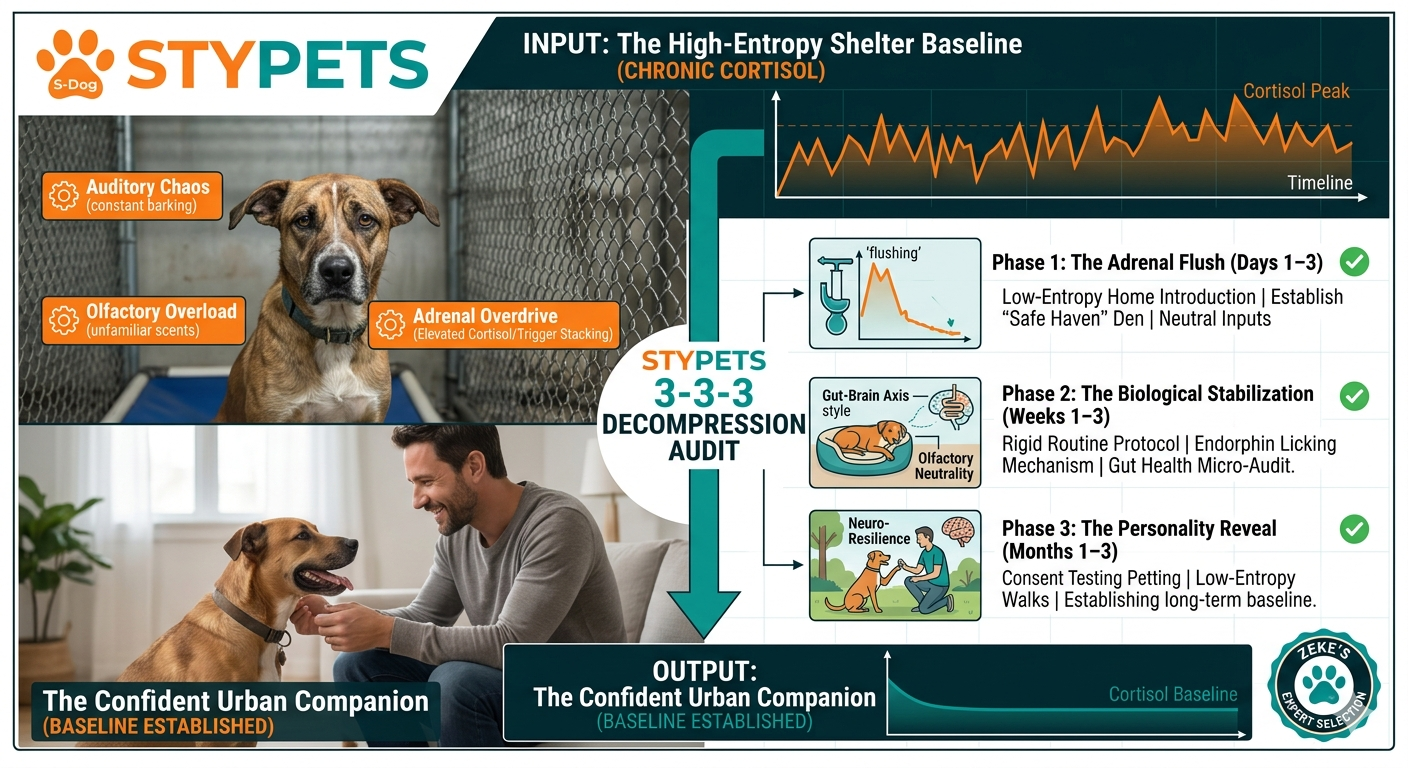
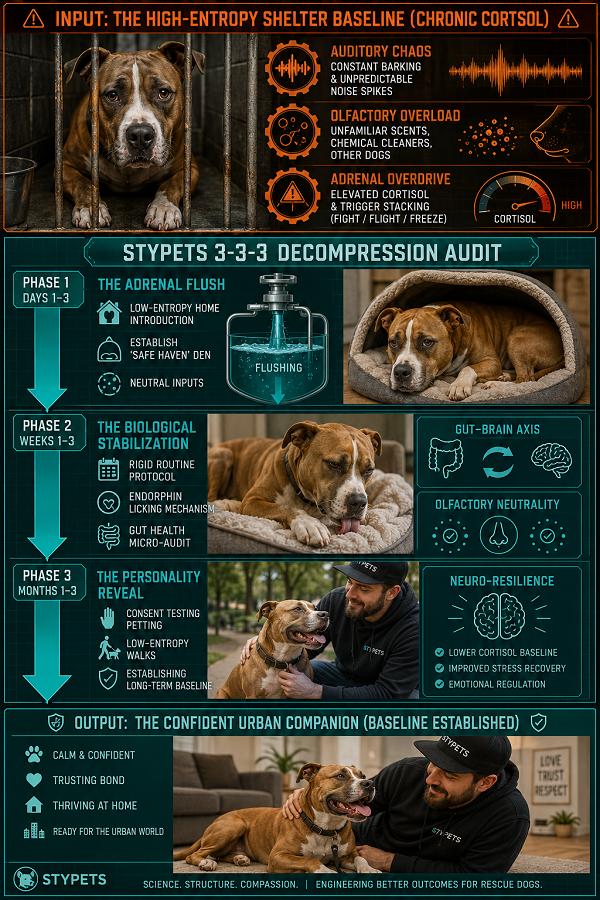
The pet industry uses the 3-3-3 rule to describe the timeline of Dog Adoption, but at STYPETS, we view it through the lens of hormonal stabilization.
The First 3 Days: The Adrenal Flush
During the first 72 hours, your dog is in a sensory fog. Their main focus is mapping the environment for threats.
-
Action: Limit visitors and avoid “adventure” walks.
-
Goal: Allow the initial “Shelter Spike” to begin its descent.
The First 3 Weeks: The Decompression Phase
As the dog realizes their basic needs are met, they begin to test the “social infrastructure” of the home. This is the most critical window for reducing cortisol in rescue dogs.
-
Action: Establish a rigid routine. Predictability is the antidote to cortisol.
-
Goal: Shift the dog from a sympathetic (fight/flight) to a parasympathetic (rest/digest) state.
The First 3 Months: The Personality Reveal
Only after 90 days of hormonal stability does the dog’s true personality emerge. This is when the biological “baseline” is finally set.
3. Engineering a Low-Cortisol Environment
To be effective at reducing cortisol in rescue dogs, you must audit your home for “sensory entropy”—the unpredictable inputs that keep a dog’s brain on high alert.
The “Safe Haven” Blueprint
-
Visual Shields: If your dog barks at windows, use frosted film or curtains. Reducing visual triggers is the fastest way to lower heart rate variability.
-
Acoustic Management: Use white noise machines to mask the “hallway entropy” common in apartments.
-
Scent Calibration: Don’t wash the dog’s shelter blanket immediately. Keeping a familiar scent (even if it’s “shelter smell”) provides a sense of continuity that aids in reducing cortisol in rescue dogs.
4. Dietary ROI: Feeding for a Calmer Brain
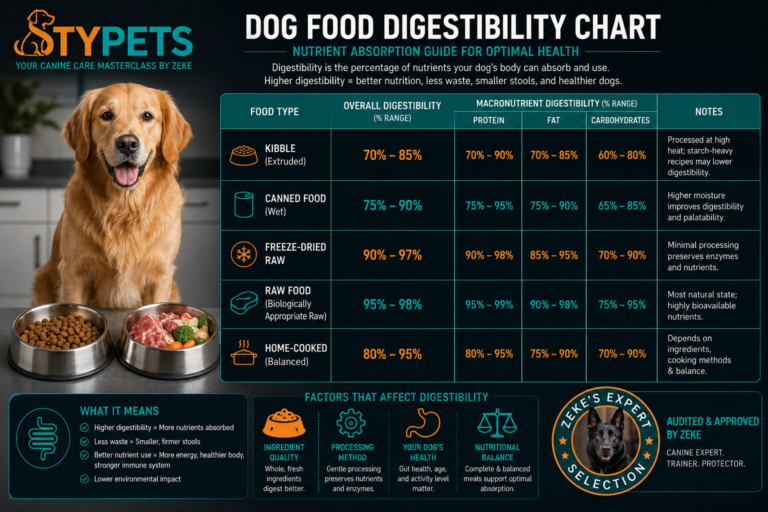
What you put in the bowl directly impacts the adrenal glands. High-sugar fillers in poor-quality Dog Food can lead to blood sugar spikes that mimic anxiety.
-
L-Theanine and Tryptophan: These amino acids are precursors to serotonin.
-
Gut-Brain Axis: Chronic stress damages the microbiome. Introducing high-quality probiotics during the first month of Dog Adoption helps stabilize the gut, which in turn stabilizes behavior.
-
The Licking Mechanism: Licking releases endorphins. Using snuffle mats or stuffed frozen toys provides a mechanical “calm-down” tool that is essential for reducing cortisol in rescue dogs.
5. The “No-Touch” Protocol: Respecting the Threshold
The biggest mistake new owners make during Dog Adoption is “forced affection.” To a dog with high cortisol, a hug feels like a predatory restraint.
-
Passive Socialization: Sit in the same room as the dog while reading a book. Ignore them. Let them choose to approach you.
-
Consent Testing: Only pet the dog for three seconds, then stop. If they move toward you, they want more. If they look away, their cortisol is too high for physical contact.
-
Low-Entropy Walks: Walk the same 100-yard stretch of grass for the first week. New smells are “data” the brain has to process; keeping the route identical reduces the processing load.
FAQ: Mastering Cortisol Management After Dog Adoption
1. How long does it take for cortisol to drop after leaving a shelter? While some levels drop within 72 hours, it often takes 4 to 6 weeks of a consistent routine for the “Chronic Adrenal Fatigue” to begin reversing.
2. Why is my rescue dog sleeping so much? This is “The Crash.” Once the dog feels safe enough to stop scanning for threats, the body demands massive amounts of sleep to repair the damage caused by chronic stress. This is a positive sign for reducing cortisol in rescue dogs.
3. Can supplements help with reducing cortisol in rescue dogs? Yes, Adaptogens like Ashwagandha or CBD (consult your vet) can help “dampen” the adrenal response, but they are not a replacement for a low-entropy environment.
4. Should I take my new dog to the park to meet friends? Absolutely not. For the first 30 days of Dog Adoption, keep the social circle restricted to the immediate household to prevent “Trigger Stacking.”
5. Why does my dog bark at night? Nighttime is when the house is quiet and every small sound is amplified. Use a white noise machine near their “Safe Haven” to reduce the acoustic triggers.
6. Is crate training good for reducing cortisol in rescue dogs? For many, yes. A crate acts as a “Den” where the dog doesn’t have to worry about guarding 360 degrees. However, if the dog has “Barrier Frustration,” a crate can actually increase cortisol. Audit their response closely.
7. Does the age of the dog change the cortisol protocol? Senior dogs often have less “Adrenal Elasticity,” meaning they take longer to recover from spikes. Puppies have more elasticity but less impulse control. The protocol remains the same: Routine is King.
Conclusion: The Long-Term ROI of Decompression
Successful Dog Adoption is measured in years, not days. By focusing on reducing cortisol in rescue dogs from Day 1, you are preventing the development of separation anxiety, leash reactivity, and chronic illness. You aren’t just giving a dog a home; you are giving their nervous system a chance to rewire itself for peace.
The “Shelter Stress Audit” is the most important document in your Dog care toolkit. Respect the biology, honor the timeline, and the bond you build will be unbreakable.